Detecting Mobile Phone Transmissions With A Sound Card

Anyone who had a cheap set of computer speakers in the early 2000s has heard it – the rhythmic dit-da-dit-dit of a GSM phone pinging a cell tower once an hour or so. [153armstrong] has a write up on how to capture this on your computer. 

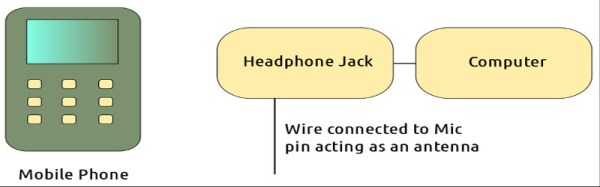
It’s incredibly simple to do – simply plug in a set of headphone to the sound card’s microphone jack, leave a mobile phone nearby, hit record, and wait. The headphone wire acts as an antenna, and when the phone transmits, it induces a current in the wire, which is picked up by the soundcard.

[153armstrong] notes that their setup only seems to pick up signals from 2G phones, likely using GSM. It doesn’t seem to pick up anything from 3G or 4G phones. We’d wager this is due to the difference in the way different cellular technologies transmit – let us know what you think in the comments.

This system is useful as a way to detect a transmitting phone at close range, however due to the limited bandwidth of a computer soundcard, it is in no way capable of actually decoding the transmissions. As far as other experiments go, why not use your soundcard to detect lightning?


Hacked Sea Scooter Lives Another Day

The Seadoo GTI Sea Scooter is a simple conveyance, consisting of a DC motor and a big prop in a waterproof casing. By grabbing on and firing the motor, it can be used to propel oneself underwater. However, [ReSearchITEng] had problems with their unit, and did what hackers do best – cracked it open to solve the problem.

Investigation seemed to suggest there were issues with the logic of the motor controller. The original circuit had a single FET, potentially controlled through PWM.  The user interfaced with the controller through a reed switch, which operates magnetically. Using reed switches is very common in these applications as it is a cheap, effective way to make a waterproof switch.

It was decided to simplify things – the original FET was replaced with a higher-rated replacement, and it was switched hard on and off directly by the original reed switch. The logic circuitry was bypassed by cutting traces on the original board. [ReSearchITEng] also goes to the trouble of highlighting potential pitfalls of the repair – if the proper care isn’t taken during the reassembly, the water seals may leak and damage the electronics inside.

Overall it’s a solid repair that could be tackled by any experienced wielder of a soldering iron, and it keeps good hardware out of the landfill. For another take on a modified DC motor controller, check out the scooter project of yours truly.


Decoding NRSC-5 With SDR To Get In Your Car

NRSC-5 is a high-definition radio standard, used primarily in the United States. It allows for digital and analog transmissions to share the original FM bandwidth allocations. Theori are a cybersecurity research startup in the US, and have set out to build a receiver that can capture and decode these signals for research purposes, and documented it online.

Their research began on the NRSC website, where the NRSC-5 standard is documented, however the team notes that the audio compression details are conspicuously missing. They then step through the physical layer, multiplexing layer, and finally the application layer, taking apart the standard piece by piece. This all culminates in the group’s development of an open-source receiver for NRSC-5 that works with RTL-SDR – perhaps the most ubiquitous SDR platform in the world. 

The group’s primary interest in NRSC-5 is its presence in cars as a part of in-car entertainment systems. As NRSC-5 allows data to be transmitted in various formats, the group suspects there may be security implications for vehicles that do not securely process this data — getting inside your car through the entertainment system by sending bad ID3 tags, for instance. We look forward to seeing results of this ongoing research.

[Thanks to Gary McMaster for the tip!]

How To Build Your Own Convertible (For Under $500)

It’s a common sight in the farming areas of the world — a group of enterprising automotive hackers take a humble economy car, and saw the roof off, building a convertible the cheapest way possible. Being the city dwelling type, I always looked on at these paddock bashing antics with awe, wishing that I too could engage in such automotive buffoonery. This year, my time would come — I was granted a hatchback for the princely sum of $100, and the private property on which to thrash it.

However, I wasn’t simply keen to recreate what had come before. I wanted to take this opportunity to build a solution for those who had suffered like me, growing up in the confines of suburbia. Surrounded by houses and with police on patrol, it simply isn’t possible to cut the roof off a car and drive it down to the beach without getting yourself in altogether too much trouble. But then again, maybe there’s a way.

The goal was to build the car in such a way that its roof could be cut off, but remain attached by removable brackets. This would allow the car to be driven around with the roof still attached, without raising too much suspicion from passing glances. For reasons of legality and safety, our build and test would be conducted entirely on private property, but it was about seeing what could be done that mattered.

Continue reading “How To Build Your Own Convertible (For Under $500)”

Hackaday Prize Entry: Yet Another Unmanned Vehicle Controller

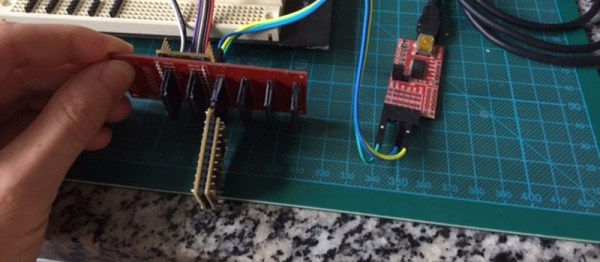
To build any sort of autonomous vehicle, you need a controller. This has to handle all sorts of jobs – reading sensor outputs, controlling motors and actuators, managing power sources – controlling a vehicle of even moderate complexity requires significant resources. Modern cars are a great example of this – even non-autonomous vehicles can have separate computers to control the engine, interior electronics, and safety systems. In this vein, [E.N. Hering] is developing a modular autonomous vehicle controller, known as YAUVC.

The acronym stands for Yet Another Unmanned Vehicle Controller, though its former name – Fly Hard With A Vengeance – was not without its charms. The project is built around the concept of modularity and redundancy. The controller, designed primarily for flying vehicles, has an ATMega328P as its primary processor, into which various modules can be plugged in to handle different tasks.

This design choice has several benefits – having separate processors to handle individual jobs can make sense in real-time systems. You’d hardly want your quadcopter to crash because the battery management routines were stealing CPU time from the flight dynamics calculations. Instead, by offloading tasks to individual modules, each can run without interfering with the others. Modularity does come with drawbacks however — the problem of maintaining efficient communication between modules is one of them. [Hering] also plans to make sure the system can be set up to use multiples of the same module for redundancy – similar to modern flight systems in passenger aircraft that weigh the results of several computers to make decisions.

Much work has already been done – with the YAUVC platform already fleshed out with a backbone design as well as modules for WiFi, accelerometers and GPS navigation. We look forward to seeing YAUVC reaching flight-ready status soon!

Radio Decoding Swiss Army Knife In A NES Controller

If you wanted to name a few things that hackers love, you couldn’t go wrong by listing off vintage console controllers, the ESP system-on-chip platform, and pocket tools for signal capture and analysis. Combine all of these, and you get the ESP32Thang.

At its heart, the ESP32Thang is based around a simple concept – take an ESP32, wire up a bunch of interesting sensors and modules, add an LCD, and cram it all in a NES controller which helpfully provides some buttons for input. [Mighty Breadboard] shows off the device’s basic functionality by using an RFM69HW module to allow the recording and replay of simple OOK signals on the 433 MHz band. This is a band typically used by all sorts of unlicenced radio gear – think home IoT devices, wireless doorbells and the like. If you want to debug these systems when you’re out and about, this is the tool for you.

This is a fairly straightforward build at the lower end of complexity, but it gets the job done with style. The next natural step up is a Raspberry Pi with a full software defined radio attached, built into a Nintendo DS. If you build one, be sure to let us know. This project might serve as some inspiration.

With the wide availability of SPI and I2C modules these days, combined with the ease of programming provided by the Arduino environment, this is a project that just about any hacker could tackle after passing the blinking LED stage. The fact that integrating such hardware is so simple these days is truly a testament to the fact that we are standing on the shoulders of giants.

Hackaday Prize Entry: A Mobile Electric Gate

Electric gates can be an excellent labor-saving device, allowing one to remain in a vehicle while the gate opens and closes by remote activation. However, it can become somewhat of a hassle juggling the various remotes and keyfobs required, so [bredman] devised an alternative solution – controlling an electric gate over the mobile network.

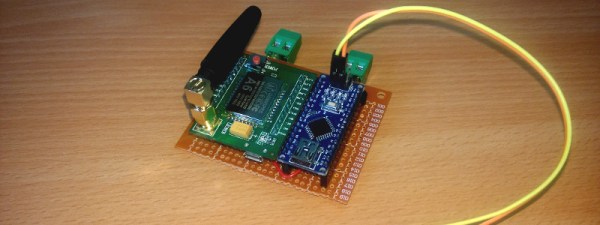
20 years ago, this might have been achieved by wiring a series of relays up to the ringer of a carphone. These days, it’s a little more sophisticated – a GSM/GPRS module is connected to an Arduino Nano. When an incoming call is detected, the gate is opened. After a 3 minute wait, the gate is once again closed.

[bredman] suffered some setbacks during the project, due to the vagaries of working with serial on the Arduino Nano and the reset line on the A6 GSM module. However, overall, the gate was a simple device to interface with, as like many such appliances, it has well-labelled and documented pins for sending the gate open and close signals.

[bredman] was careful to design the system to avoid unwanted operation. The system is designed to always automatically close the gate, so no matter how many times the controller is called, the gate will always end up in a closed state. Special attention was also paid to making sure the controller could gracefully handle losing connection to the mobile network. It’s choices like these that can make a project much more satisfying to use – a gate system that constantly requires attention and rebooting will likely not last long with its users.

Overall, it’s a great project that shows how accessible such projects are – with some carefully chosen modules and mastery of serial communications, it’s a cinch to put together a project to connect almost anything to the Internet or mobile networks these days.  For a different take, check out this garage door opener that logs to Google Drive.