Using JTAG To Dump The Xbox’s Secret Boot ROM

When Microsoft released its first entry into the video game console market with the Xbox, a lot of the discussions at the time revolved around the fact that it used a nearly off-the-shelf Intel CPU and NVIDIA GPU solution. This made it quite different from the very custom consoles from Nintendo and Sony, and invited thoughts on running custom code on the x86 console. Although the security in the console was hacked before long, there were still some open questions, such as whether the secret boot ROM could have been dumped via the CPU’s JTAG interface. This is the question which [Markus Gaasedelen] sought to answer.

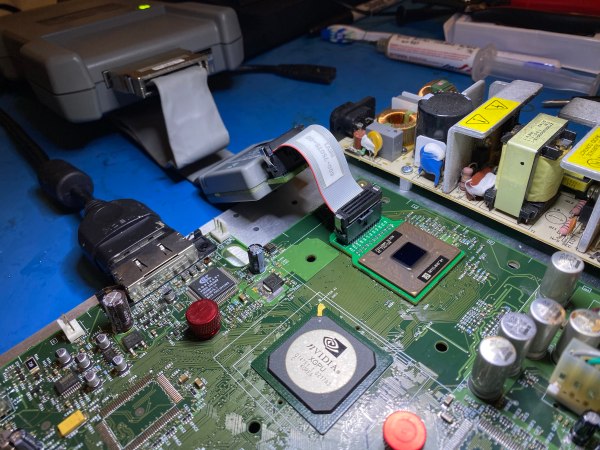
The reason why this secret code was originally dumped by intercepting it as it made its merry way from the South to the North Bridge (containing the GPU) of the Xbox was because Microsoft had foolishly left this path unencrypted, and because the JTAG interface on the CPU was left disabled via the TRST# pin which was tied to ground. This meant that without removing the CPU and adding some kind of interposer, the JTAG interface would not be active.

A small issue after the harrowing task of desoldering the CPU and reinstalling it with the custom interposer in place was to keep the system integrity check (enforced by an onboard PIC16 MCU) intact. With the CPU hooked up to the JTAG debugger this check failed, requiring an external injection of the signal on the I2C bus to keep the PIC16 from resetting the system. Yet even after all of this, and getting the secret bootrom code dumped via JTAG, there was one final system reset that was tied to the detection of an abnormal CPU start-up.

The original Xbox ended up being hacked pretty thoroughly, famously giving rise to projects like Xbox Media Center (XBMC), which today is known as Kodi. Microsoft learned their lesson though, as each of their new consoles has been more secure than the last. Barring some colossal screw-up in Redmond, the glory days of Xbox hacking are sadly well behind us.

The World ID Orb And The Question Of What Defines A Person

Among the daily churn of ‘Web 3.0’, blockchains and cryptocurrency messaging, there is generally very little that feels genuinely interesting or unique enough to pay attention to. The same was true for OpenAI CEO Sam Altman’s Ethereum blockchain-based Worldcoin when it was launched in 2021 while promising many of the same things as Bitcoin and others have for years. However, with the recent introduction of the World ID protocol by Tools for Humanity (TfH) – the company founded for Worldcoin by Mr. Altman – suddenly the interest of the general public was piqued.

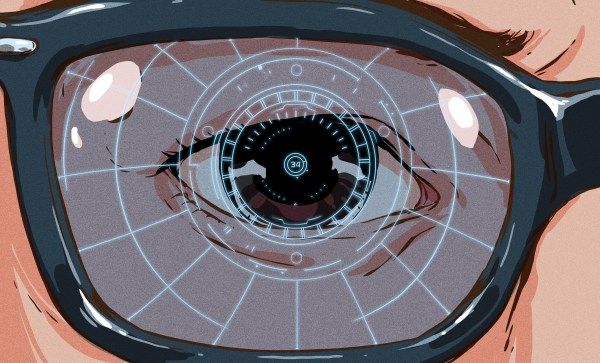
Defined by TfH as a ‘privacy-first decentralized identity protocol’ World ID is supposed to be the end-all, be-all of authentication protocols. Part of it is an ominous-looking orb contraption that performs iris scans to enroll new participants. Not only do participants get ‘free’ Worldcoins if they sign up for a World ID enrollment this way, TfH also promises that this authentication protocol can uniquely identify any person without requiring them to submit any personal data, only requiring a scan of your irises.

Essentially, this would make World ID a unique ID for every person alive today and in the future, providing much more security while preventing identity theft. This naturally raises many questions about the feasibility of using iris recognition, as well as the potential for abuse and the impact of ocular surgery and diseases. Basically, can you reduce proof of personhood to an individual’s eyes, and should you?

Continue reading “The World ID Orb And The Question Of What Defines A Person”

Humanity’s Return To The Moon And The Prospect Of South Pole Moon Bases

The last time that a human set foot on the Moon, it was December 1972 — when the crew of the Apollo 17 mission spent a few days on the surface before returning to Earth. Since then only unmanned probes have either touched down on the lunar surface or entered orbit to take snapshots and perform measurements.

But after years of false starts, there are finally new plans on the table which would see humans return to the Moon. Not just to visit, but with the goal of establishing a permanent presence on the lunar surface. What exactly has changed that the world went from space fever in the 1960s to tepid interest in anything beyond LEO for the past fifty years, to the renewed interest today?

Part of the reason at least appears to be an increasing interest in mineable resources on the Moon, along with the potential of manufacturing in a low gravity environment, and as a jumping-off point for missions to planets beyond Earth, such as Mars and Venus. Even with 1960s technology, the Moon is after all only a few days away from launch to landing, and we know that the lunar surface is rich in silicon dioxide, aluminium oxide as well as other metals and significant amounts of helium-3, enabling in-situ resource utilization.

Current and upcoming Moon missions focus on exploring the lunar south pole in particular, with frozen water presumed to exist in deep craters at both poles. All of which raises the question of we may truly see lunar-based colonies and factories pop up on the Moon this time, or are we merely seeing a repeat of last century?

Continue reading “Humanity’s Return To The Moon And The Prospect Of South Pole Moon Bases”

Reviving An 8-Inch Hard Drive From The 1980s

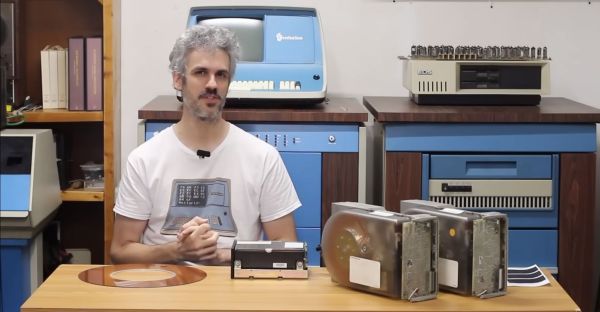
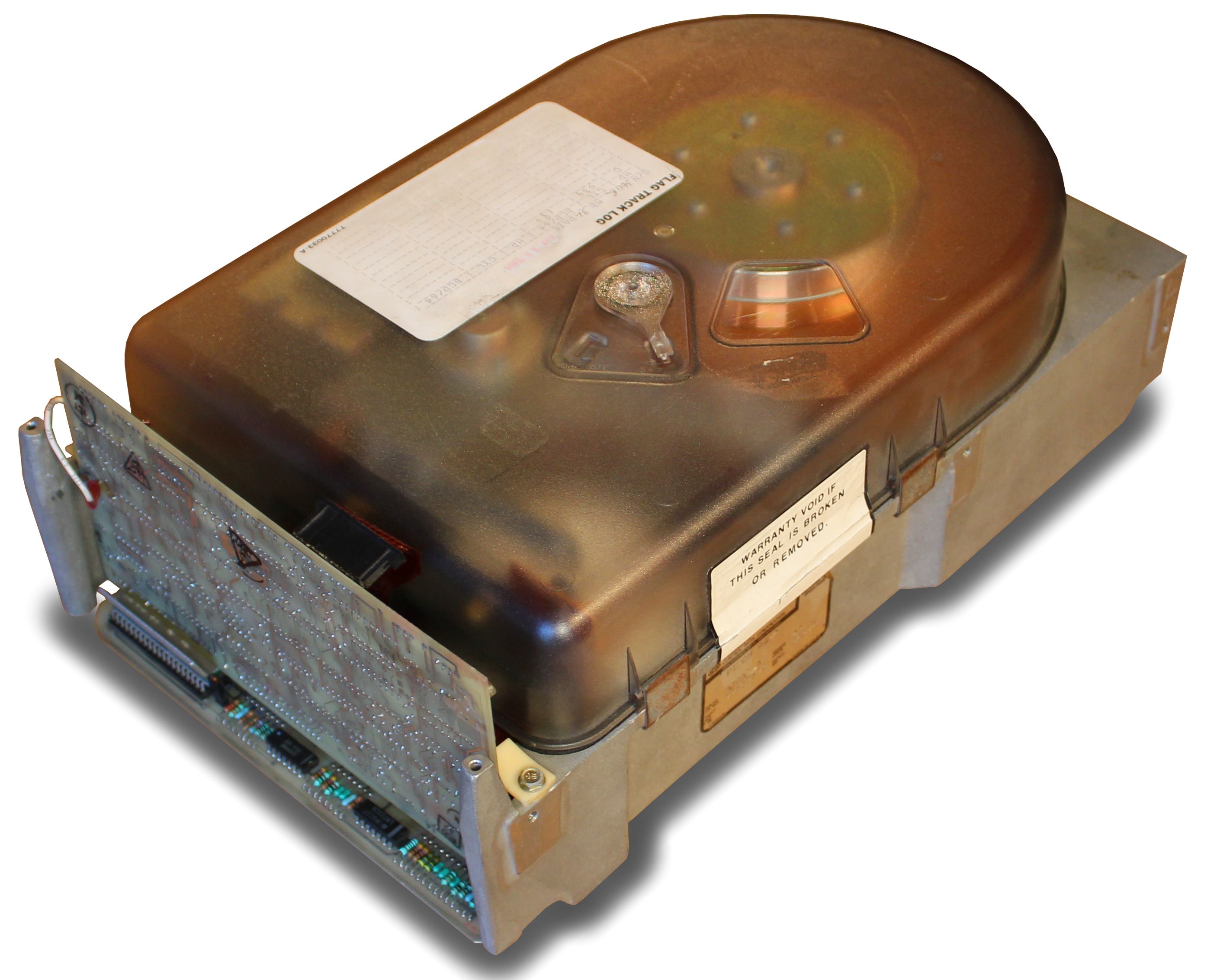
As part of the eternal quest within the realm of retrocomputing, storage devices can be one of the most challenging, especially when it comes to firmly obsolete hard drives, such as the CDC Finch drive. This compact 8″ HDD replaced the previous 14″ models with a form factor that was decidedly more portable. These Finch drives being 1980s technology that got run pretty hard before their retirement, it’s little wonder that they’d end up on the repair bench over at [Usagi Electric]

A CDC Finch hard disk drive, available in 8 to 32 MB for all your data storage needs. (Credit: Usage Electric)

Introduced in the early 1980s, the CDC Model 9410 Finch drive was unlike its 14″ predecessors in that it is a sealed unit, with maintenance-free air filtration. With the 14″ models you’d have both fixed and swappable platters, with far less consideration for dust exposure. This makes these Finch drives more touchy to work on, not unlike HDDs today, and adds to the excitement when repairing one of these old drives.

In this video, two differently broken Finch drives are discussed. Both appear to have an issue on the controller board, with one not responding to communications on the interface, while the other featuring a dead short on the interface pins. The first drive was brought back to life by replacing a dead SN75110 line driver IC, as well as a dead 7818 voltage regulator that was only outputting a sad 0.3 V.

Unfortunately, after half an hour of uptime and in the process of dumping data the drive errored out with a Not Ready, indicating that there are further issues on the controller board to fix. The good news here is that the platters appear to be pretty robust, but the controller boards on these old drives tend to develop issues over the years, something which will be further explored in upcoming videos.

Continue reading “Reviving An 8-Inch Hard Drive From The 1980s”

When The Sojourner Mars Rover Nearly Ran LISP

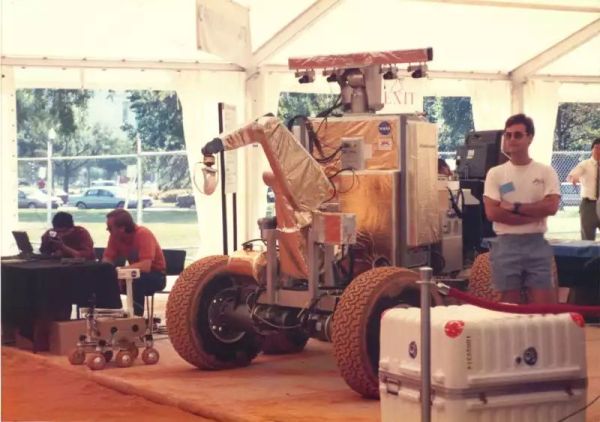
During the late 1980s NASA’s Jet Propulsion Laboratory (JPL) was busy developing the first ever wheeled robot that would roam the surface of Mars. Due to the long round-trip times of any signals between Mars and Earth, development of the firmware that would control the rover was a major point, with the two teams occupied with the task each picking different levels of autonomy for the rover. In a retrospective, [Ron Garrett] who worked at JPL on the ‘more autonomy’ team describes his recollections.

Whereas [Ron]’s team focused on creating a rover that could be provided with high-level instructions which the sophisticated LISP-based firmware would use as guidelines to navigate and operate by, the other team pursued a more limited autonomy approach whereby a human driver would use explicitly plan out the route which the rover would follow before awaiting new instructions.

Perhaps unsurprisingly, the system requirements for running LISP and the additional uncertainties and complexities with the autonomous approach, as well as testing and validating the firmware, resulted in the Sojourner Mars rover featuring the latter approach, with straightforward C-based firmware. Most of Sojourner’s autonomy was limited to a home return function if communication with the lander was lost, which limited both its range and operations during its 85-day extended mission.

As [Ron] covers with examples from later missions, one advantage of LISP is that it allows you to send instructions which can be interpreted (e.g. to debug the system) without having to program in such functionality explicitly. With later Mars rover missions much more of this autonomy that [Ron]’s team pioneered was implemented, although C remained the language of choice for these later rovers.

Heading image: Ron Garrett standing in front of the Robbie prototype. Rocky III can be see in the lower left, and above him are Rajiv Desai and Robert Ivlev, two other members of the team. (Credit: Ron Garret)

Repairing A Home Injection Molding Machine

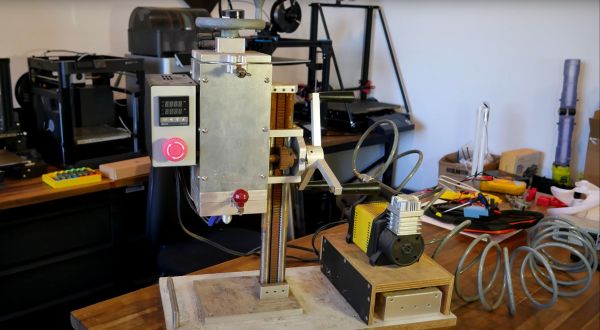
When [Michael] over at the Teaching Tech YouTube channel bought a hobby injection molding machine a long time ago, one of the plans he had with it was to use it for grinding up waste bits of PLA filament for injection molding. Since the machine was bought from a US shop and [Michael] is based in Australia it required some modifications to adapt it to the local 220+ VAC mains, followed by adding a PID temperature controller and a small compressor to provide the compressed air rather than from a large shop compressor.

Although [Michael] had discussed using the machine for PLA with the seller to confirm that this would work, a user error meant that the now defective unit had been sitting idly for many years, until recently.

Since the machine had been gathering dust and rust in the garage, fixing the machine up took a complete teardown to remove corrosion and resolve other issues. After this the original fault was identified, which turned out to be a shorted wire near the heater which had been turned up to a too high temperature, leading to the release of magic smoke and banishment of the machine to the Pit of Despair, AKA the shadowy depths of one’s garage.

In this first installment, [Michael] cleaned up the machine and restored it to a working state. In the next part injection molding will be attempted again, which should give some idea of the feasibility of turning scraps of PLA and failed 3D prints into smooth injection molded parts, assuming you have the CNC machine or patience to carve out the requisite molds, of course.

Continue reading “Repairing A Home Injection Molding Machine”

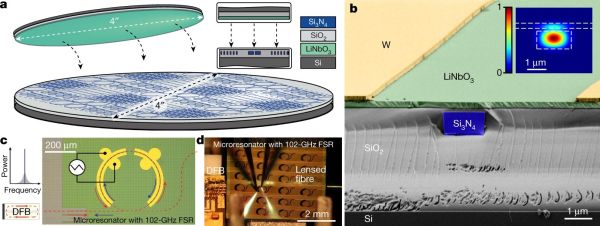
Stack of Si3N4-LiNbO3 forming the integrated laser and integrated into test setup (d). (Credit: Snigirev et al., 2023)

Fast Adjustable Lasers Using Lithium Niobate Integrated Photonics

Making lasers smaller and more capable of rapidly alternating between frequencies, while remaining within a narrow band, is an essential part of bringing down the cost of technologies such as LiDAR and optical communication. Much of the challenge here lies understandably in finding the right materials that enable a laser which incorporates all of these properties.

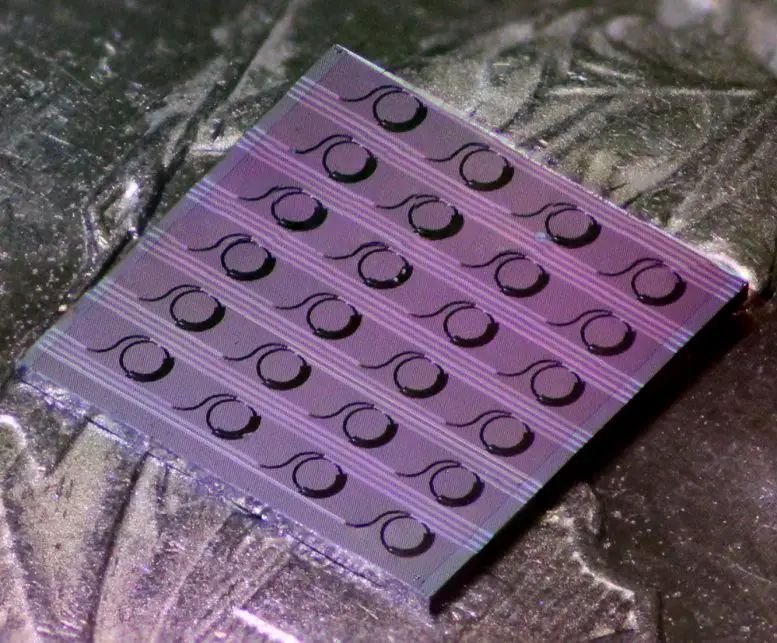
A heterogeneous Si3N4–LiNbO3 chip as used in the study. (Credit: Snigirev et al., 2023)

Here a recent study by [Viacheslav Snigirev] and colleagues (press release) demonstrates how combining the properties of lithium niobate (LiNbO3) with those of silicon nitride (Si3N4) into a hybrid (Si3N4)–LiNbO3 wafer stack allows for an InP-based laser source to be modulated in the etched photonic circuitry to achieve the desired output properties.

Much of the modulation stability is achieved through laser self-injection locking via the microresonator structures on the hybrid chip. These provide optical back reflection that forces the laser diode to resonate at a specific frequency, providing the frequency lock. What enables the fast frequency tuning is that this is determined by the applied voltage on the microresonator structure via the formed electrodes.

With a LiDAR demonstration in the paper that uses one of these hybrid circuits it is demonstrated that the direct wafer bonding approach works well, and a number of optimization suggestions are provided. As with all of these studies, they build upon years of previous research as problems are found and solutions suggested and tested. It would seem that thin-film LiNbO3 structures are now finding some very useful applications in photonics.

(Heading image: Stack of Si3N4-LiNbO3 forming the integrated laser and integrated into test setup (d). (Credit: Snigirev et al., 2023) )