A DSLR Shutter Cable For Android

Here’s a very easy way to trigger your DSLR camera using an Android device. It’s a similar method used with IR triggered cameras, in that all you need to do is assemble some simple hardware to plug into the headphone jack. The app that triggers the camera simply plays back a well crafted audio file to do so. The thing that this cable adds is the ability to use the focus feature, since the cable has two data lines.

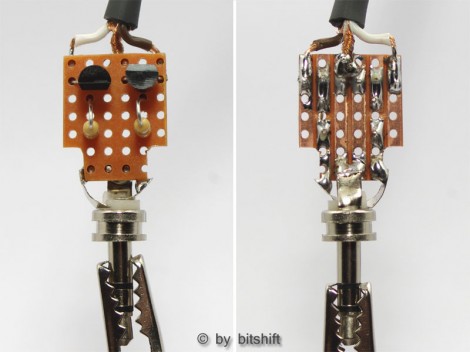
The hardware is dead-simple. A pair of NPN transistors and a pair of resistors are hosted by this small chunk of strip board. The audio jack for Android uses left and right audio channels to drive the base of these transistors. On the camera side of things the transistors are pulling the focus, and shutter contacts to ground. Once this is covered with shrink tubing it’ll be pretty rugged, and ready to be thrown in your camera bag for use on short notice.

[Thanks Hannes]
Player Guitar Sounds Wonderful; Makes Us Drool Because Of The Complexity

It becomes obvious when you listen to this player guitar that it’s not a human being playing. But the only reason for that is the unrelenting precision with which the songs are played. In addition to that accuracy, it’s interesting to note that this tune is normally played by a group of guitarists but here the machine manages to do it on one instrument. And we think it sounds fantastic!

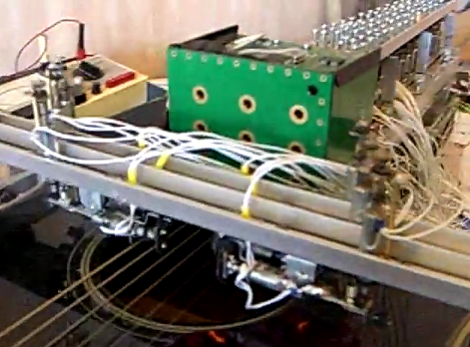
This comes from [Vladimir Demin], a maker who previously built an automatic Bayan (like an accordion but with buttons where the keyboard is normally found). This time around it’s the six strings and many frets of a guitar that have been outfitted with one solenoid each. In the image above you can see the strumming mechanism mounted near the tone hole. Six picks are held in place, and it appears that each has two solenoids. From what we can observe in the video, one of the solenoids is used to strum the sting, the other tilts the pick mount so that there won’t be a second strumming when the pick is returned to its starting position.

Continue reading “Player Guitar Sounds Wonderful; Makes Us Drool Because Of The Complexity”

Conductive Ink Circuit Experiments

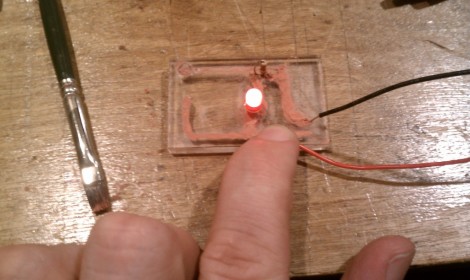
This glowing LED is proof that the experiments [Nvermeer] is doing with conductive ink are working. We’re filing this one as a chemistry hack because  you need to hit the lab ahead of time in order to get the conductivity necessary for success. He reports that this technique uses a copper powder suspended in an epoxy intended for spray painting. Before mixing the two he etched the powder in ammonium persulfate, then washed it in deionized water which made it a much better conductor.

We gather that the ink was applied with the brush seen in the photo. But since this uses that spray paint friendly solution to host the copper powder we wonder about stenciling with something like masking tape in order to spray the circuit paths onto the substrate.

There’s not too much info up yet, but [Nvermeer] does link to one of our other favorite conductive ink projects.

Scavenging From Consumer Electronics To Make A Flame-powered Phone Charger

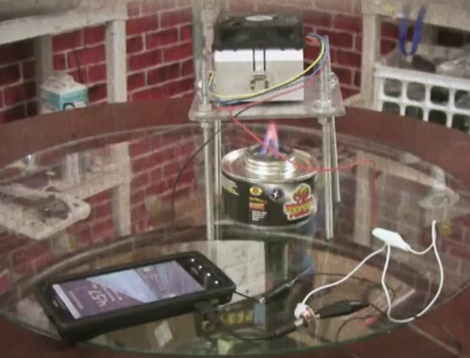
[Gigafide] just finished building this flame-powered phone charger. The concept is not new. He grabbed a Peltier cooler and used the temperature differential between a flame and a heat sink to produce electricity used by the charger. If you search around here enough you’ll find plenty of candle-powered devices, and a few hacks that use a Peltier device in a bit more interesting way. But we really like his high-production value video, straightforward explanation of the concepts, and ability to source the components in consumer devices. We don’t think you’ll be disappointed by his video found after the break.

The Peltier device comes out of a USB drink chiller. It is supported by a metal stand made from electrical box covers and threaded rod. Underneath he’s using a gel fuel can used by the food industry, and above he’s got  CPU heat sink and fan. This setup puts out around 1.5V but he’ll need a boost converter to charge a phone with that. A single AA battery charger meant to power your phone in a pinch is perfect for this application.

Continue reading “Scavenging From Consumer Electronics To Make A Flame-powered Phone Charger”

Adding Kilometers To A Radio Meant Only For Meters

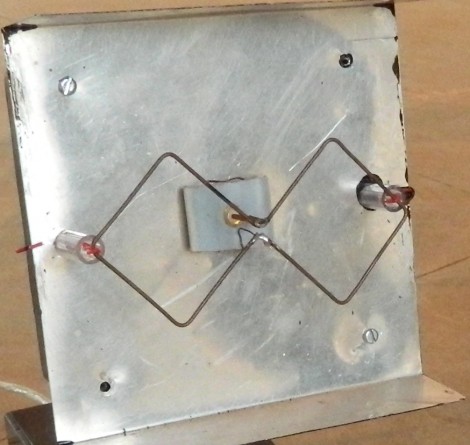
The NRF 24L01+ radio transceiver can be found in a lot of wireless project builds. But it’s only meant to work at a range of a few meters. [Achu Wilson] found that he could greatly extend the range by as much as 2 kilometers. All he needed to do was build this high-gain antenna.

He already had an idea of what he wanted to use the RF link for, so a directional antenna is no a problem. He chose a biquad setup with a back reflector, then used NEC2 to model the design and tweak it for the best performance possible. It only took him about two hours to complete the build, and manages a 10 dB gain. Not bad for some wire and a scrap of sheet meta.

This is the same transceiver chip used in the SNES wireless mod. If only we had a really powerful set of binoculars we could play the extremely long-distance game of Mario Kart we’ve always dreamed about.

Teaching BeagleBone To Play With LIDD Displays

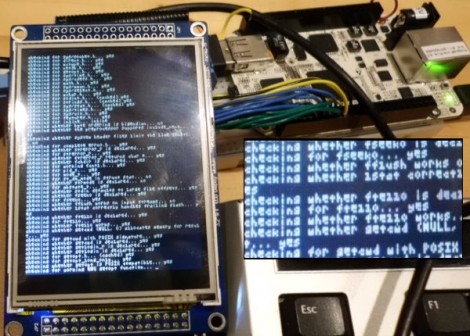
[Chris] hasn’t managed to get his hands on a Raspberry Pi yet, so he ordered a BeagleBone and got down to business. He was surprised to find that there isn’t much info out there about using LIDD type displays with the hardware. This protocol is used in many of the 320×240 smart LCD modules on the market, so he hammered out his own drivers and is sharing the details.

The system is designed to run a Linux kernel and [Chris] has chosen to go with Angstrom. His journey started by working out how to compile and patch the kernel himself. From there it was just a matter of getting the pin mapping right, and compiling a driver (it sounds way too simple when put like that).

Apparently he’s pretty close to getting the X desktop environment up and running. No idea what he plans for the hardware, but we’re all for people sharing their work to make it easier for others. Thanks!

How To Build A Competitive Battle Robot

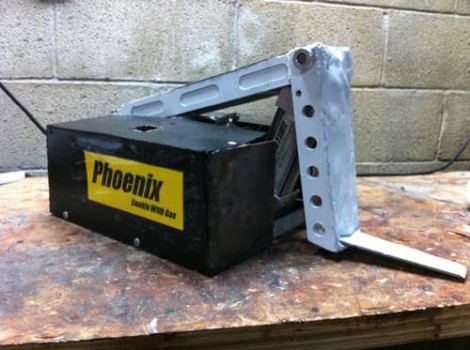
Ever wonder what’s under the hood with a competitive battle robot like this one? It’s usually a big secret as teams don’t care to give their competition any help. But [AlexHrn] decided not only to give us a peek, but also shows us his step-by-step build process for Phoenix, the 30 pound flipping battle robot.

[Alex] has already seen quite a bit of success with a different robot, but he couldn’t quite beat another competitor whose bot included a flipping arm which threw its competition across the ring. So [Alex] decided to join in on the technique with this build. The arm itself uses air pressure to exert a large force very quickly. Inside, a paintball gun tank powers the pneumatic ram. It looks like this tank is charged up before the competition and only gets about 12 shots before it’s depleted. You can see the power in the quick clip after the break.

For locomotion the unit uses a couple of cordless drill motors. These have a fairly high RPM and work well when powered by batteries.

Continue reading “How To Build A Competitive Battle Robot”