Scratch-built Software-Defined Radio

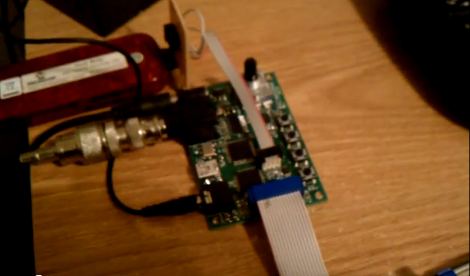
[Ben] is showing off some results from his Software-Define Radio project. The board seen above, which he designed from the ground up, is receiving a WWV radio broadcast. This is the atomic clock signal from Fort Collins, Colorado. The audio heard in the clip after the break is a bit noisy, but since he’s about 2000 miles from the origin of the signal we think he’s done really well!

The seed for this build was planted in [Ben’s] head back in July when he saw [Jeri Ellsworth’s] SDR project. He’s posted some of the build details up in a forum post. The approach is similar to [Jeri’s] but there are several key differences. He’s using a DS1085 programmable oscillator where she chose an FPGA for that purpose. Once his hardware demodulates and filters the incoming signal, a PIC32 does the rest of the work and outputs a PWM signal to an Op-Amp to generate audio.

Continue reading “Scratch-built Software-Defined Radio”

EFF On Securing Digital Information When Crossing The Border

The Electronic Frontier Foundation, long-time defenders of the common man’s rights in the electronic realm, has published a guide to keeping your digital devices private when entering the United States. It seems the defenders of freedom and liberty (ICE, DHS, TSA, and CBP) are able to take a few freedoms with your liberty at a border crossing by seizing your devices and copies of the data they store for up to five days. This requires no suspicion of wrongdoing, and copies of this data may be shared with other agencies thereby negating the five day limit.

Do you have a reason to protect your digital property? This is discussed in the paper. It may be confidential information, by way of a business contract or professional relationship (Doctors, Lawyers, Journalists, etc.). Or you may just want to keep your privacy on principle. No matter what your stance, the EFF has covered all the bases in this intriguing read. We think the best advice they give is to make an encrypted backup of your data on the internet, blank your computer before the border crossing, and restore it when you get to your destination. If you don’t have the data with you, it can’t be compromised. It that’s not an option, they have plenty of guidelines on cryptographic techniques.

Continue reading “EFF On Securing Digital Information When Crossing The Border”

Reverse Engineering The Icebreaker POV Toy

[Ch00f] spent some serious time figuring out how the Icebreaker POV toy works. This is a pretty cool device about the size of a toothbrush holder. It’s in a clear plastic case, which lets the row of 32 surface mount LEDs shine through. But making light isn’t their only function. You can use the device to scan in a high-contrast design, then ‘play it back’ using the persistence of vision display properties of the LED strip.

Perhaps the biggest question on [Ch00f’s] mind was how the sensing is done. He made a series of observations, then started monkeying around with the LEDs to investigate them. It seems that one LED is lit up while the ones around it are used as light sensors. This becomes more confusing once he realized that the display was multiplexed.

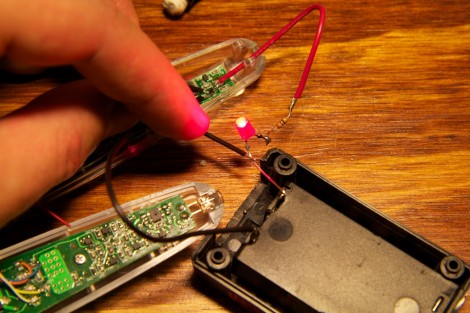
His write-up includes a collection of schematics that can be pieced together to conceptualize the entire circuit. The image above was taken during this process, using an LED to check the connections on a part. This let him prove that it’s an N-channel MOSFET. He plans to take what learned and roll it into his own project.

[via Reddit]

Keep Others From Snooping In Your Digital Life

In our digital age prying eyes are everywhere. The sad thing is that they may even belong to your own government. But no matter who it is, there are some things you can do to keep your private digital devices and content as secure as possible.

The link above goes to [Jerry Whiting’s] discussion on the topic. He’s certainly an interesting speaker, but make sure you’re using headphones at work as the language can be a bit sultry once in a while. He aims the lesson at the Occupy movement, but it’s a fun listen for any conspiracy theorist out there. The topics run the gamut, starting with the specter of physical access, then moving on to protecting your network through traffic analysis and using key pairs. This Security 101 segment comes in two parts (the first one is embedded after the break), each a bit more than thirty minutes. He’s planning to post a second lesson covering hashes and encryption. Continue reading “Keep Others From Snooping In Your Digital Life”

Motorized Camera Mount Unexpectedly Popular For CNC-aimed Hardware

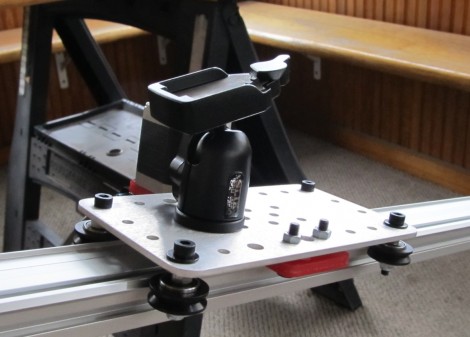
Here’s a camera mount that moves smoothly along a motorized sled. [Bart Dring] created the system and was surprised by it’s popularity, having received several sales requests from photographers. He originally designed the linear bearing system, called the MakerSlide as an inexpensive alternative to other CNC machine solutions. Allowing a computer to map out timed movements for video shots wasn’t on his radar then, but as you can see in the clip after the break, the MakerSlide does an amazing job at it.

The modular track system makes it easy to attach to a base. In this case, a couple of pieces of acrylic let him support both ends of the track on standard camera tripods. [Bart] mentions the knowledge gap between people who work with CNC milling hardware and photographers as an issue in deciding how to control the system. Since photographers aren’t likely to be proficient in EMC2, he designed a control application with an Arduino. It uses a stepper motor controller shield, and does some fancy math to make sure there is smooth acceleration, etc.

Continue reading “Motorized Camera Mount Unexpectedly Popular For CNC-aimed Hardware”

Hack Removes Ads From Kindle ‘Special Offers’ Hardware

We figured it wouldn’t be long before someone figured out how to remove the ads from the ‘Special Offers’ versions of the Amazon Kindle hardware. There are two things that made this obvious to us, the huge flaw that lets code be easily run as root, and the MP3 tag forming that makes it possible to unlock the device.

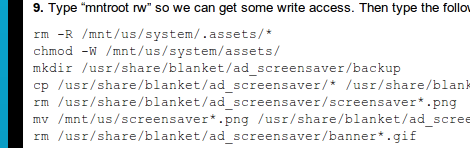
[Pat Hartl] knows his way around a *nix shell, so once he gained SSH access to the device he started a search for the ad images that make up the special offers feature. He found them in a few different places, making backups of the files in an alternate location, then removing them with some simple commands. He even rolled the process into a one-click installer like the Jailbreak package. It makes us wonder if Amazon has a way to tell if your device is not longer pulling down content for these offers?

At risk of sounding preachy, Amazon does offer this hardware without ads for a one-time fee. Circumventing the unobtrusive ads may lead to higher hardware prices in the future, and [Pat] mentions that. He pulled off this hack to show the holes in Amazon’s security, and hitting them in the pocketbook is a powerful way to do it.

Hackaday itself is ad-supported. We run advertisements that do not use sound, popups, or flashing video effects. Remember to turn off your ad-block for our site in order to show your support. Thanks!

Automatic Flashlight Tag Damage Sensor

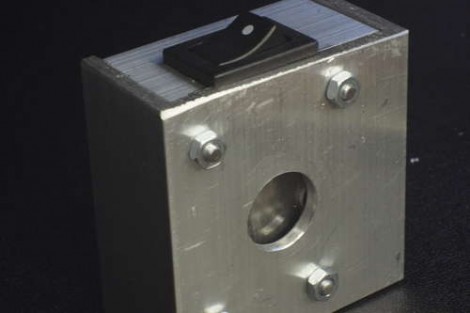
You’re out at night and playing a boisterous game of flashlight tag. But how can you tell if you’ve been mortally wounded by your opponents light beam? [Kenyer] solved this problem by building a flashlight tag damage sensor which is worn by each participant. It adds a bit of the high-tech equipment used with laser tag while keeping a low-tech price tag.

The sensor relies on a light dependent resistor to register hits when a flashlight beam passes through the round window. It will only register one hit in a three-second time period. At the end of the game, the total number of hits recorded can be flashed back using an on-board LED to see who is the victor. You can see a demo of this functionality in the clip after the break.

[Kenyer] started with a breadboard prototype using an Arduino as the driver. Obviously the cost of an Arduino for every player is a bit ridiculous. He scaled down the project, running the Arduino code on an ATtiny microcontroller. Continue reading “Automatic Flashlight Tag Damage Sensor”