OpenWRT On A Seagate FreeAgent Dockstar

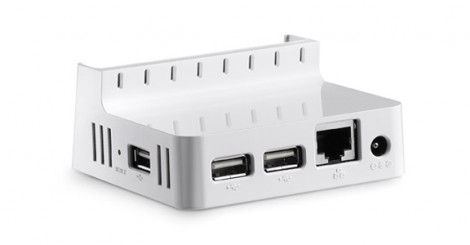
The Seagate FreeAgent Dockstar aims to make all of your stuff available online. It serves that purpose but sometimes you just want more options for controlling your hardware and running some scripts. [Eric Cooper] put together a guide for installing OpenWRT on the Dockstar by building your own kernel and loading it onto the internal storage. Once you have a kernel that will play nicely with the hardware, you can install it by tunneling in through SSH; the same method you would use if you wanted to run Linux on this hardware. If you have problems along the way, [Eric’s] also included a guide for cracking the Dockstar open and connecting a serial cable.
SEGA Genesis Cloned With An FPGA

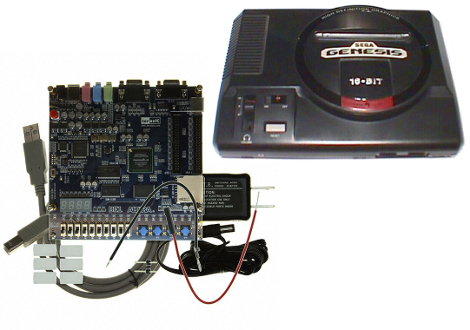
[Greg] managed to clone a SEGA Genesis using a field programmable gate array. He used a Terasic/Altera DE1 board, which will set you back about $160, during development. The onboard push buttons are currently used as the controller with VGA for the display. Who knows, maybe there’s enough programming space left to drive a PSP screen and turn this into a handheld?

You can see some gameplay footage after the break. If SEGA was never your thing don’t forget that there is an NES FPGA hack out there too.

Continue reading “SEGA Genesis Cloned With An FPGA”

Neon Binary Clock

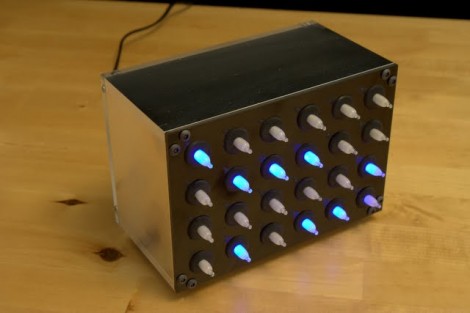
[Josiah] said ‘no’ to LEDs and instead used blue-phosphor neon lamps to build this binary clock. The ATmega328 inside uses three 8-bit shift registers to control the display. Each lamp needs a high-voltage NPN transistor in order to switch on the 150V necessary for proper illumination. A simple circuit was used to pull a 60 Hz clock signal out of the incoming 16VAC power. Unfortunately it was a bit too simple and didn’t provide a clean signal. [Josiah’s] workaround is something of a debounce subroutine in the firmware to prevent multiple interrupts on the falling edge.

The last project we saw from [Josiah] was the Coachella Lamp. That was a show piece of antiquated technology and this is another show piece with a minimalistic style. We also liked seeing the protoboard work on the inside. That’s a pretty jam-packed circuit board and keeping everything in the right place while you build up each trace with blobs of solder is no small feat.

Decapping Integrated Circuits With Sap

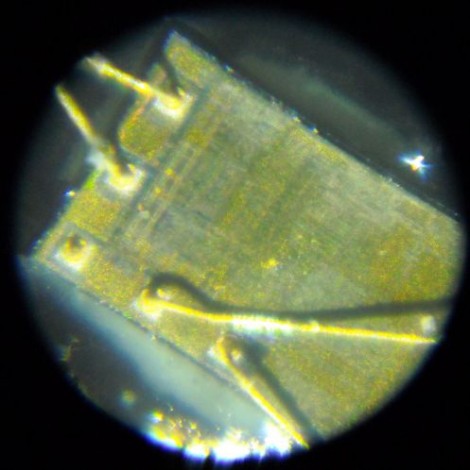
[James] is interested in reverse engineering some integrated circuits. One of the biggest hurdles in this process has always been just getting to the guts of the chip. He used acetone to dissolve the plastic case but had trouble getting through the epoxy blob. Commonly, the epoxy is soaked in nitric acid for a few minutes but [James] didn’t have access to that chemical. Instead he popped into the local music store and picked up some rosin (used to make violin bows sticky enough to grab the strings of the instrument). After boiling down the rock-hard rosin and the chip for 20 minutes, he got a clean and relatively undamaged semiconductor that he can easily peer into.

CNC Build Ditches Rods For Hardboard

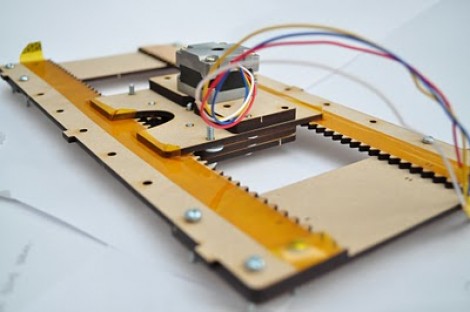
This is a redesigned x-axis for [Peter Jansen’s] selective laser sintering rig. We looked in on his SLS project last month and since then he’s been refining the design. The new component uses a rack and pinion system, relying on some Kapton tape to reduce friction for a nice smooth slide. One stepper motor powers the laser-cut gear box with four gears interfacing the sled to the frame for stable and accurate motion. Now he’s just got to work out the math/physics that go into finding the optimal gear ratios as this prototype is just a rough guess. If you’ve got the skills to work it out please lend [Peter] a hand as we’re quite excited with where this is going.

That Light Switch Is Disgusting!

[Katrin Baumgarten] has fourteen switches that are made to gross you out. From a button that retreats into its hole as your finger approaches, to a mysterious goo-oozing faceplate, to a hairy housing that gets aroused as your try to flip it on, the intrigue is enough to get you to try out the next creepy node in the network. There’s a clip of several different switches after the break and if that’s not enough she’s got more on her Vimeo channel.

Continue reading “That Light Switch Is Disgusting!”

Programmable Game Boy Cartridge Walk Through

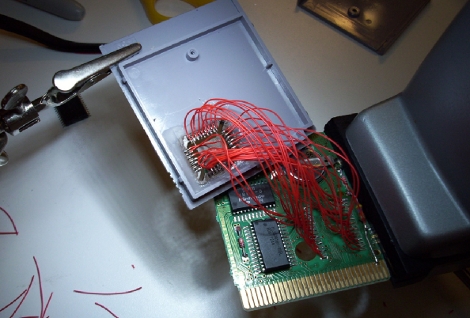
We looked at [Gerry’s] PLCC based programmable Game Boy cartridge back in May and mentioned that he was working on a how-to video. He did quite a bit more than that. He’s made a PDF version of the instructions but went into deep detail with a collection of four videos on his YouTube channel. We’ve embedded all four after the break. They include an introduction and background about the cartridges, desoldering the ROM chip, preparing sockets and wire, and making the solder connections. Whether you’re interested in this particular hack or not, seeing [Gerry’s] soldering practices make the videos worth watching.

Continue reading “Programmable Game Boy Cartridge Walk Through”