Hacking Fake Food

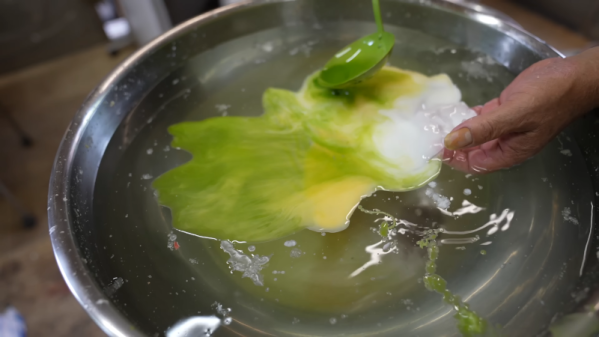
Ever seen a restaurant where they display fake models of the food on the menu? We never thought much about how shokuhin sampuru — the Japanese name — were made until we watched [Process X]’s video showing a 71-year-old artist creating food models. We aren’t sure what we — or you — would do with this information, but it is a striking process, and there must be something you could do with it. We suggest turning on the English captions, but you’d probably enjoy watching the unusual craftsmanship even with no words.

In years past, the food models were primarily made from wax, but since the 1980s, it is more common to use polyvinyl chloride, silicone, and resin. While some factories produce items, sometimes with a mold, single craftsmen like the one in the video still make up the largest part of the market.

We aren’t sure, but we think the material in the video is wax. We couldn’t help but think that some of this could have been 3D printed, but even with the finest resins and resolution, it probably wouldn’t be quite as artistic. We think wax is mainly underutilized in today’s tech. But there are some places it still shows up.

Continue reading “Hacking Fake Food” →

Linux Containers The Hard Way

If you want to make containers under Linux, plenty of high-level options exist. [Lucavallin] wanted to learn more about how containers really work, so he decided to tackle the problem using the low-level kernel functions, and he shared the code with us on GitHub.

Containers are more isolated than processes but not quite full virtual machines. While a virtual machine creates a fake computer, a container is more like a fake operating system. Applications can run with their own idea of libraries, devices, and other resources, but it doesn’t try to abstract the underlying hardware.

Continue reading “Linux Containers The Hard Way” →

Noisy Keyboards Sink Ships

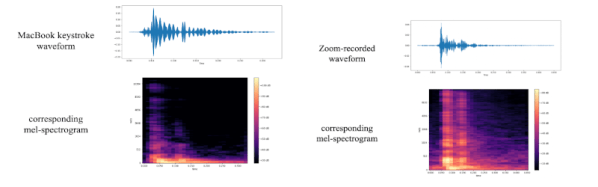
Many of us like a keyboard with a positive click noise when we type. You might want to rethink that, though, in light of a new paper from the UK that shows how researchers trained an AI to decode keystrokes from noise on conference calls.

The researchers point out that people don’t expect sound-based exploits. The paper reads, “For example, when typing a password, people will regularly hide their screen but will do little to obfuscate their keyboard’s sound.”

The technique uses the same kind of attention network that makes models like ChatGPT so powerful. It seems to work well, as the paper claims a 97% peak accuracy over both a telephone or Zoom. In addition, where the model was wrong, it tended to be close, identifying an adjacent keystroke instead of the correct one. This would be easy to correct for in software, or even in your brain as infrequent as it is. If you see the sentence “Paris im the s[ring,” you can probably figure out what was really typed.

We’ve seen this done before, but this technique raises the bar. As sophisticated as keyboard listening was back in the 1970s, you can only imagine what the three-letter agencies can do these days.

In the meantime, the mitigation for this particular threat seems obvious — just start screaming whenever you type in your password.

Prepare To Brake: Quick Intro To Metal Bending

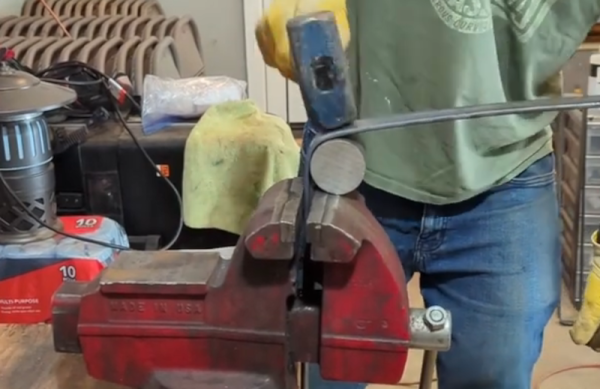
If you want to bend metal to make shapes, you might use equipment like a brake. But if you don’t have one, no worries. You can still do a lot with common tools like a vise and torches. [Bwrussell] shows you how. He welds together a die to use as a bending jig and makes a set of table legs.

You might think that putting metal in a vise and bending it isn’t exactly brain surgery. It isn’t, but there is more to it than that. Starting with a bending plan and the creation of the jigs, clamping and bending is only part of it. You can see a little bit of the action in the video below.

Speaking of planning, the design was in Fusion 360’s sheet metal workflow. To facilitate the bends, the build uses two torches. A MAPP torch gets very hot, and a propane torch makes sure that a larger area stays hot. There are quite a few tips you can pick up in this post, even if you aren’t making table legs.

Fusion 360 does a lot of the design work, but if you want a quick lesson on what happens when you bend metal, we can help. Want to make your own metal brake?

Continue reading “Prepare To Brake: Quick Intro To Metal Bending” →

3D Print Your Best Friend A Wheelchair

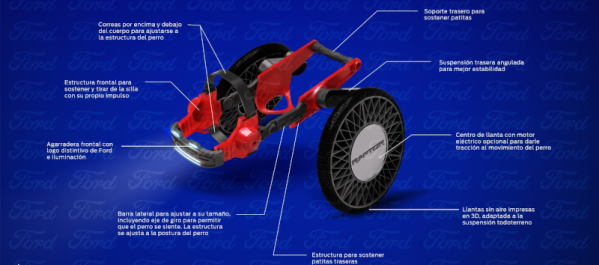
We all know that 3D printing has been a boon for people with different life challenges. But the Ford Motor Company in Mexico wants to help dogs that need mobility assistance. They’ve designed and released P-Raptor (we presume the P is for perro), a wheelchair for pooches with rear leg issues. The web page is in Spanish, and translating it didn’t seem to work for some reason, but if you have any Spanish, you can probably work it out or cut and paste just the text into your favorite translator.

The design is modular to adapt to different size dogs and different problems. It contains an electric motor in the tires. The tires themselves are oversized to help your friend cover rugged terrain. Dogs want to look cool, too, so a grill with lighting is included.

Continue reading “3D Print Your Best Friend A Wheelchair” →

If The Shoe Doesn’t Fit, Print It!

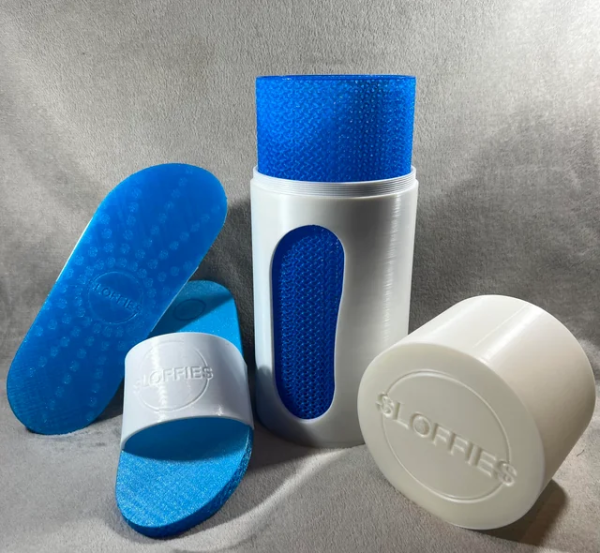
Usually when we talk about flip-flops here we mean the circuit. But in this case, it is [Jeandre Groenewald]’s 3D printed shoe design called Sloffies. The shoes use TPU, and the matching package prints in PLA. Of course, you have to pick the size to fit your feet, and there’s an OpenSCAD file that allows you to customize the strap.

Unlike some 3D apparel we’ve seen, these look like a commercial product. Of course, the cool product packaging doesn’t hurt any. Are they comfortable? We don’t know, but our guess is it is no worse than other similar shoes that are made of one material.

You need to get the infill settings right, so there is a small test piece you can use for tuning. We aren’t sure what you are optimizing for, though, but at least you can see how the material will flex before you print an entire shoe.

We’ve seen commercial shoe printing, but not the entire shoe and packaging. If you are interested in creating your own designs, you don’t have to start from scratch.

Metal Forming With A 3D Printer

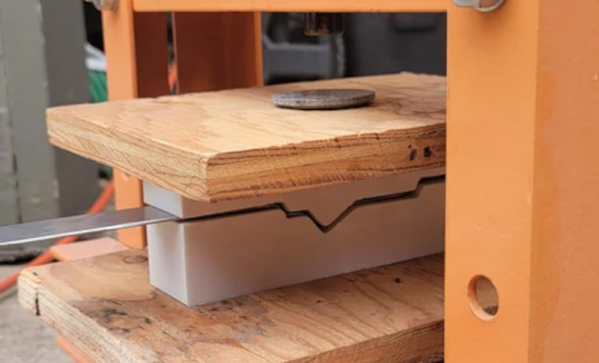
How do you use a 3D printer to bend metal? One way would be to take it to a machine shop and offer to trade the owner your printer for some time in their shop. A smarter way is to do like [Jaba 3D], and print dies using the printer. You can then use those dies in a press to make the shapes you want.

In the case of [Jaba], the Harbor Freight press uses a hydraulic cylinder to develop about 6 tons of pressure. We don’t think Harbor Freight carries this particular press, but for between $150 and $250, you can get a 12-20 ton press, and, of course, there are other suppliers, as well.

The target object, in this case, was an automotive bracket. The process of grabbing an image, converting it to an SVG, and then creating a 3D part has many uses. Apparently, PLA is sufficient for this purpose, although the print uses ten top and bottom layers along with 80% infill. That does make the prints take a long time.

As you might expect, the dies don’t last very long. In this case, they needed two shots, and they got them, but PLA is probably not the right material if you wanted to go for mass production.

Metal forming does occur at large scales, too. If you want to make your own press-forming tools, we have advice for you.