Arduino + Ham Radio = Texting

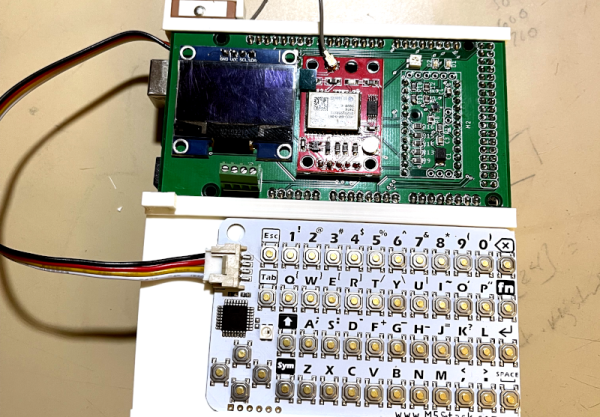
Over on the Spectrum web site, [Dale] — a relatively new ham radio operator — talks about his system for sending text messaging over VHF radios called HamMessenger. Of course, hams send messages all the time using a variety of protocols, but [Dale] wanted a self-contained and portable unit with a keyboard, screen, and a GPS receiver. So he built one. You can find his work on GitHub.

At the heart of the project is MicroAPRS, an Arduino firmware for packet radio. Instead of using a bigger computer, he decided to dedicate another Arduino to do everything but the modem function.

Continue reading “Arduino + Ham Radio = Texting”

There Were Almost Jet Packs On The Moon

Here it is almost 2022 and we still don’t have our jet packs. But don’t feel bad. NASA astronauts wanted a lunar jetpack, but they didn’t get one either. [Amy] at The Vintage Space has an interesting video about what almost was, and you can see it below.

Of course, a jet pack on the moon would be easier than an Earthbound one. The goal was to allow the crew to range further from their lander since they couldn’t carry very much and the lander didn’t have a lot of consumables, either. In addition, if you lost sight of the lander, getting back could be a problem since navigating on the moon was an unknown skill.

In 1969 awarded exploratory contracts for lunar personal flying vehicles including one to Bell who had their Earth-bound jet pack that shows up every so often for example in Bond movies.

Continue reading “There Were Almost Jet Packs On The Moon”

Hacking Multiplication With Karatsuba’s Algorithm

People tend to obsess over making computer software faster. You can, of course, just crank up the clock speed and add more processors, but often the most powerful way to make something faster is to find a better way to do it. Sometimes those methods are very different from how a human being would do the same task, but it suits the computer’s capabilities. [Nemean] has a video explaining a better multiplication algorithm known as Karatsuba’s algorithm and it is actually quite clever. You can see the video below.

To help you understand the algorithm, the video shows a simple two-digit by two-digit multiplication. You can see that the first and last digits are essentially the result of one multiplication. It is all the intermediate digits that add together. The only thing that might change the first digit is a carry.

Continue reading “Hacking Multiplication With Karatsuba’s Algorithm”

Binaural Hearing Modeled With An Arduino

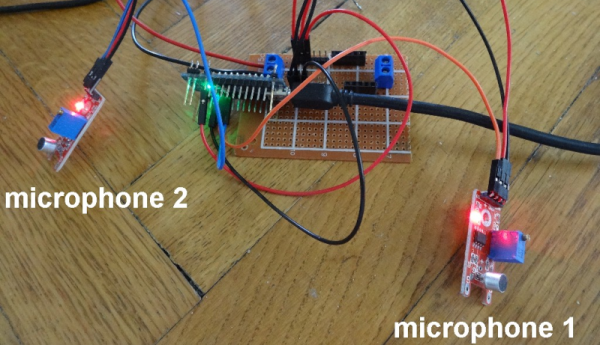
You don’t have two ears by accident. [Stoppi] has a great post about this, along with a video you can see below. (The text is in German, but that’s what translation is for.) The point to having two ears is that you receive audio information from slightly different angles and distances in each ear and your amazing brain can deduce a lot of spatial information from that data.

For the Arduino demonstration, cheap microphone boards take the place of your ears. A servo motor points to the direction of sound. This would be a good gimmick for a Halloween prop or a noise-sensitive security camera.

Continue reading “Binaural Hearing Modeled With An Arduino”

Tech In Plain Sight: Eyeglasses

Glasses wearers, try a little experiment. Take off your glasses and look at this page or, at least, at something you can’t see well without your glasses. Now imagine if you lived in a time where there was nothing to be done about your vision. If you wear contacts or you have good vision — perhaps you had surgery — then congratulations. But for most of us, vision changes with age are a fact of life. Even many young people need glasses or some other intervention to get good eyesight. At first glance, you might think eyeglasses are an obvious invention, but it turns out we didn’t get real glasses for quite some time and modern glasses are truly a piece of high tech that hides — quite literally — right in front of your face.

Continue reading “Tech In Plain Sight: Eyeglasses”

Pluto Spectrum Analyzer Uses Command Line

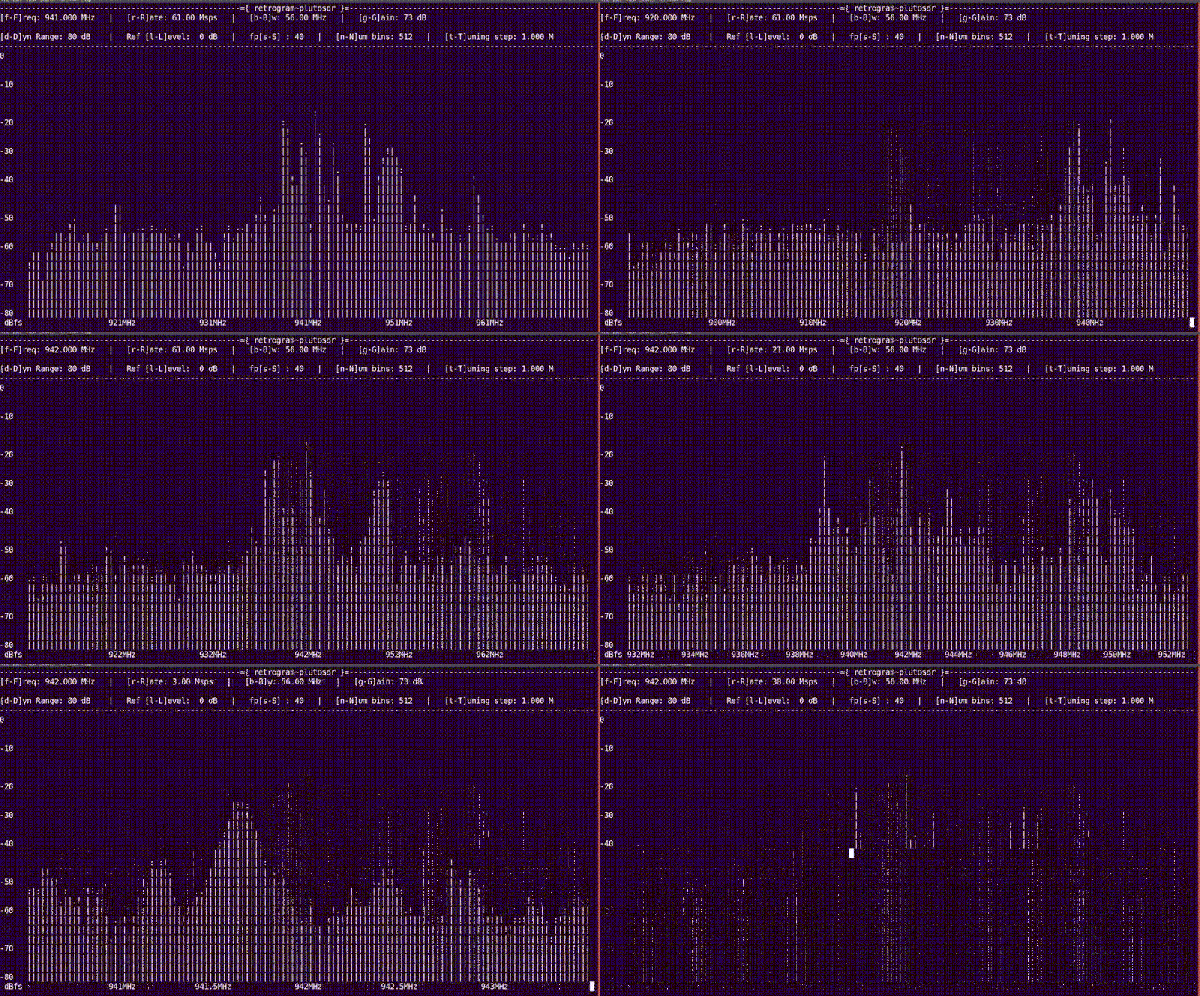
If you don’t care about shortwave frequencies, the PlutoSDR is a great deal. The device is supposed to be an evaluation board for Analog Device’s radio chips, but it does great as a software-defined radio that can receive and transmit and it even runs Linux internally. [SignalsEverywhere] shows how to use it as a spectrum analyzer that works from the command line in the video you can see below.

The software used is Retrogram. Despite the ASCII graphics, the program has many features. You can use simple keystrokes to change the center frequency, the sampling rate, the bandwidth, and more. You can run the software on a Linux host or compile a binary on the box or cross-compile using tools on the Raspberry Pi.

Continue reading “Pluto Spectrum Analyzer Uses Command Line”

Vacuum “Tube” Might Replace GPS One Day

GPS and similar satellite navigation systems changed everything. The modern generation is far less likely to have had to fold a service station map or ask someone for directions on the side of the road. But GPS isn’t perfect. You need to see the sky, for one thing. For another, an adversary could jam or take down your satellites. Even a natural disaster could temporarily or permanently knock out your access to the satellites.

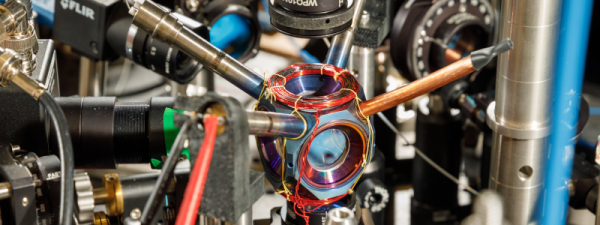
The people at Sandia National Labs worry about things like that and they want to replace GPS with quantum accelerometers and gyroscopes. The problem: those things take expensive and bulky vacuum systems and lasers. Sandia, however, has had a sealed device about the size of an avocado that weighs about a pound that could possibly do the job. Their goal is to see it work without maintenance for four more years.

This is no ordinary vacuum tube, though. It is made of titanium and sapphire. By itself, the device doesn’t do much of anything, but it shows that rubidium can be contained in a sealed chamber with no additional pumping. These quantum sensors aren’t anything new, but a tiny self-contained cold-atom sensor can pave the way for putting these sensors in vehicles like ships, aircraft, and ground vehicles. Submarines, which don’t usually have a clear shot at the sky without floating an antenna, are also candidates for the new technology.

A navigation system based on this technology uses a laser to cool the subject atoms and then measures their movements. This allows very precise determination of acceleration and rotation which allows for a more precise inertial navigation system.

If you need a refresher on how GPS works, we can explain it. If you think the idea of a module containing rubidium is far-fetched, don’t forget you can already get them for precision clock work.