AVR Bare Metal With Lisp

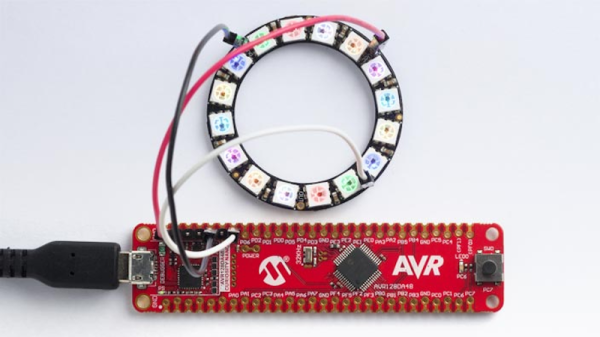
There are two kinds of programmers: those who don’t use Lisp, and those who need new parenthesis keycaps every six months. Lisp is one of those languages you either really love or really hate. If you love it, you may have checked out ulisp, which runs on Arduino boards of the AVR and ARM variety, as well as ESP chips, RISC-V, and others. A recent update allows the language to insert assembler into AVR programs.

We probably don’t need to convince anyone reading Hackaday why adding assembler is a good thing. It seems to integrate well with the environment, too, so you can write assembler macros in Lisp, which opens up many possibilities.

Continue reading “AVR Bare Metal With Lisp”

Linux Fu: Mixing Bash And Python

Although bash scripts are regularly maligned, they do have a certain simplicity and ease of creation that makes them hard to resist. But sometimes you really need to do some heavy lifting in another language. I’ll talk about Python, but actually, you can use many different languages with this technique, although you might need a little adaptation, depending on your language of choice.

Of course, you don’t have to do anything special to call another program from a bash script. After all, that’s what it’s mainly used for: calling other programs. However, it isn’t very handy to have your script spread out over multiple files. They can get out of sync and if you want to send it to someone or another machine, you have to remember what to get. It is nicer to have everything in one file.

Continue reading “Linux Fu: Mixing Bash And Python”

Silicon Carbide Chips Can Go To Hell

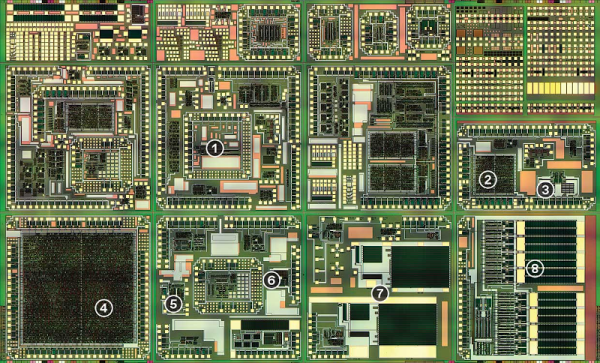
IEEE Spectrum had an interesting read about circuits using silicon carbide as a substrate. [Alan Mantooth] and colleagues say that circuits based on this or some other rugged technology will be necessary for missions to Venus, which they liken to hell. That might seem like hyperbole, but at about 460C with an atmosphere full of sulphuric acid, maybe it isn’t such a stretch. When the Soviets sent Venera 13 to Venus, it was able to send data for just over two hours before it was gone. You’d hope 40 years later we could do better.

Silicon carbide is a semiconductor made with an even mix of silicon and carbon. The resulting components can operate for at least a year at 500C. This high-temperature operation has earned them a place in solar energy and other demanding applications.  [Alan], with the University of Arkansas along with colleagues from the KTH Royal Insitute of Technology in Stockholm are building test circuits aimed at developing high-temperature radios for use in environments like the one found on Venus.

Continue reading “Silicon Carbide Chips Can Go To Hell”

A $50 CNC

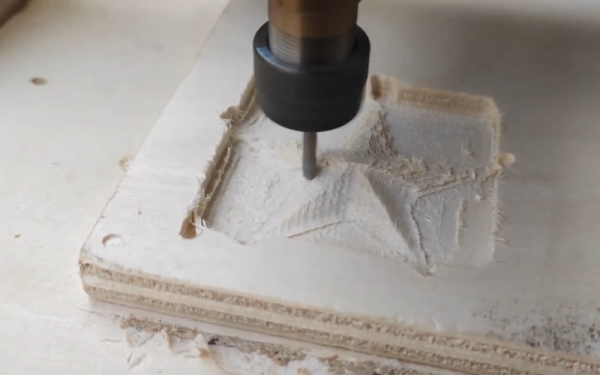
In theory, there’s isn’t much to building a CNC machine. Hook a bit to a motor and move the motor around with some lead screws and stepper motors. Easy. But, of course, the devil is in the details. [DAZ] made a nice-looking and inexpensive rig that probably isn’t the most precise CNC in the world, but it looks like it does a good enough job and he claims he spent about $50 on it. The video below shows some of the work it has done, and it doesn’t look bad.

This isn’t a rainy afternoon project. You’ll need to cut some wood and 3D print many parts. The drives use M8 threaded rod. Electronics is just an Arduino running standard software.

The steppers looked pretty light duty, and we wondered if it would have been worthwhile to trade them out for beefier ones instead of modifying the ones used for bipolar operation. Still, the results did look good for $50. The 775 spindle is another place you could probably spend a little more and get something better. Non-printed linear rails, and a better screw? The point is that you’ve got a basis to build from.

Continue reading “A $50 CNC”

Measuring An Atom

Do you need a well-equipped lab to measure the size of an atom (German, machine translation)? According to [stoppi], no. You need sunflower oil, some bear moss spores, and a bit of gasoline. You’ll also need some common things like a syringe, a baking sheet, and a jar. You can see the whole process in the video below. The measurement isn’t really for a specific atom, but it is an average for a lipid molecule, which is still impressive.

You essentially measure the diameter of an oil drop spread over water. Since the oil is mostly oleic acid, the height of the layer is known as 167 atoms. After that, it is some simple measurements and math to get the height and find the average atom height.

Continue reading “Measuring An Atom”

Helicopter Is Full Of Compressed Air

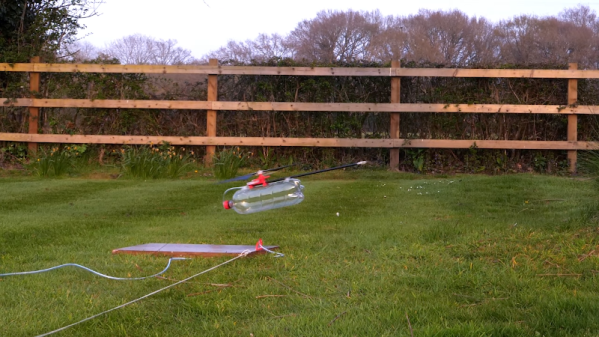
[Tom] likes to build little helicopters and decided to build one that runs on compressed air. (Video, embedded below.) Turns out it was a little harder than he thought. Originally, he was trying for a compressed air quadcopter. He’d already worked with an air turbine, but putting on a vehicle that can lift itself into the air turns out to have a lot of hidden gotchas.

[Tom] went through a lot of design considerations to arrive at the helicopter design. He considered counter-rotating props, but there were a host of problems involved. He finally settled on a single prob with a tail rotor that resides on the far end of a long boom to allow the resulting lever arm to reduce the work required of the tail rotor.

Continue reading “Helicopter Is Full Of Compressed Air”

Texture Adds Stiffness To 3D Parts

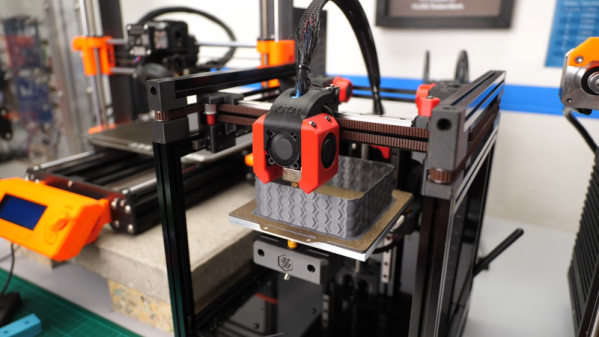
[Stefan] is always looking for a way to make stronger and better 3D prints. His latest experiments involve using a texture on thin plastic parts to increase stiffness. You can see the texture pattern in the banner above and the video below.

While a lot of people looked at IdeaMaker’s new texturing feature as something for cosmetics, [Stefan] thought of sheet metal products that often use bead patterns to increase stiffness and strength. Can patterned plastic be stiffer than ordinary printed plastic? Turns out, the answer is yes.

Continue reading “Texture Adds Stiffness To 3D Parts”