Split Keyboard Uses No PCB

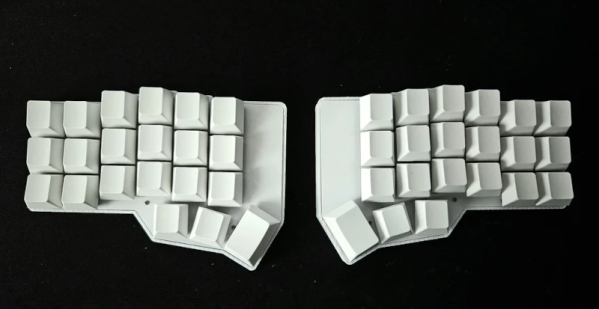
When [daniely101] wanted a split keyboard, he decided to build his own. It wound up costing $25 to create a wireless board with no custom PCB required. Each half has its own microcontroller, and the whole thing connects via Bluetooth. While we don’t mind making a PCB, we can appreciate that you could change your mind easily with this wiring scheme.

The 3D printed case holds the keys, and then it is just a matter of carefully soldering the keys to the microcontrollers. Of course, each side also has to have its own battery. The ZMK firmware is split in half, one part for each side of the keyboard. The nRF52840 CPUs have plenty of wireless connectivity. The keys are set in rows and columns, so the amount of soldering back to the controller is manageable.

While we applaud the wireless design, it does seem odd that you have to charge both halves and turn them on and off separately. But that’s the nice thing about a design like this — you could modify the design to not have a split. Or, you could allow one flexible wire pair to run across for power. Of course, you could modify the layout, including adding or deleting keys.

You might consider adding a pointing device. At least you don’t have to pull out a saw.
Continue reading “Split Keyboard Uses No PCB”

Just For Laughs: Charlie Douglass And The Laugh Track

I ran into an old episode of Hogan’s Heroes the other day that stuck me as odd. It didn’t have a laugh track. Ironically, the show was one where two pilots were shown, one with and one without a laugh track. The resulting data ensured future shows would have fake laughter. This wasn’t the pilot, though, so I think it was just an error on the part of the streaming service.

However, it was very odd. Many of the jokes didn’t come off as funny without the laugh track. Many of them came off as cruel. That got me to thinking about how they had to put laughter in these shows to begin with. I had my suspicions, but was I way off!

Well, to be honest, my suspicions were well-founded if you go back far enough. Bing Crosby was tired of running two live broadcasts, one for each coast, so he invested in tape recording, using German recorders Jack Mullin had brought back after World War II. Apparently, one week, Crosby’s guest was a comic named Bob Burns. He told some off-color stories, and the audience was howling. Of course, none of that would make it on the air in those days. But they saved the recording.

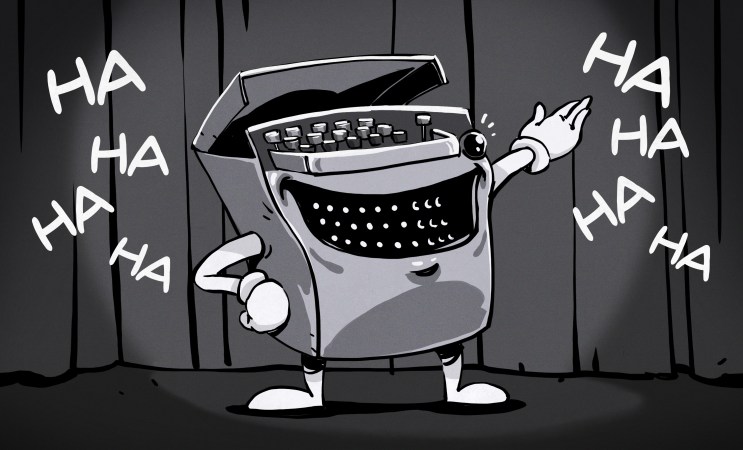
A few weeks later, either a bit of the show wasn’t as funny or the audience was in a bad mood. So they spliced in some of the laughs from the Burns performance. You could guess that would happen, and that’s the apparent birth of the laugh track. But that method didn’t last long before someone — Charley Douglass — came up with something better. Continue reading “Just For Laughs: Charlie Douglass And The Laugh Track”

History Of Forgotten Moon Bases

If you were alive when 2001: A Space Odyssey was in theaters, you might have thought it didn’t really go far enough. After all, in 1958, the US launched its first satellite. The first US astronaut went up in 1961. Eight years later, Armstrong put a boot on the moon’s surface. That was a lot of progress for 11 years. The movie came out in 1968, so what would happen in 33 years? Turns out, not as much as you would have guessed back then. [The History Guy] takes us through a trip of what could have been if progress had marched on after those first few moon landings. You can watch the video below.

The story picks up way before NASA. Each of the US military branches felt like it should take the lead on space technology. Sputnik changed everything and spawned both ARPA and NASA. The Air Force, though, had an entire space program in development, and many of the astronauts for that program became NASA astronauts.

Continue reading “History Of Forgotten Moon Bases”

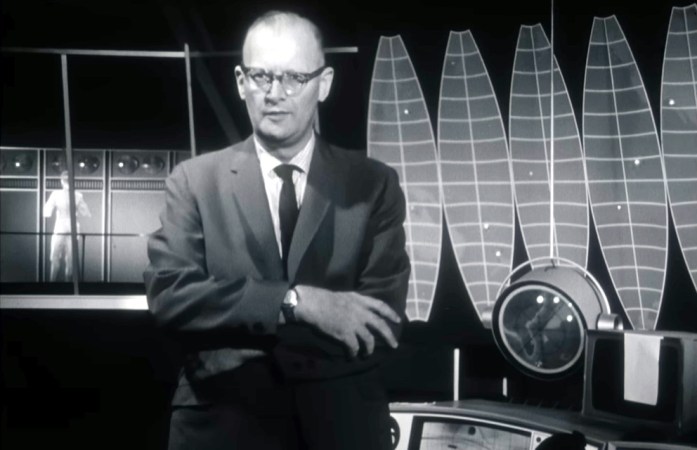
Retrotechtacular: Arthur C. Clarke Predicts The Future

Predicting the future is a dangerous occupation. Few people can claim as much success as Arthur C. Clarke, the famous science and science fiction author. Thanks to the BBC and the Australian Broadcasting Company, we can see what Sir Arthur thought about the future in 1964 and then ten years later in 1974.

Perhaps his best-known prediction was that of communication satellites, but he called quite a few other things, too. Like all prognosticators, he didn’t bat a thousand, and he missed a wrinkle or two, but overall, he has a very impressive track record.

Continue reading “Retrotechtacular: Arthur C. Clarke Predicts The Future”

Dummy Plug Gets Smarter With Raspberry Pi

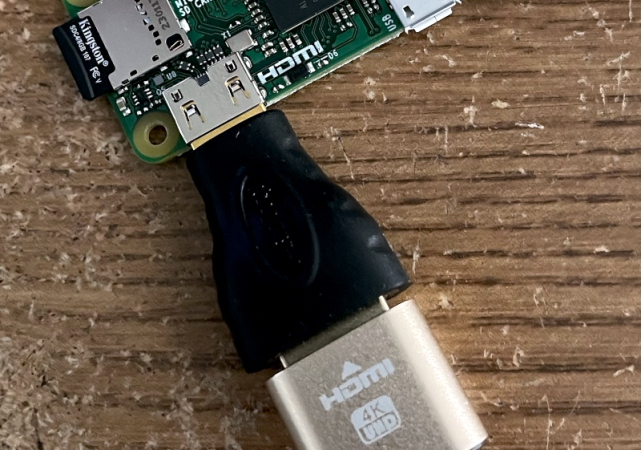
[Doug Brown] had a problem. He uses a dummy HDMI plug to fool a computer into thinking it has a monitor for when you want to run the computer headless. The dummy plug is a cheap device that fools the computer into thinking it has a monitor and, as such, has to send the Extended Display ID (EDID) to the computer. However, that means the plug pretends to be some kind of monitor. But what if you want it to pretend to be a different monitor?

The EDID is sent via I2C and, as you might expect, you can use the bus to reprogram the EEPROM on the dummy plug. [Doug] points out that you can easily get into trouble if you do this with, for example, a real monitor or if you pick the wrong I2C bus. So be careful.

Continue reading “Dummy Plug Gets Smarter With Raspberry Pi”

Laptop Brick Is Brought Back From The Brink

We’ve all been there. [Kasyan TV] had a universal adapter for a used laptop, and though it worked for a long time, it finally failed. Can it be fixed? Of course, it can, but it is up to you if it is worth it or not. You can find [Kasyan’s] teardown and repair in the video below.

Inside the unit, there were a surprising number of components crammed into a small area. The brick also had power factor correction. The first step, of course, was to map out the actual circuit topology.

Continue reading “Laptop Brick Is Brought Back From The Brink”

Cassette Data Storage From The 1970s

When home computers first appeared, disk drives were an expensive rarity. Consumers weren’t likely to be interested in punch cards or paper tape, but most people did have consumer-grade audio cassette recorders. There were a few attempts at storing data on tapes, which, in theory, is simple enough. But, practically, cheap audio recorders are far from perfect, which can complicate the situation.

A conference in Kansas City settled on a standard design, and the “Kansas City standard” tape format appeared. In a recent video, [Igor Brichkov] attempts to work with the format using 555s and op amps — the same way computers back in the day might have done it. Check out the video below to learn more.

These days, it would be dead simple to digitize audio and process it to recover data. The 1970s were a different time. The KC standard used frequency shift method with 2.4 kHz tones standing in for ones, and 1.2 kHz tones were zeros. The bit length was equal (at 300 baud), so a one had 8 cycles and a zero had 4 cycles. There were other mundane details like a start bit, a minimum stop bit, and the fact that the least significant bit was first.

The real world makes these things iffy. Stretched tape, varying motor speeds, and tape dropouts can all change things. The format makes it possible to detect the tones and then feed the output to a UART that you might use for a serial port.

There were many schemes. The one in the video uses an op-amp to square up the signal to a digital output. The digital pulses feed to a pair of 555s made to re-trigger during fast input trains but not during slower input trains. If that doesn’t make sense, watch the video!

The KC standard shows up all over the place. We’ve even used it to hide secret messages in our podcast.

Continue reading “Cassette Data Storage From The 1970s”