Custom Alexa Skill In A Few Minutes Using Glitch

As hackers, we like to think of ourselves as a logical bunch. But the truth is, we are as subject to fads as the general public. There was a time when the cool projects swapped green LEDs out for blue ones or added WiFi connectivity where nobody else had it. Now all the rage is to connect your project to a personal assistant. The problem is, this requires software. Software that lives on a publicly accessible network somewhere, and who wants to deal with that when you’re just playing with custom Alexa skills for the first time?

If you have a computer that faces the Internet, that’s fine. If you don’t, you can borrow one of Amazon’s, but then you need to understand their infrastructure which is a job all by itself. However, there is a very simple way to jump start an Alexa skill. I got one up and running in virtually no time using a website called Glitch. Glitch is a little bit of everything. It is a web hosting service, a programming IDE for Node.js, a code repository, and a few other things. The site is from the company that brought us Trello and helped to start Stack Overflow.

Glitch isn’t about making Alexa skills. It is about creating web applications and services easily. However, that’s about 90% of the work involved in making an Alexa skill. You’ll need an account on Glitch and an Amazon developer’s account. Both are free, at least for what we want to accomplish. Glitch has some templates for Google Home, as well. I have both but decided to focus on Alexa, for no particular reason.

Continue reading “Custom Alexa Skill In A Few Minutes Using Glitch”

Iro3d 3D Prints In Powdered Metal

Printing with plastic and even resin is getting fairly common. Metal printing, though, is still in the realm of the exotic. A company called Iro3D is aiming to change that with a steel printer that you can buy in beta for about $5000. That seems steep when you can get plastic printers for under $200, but it is sheer bargain basement for something that can print in real metal.

Of course, there’s a catch. The printer doesn’t create a solid metal object right away. What it does is prepares a crucible using sand and metal powder. You then place the crucible in a kiln and what comes out is the final product. You can see a video review of their prototype machine, below from [3D Printing Nerd]. The company’s promotional video that shows a part coming out of the kiln is also below.

Continue reading “Iro3d 3D Prints In Powdered Metal”

3D Print A Home Automation Switch

If you are the kind of person who won’t use cheap Sonoff modules to control AC powered devices, we don’t blame you and you should probably stop reading now. However, if you don’t mind a little exposed AC wiring and you have a 3D printer, you might be interested in the second generation of [530 Project’s] in-wall light switch.

The 3D printed switch fits a standard box and uses the guts of a Sonoff controller. These work with all the popular ecosystems such as Alexa and Google Home. And they are cheap. Like, really cheap. If you already have a 3D printer, even counting the cost of the filament these are going to be a small fraction of the cost of a commercial switch. You can see a video about the device, below.

Continue reading “3D Print A Home Automation Switch”

Automating Your Door For $20

We love the doors on Star Trek’s Enterprise. We should have known they were human-operated though because they were too smart. They would wait for people, or fail to open when someone was thrown against them during a fight. [SieuweE] has a much more practical automatic door that he calls ArduDoor.

You might guess from the name it uses an Arduino. It also uses a windshield wiper motor which is perfect since it is high-torque and low speed. You might even be able to pick one up for little or nothing if you frequent the junkyards.

Continue reading “Automating Your Door For $20”

3D Printed Hovercraft Takes Flight

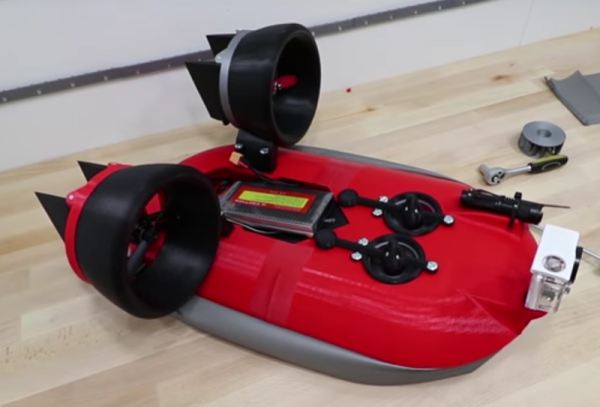
Last time we checked in on [Ivan Miranda] he was putting a drill press on the Internet. Lately, he has been trying to 3D print a hovercraft with some success. He made four attempts before arriving at one that works fairly well, as you can see in the video below. We will warn you, though, the screwdriver cam is a bit disconcerting and we suggest waiting at least an hour after you eat to watch.

The starboard impeller broke midway through the test, although with a single impeller it was working pretty well. [Ivan] thinks he can print the impeller frames more strongly to prevent future failures. The design is in Fusion360 and there is enough detail that you can probably duplicate his work if you have the urge. There’s a mount for a headlight and an action camera on the bow.

Continue reading “3D Printed Hovercraft Takes Flight”

Meltdown Code Proves Concept

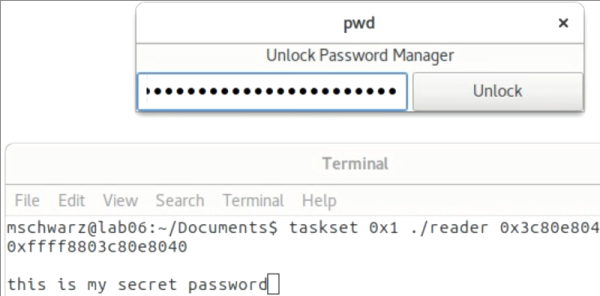
If you’ve read about Meltdown, you might have thought, “how likely is that to actually happen?” You can more easily judge for yourself by looking at the code available on GitHub. The Linux software is just proof of concept, but it both shows what could happen and — in a way — illustrates some of the difficulties in making this work. There are also two videos in the repository that show spying on password input and dumping physical memory.

The interesting thing is that there are a lot of things that will stop the demos from working. For example a slow CPU, a CPU without out-of-order execution, or an imprecise high-resolution timer. This is apparently especially problematic in virtual machines.

Continue reading “Meltdown Code Proves Concept”

Mbed Labs Chock Full Of Arm Goodies

One of the things we like about ARM processors is that there are a variety of options for library support. You can write your own code at the bare metal, of course, but you can also use many different abstraction libraries to make things easier. At the other end of the spectrum, there is Mbed, similar to the sort of libraries that Arduino supplies. Easy to use, although not always the best possible performance. Mbed now has an Mbed Labs site with a lot of extra goodies that go with the Mbed ecosystem, and it has quite a few interesting things.

You’ve always been able to write Mbed code in your browser — some people love that and some hate it and use locally-hosted tools like Platform.io. However, with the Mbed Lab, you can build and most importantly simulate your code in the browser (something we covered last year). There’s also a Javascript interpreter that runs on your chip, a small implementation of TensorFlow for deep learning, and a few other projects on the page.

Continue reading “Mbed Labs Chock Full Of Arm Goodies”