The Best Of Both Worlds: Arduino + 555 Should Confuse Commenters

Hardly a week goes by that some Hackaday post doesn’t elicit one of the following comments:

That’s stupid! Why use an Arduino when you could do the same thing with a 555?

And:

That’s stupid! Why use a bunch of parts when you can use an Arduino?

However, we rarely see those two comments on the same post. Until now. [ZHut] managed to bring these two worlds together by presenting how to make an Arduino blink an LED in conjunction with a 555 timer. We know, we know. It is hard to decide how to comment about this. You can consider it while you watch the video, below.

Continue reading “The Best Of Both Worlds: Arduino + 555 Should Confuse Commenters”

ESP32 Tutorials

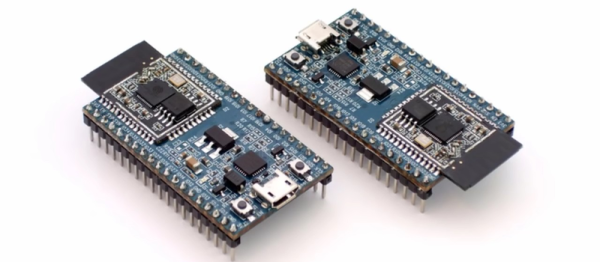
The ESP8266 has become one of those ubiquitous parts that everyone knows. However, the new ESP32 has a lot of great new features, too. If you want to take the ESP32 for a spin, you should check out [Neil Kolban’s] video series about the device. When we say series, we aren’t kidding. At last count, there were nineteen videos. Some are only a few minutes long, but some weigh in at nearly twenty minutes and the average is somewhere in between.

The topics range from setting up tools and using Eclipse and GDB. There are also tutorials on specific tasks like PWM, analog conversion, real-time operating systems, and more.

Continue reading “ESP32 Tutorials”

DIY 3D Slicer Is A Dynamo

We all know that hacker that won’t use a regular compiler. If he’s not using assembly language, he uses a compiler he wrote. If you don’t know him, maybe it is you! If you really don’t know one, then meet these two. [Nathan Fuller] and [Andy Baldwin] want to encourage you to write your own 3D slicer.

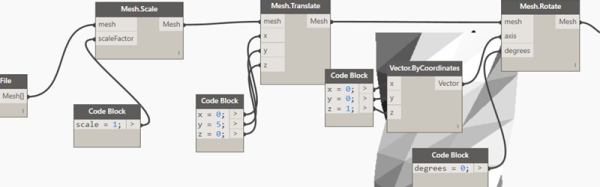
Their post is very detailed and uses Autodesk Dynamo as a graphical programming language. However, the details aren’t really specific to Dynamo. It is like a compiler. You sort of know what it must be doing, but until you’ve seen one taken apart, there are a lot of subtleties you probably wouldn’t think of right away if you were building one from scratch.

Continue reading “DIY 3D Slicer Is A Dynamo”

Beefy 100 Amp Electronic Load Uses Two MOSFETs

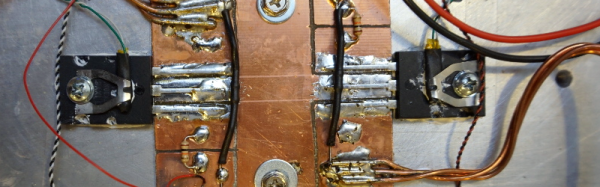
[Kerry Wong] had some extreme MOSFETs (IXTK90N25L2) and decided to create a high current electronic load. The result was a two-channel beast that can handle 50 A per channel. Together, they can sink 400 W and can handle a peak of 1 kW for brief periods. You can see a demo in the video below.

An electronic load is essentially a load resistor you can connect to a source and the resistance is set by an input voltage. So if the load is set to 10 A and you connect it to a 12 V source, the MOSFET should look like a 1.2 ohm resistor. Keep in mind that’s 120 watts–more power than a common incandescent light bulb. So you are going to need to carry some heat away.

The circuit is pretty simple. The FETs accept a voltage on their gates that sets them to look effectively like a resistor that varies with the voltage. A very small source resistor develops a voltage based on current (only 75 mV for a 50 A draw). That voltage feeds a comparator which generates the gate voltage after looking at the input control voltage. Each millivolt into the comparator translates to an additional 1.33 A through the load.

Continue reading “Beefy 100 Amp Electronic Load Uses Two MOSFETs”

Looking Back At QRP Transmitters

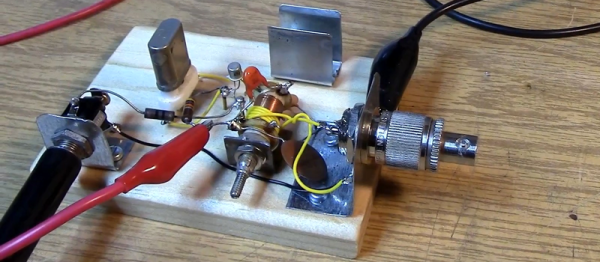
When you get to a certain age, you get unsettled by people calling “your” music oldies. That’s how a few of us felt when we saw [Mikrowave1’s] video about Retro QRP – Solid Gold Years (see below). “QRP” is the ham radio term for low power operation, and the “solid gold” years in question are the 1960s to 1980. The videox has some good stuff, including some old books and some analysis of a popular one-transistor design from that time. He even tries a few different period transistors to see which works best.

[Mikrowave1] talks about the construction techniques used in that time frame, old transistors, and some vintage test equipment. You can even see an old ARC-5 command receiver in use to listen to the transmitter. These were made for use in military aircraft and were very common as surplus.

Continue reading “Looking Back At QRP Transmitters”

Understanding DMA

In the world of computers, the central processing unit (CPU) is–well–central. Your first computer course probably explained it like the brain of the computer. However, sometimes you can overload that brain and CPU designers are always trying to improve both speed and throughput using a variety of techniques. One of those methods is DMA or direct memory access.

As the name implies, DMA is the ability for an I/O device to transfer data directly to or from memory. In some cases, it might actually transfer data to another device, but not all DMA systems support that. Sounds simple, but the devil is in the details. There’s a lot of information in this introduction to DMA by [Andrei Chichak]. It covers different types of DMA and the tradeoffs involved in each one.

Continue reading “Understanding DMA”

Ask Hackaday: What’s Your Etchant?

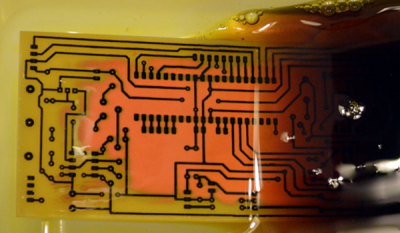
Although the typical cliché for a mad scientist usually involves Bunsen burners, beakers, and retorts, most of us (with some exceptions, of course) aren’t really chemists. However, there are some electronic endeavors that require a bit of knowledge about chemistry or related fields like metallurgy. No place is this more apparent than producing your own PCBs. Unless you use a mill, you are probably using a chemical bath of some sort to strip copper from your boards.

The standard go-to solution is ferric chloride. It isn’t too tricky to use, but it does work better hot and with aeration, although neither are absolutely necessary. However, it does tend to stain just about everything it touches. In liquid form, it is more expensive to ship, although you can get it in dry form. Another common etchant is ammonium or sodium persulphate.
pcbyThere’s also a variety of homemade etchants using things like muriatic acid and vinegar. Most of these use peroxide as an oxidizer. There’s lots of information about things like this on the Internet. However, like everything on the Internet, you can find good information and bad information.

When [w_k_fay] ran out of PCB etchant, he decided to make his own to replace it and wrote a great guide on how this is done. He found a lot of vague and conflicting information on the Internet. He read that the vinegar solution was too slow and the cupric acid needs a heated tank, a way to oxygenate the solution, and strict pH controls. However, he did have successful experiments with the hydrochloric acid and peroxide. He also used the same materials (along with some others) to make ferric chloride successfully.

Continue reading “Ask Hackaday: What’s Your Etchant?”