Optimizing The Spread: More Spreadsheet Circuit Design Tricks

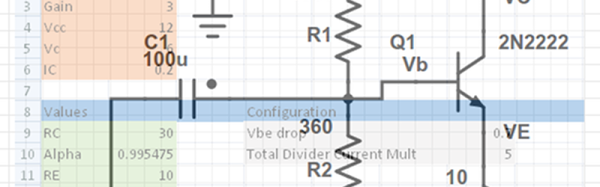
Last time I showed you how to set up a reasonably complex design in a spreadsheet: a common emitter bipolar transistor amplifier. Having the design in a spreadsheet makes it easy to do “what if” scenarios and see the effects on the design almost immediately.

Another advantage that spreadsheets offer is a way to “solve” or optimize equations. That can be very useful once you have your model. For Excel, you need to install the Solver add-in (go to the Excel Options dialog, select Manage Add-Ins, and select the Solver Add-In). You might also enjoy OpenSolver. You can even get that for Google Sheets (although it currently lacks a non-linear solver which makes it less useful for what we need).

Continue reading “Optimizing The Spread: More Spreadsheet Circuit Design Tricks” →
3D Printing School Of Knocks

Unless you are under age 20, there are probably things you know now that you wish you knew growing up. Even on hacker projects, it isn’t unusual to do better on your second whatchamacallit than on your first one. After all, you learn something each time and apply it to subsequent builds.

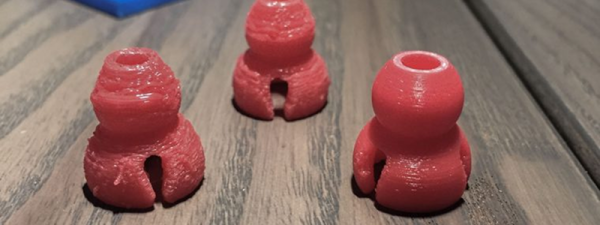
[James Lewis] (sometimes known as the [Bald Engineer]) has spent a couple of years with a 3D printer. He says that as of March this year, he had used the machine for about 75 hours. Since then his usage went up to 300 hours because he’s finally learned his lessons about how to get good prints.

If you are experienced, you might not be surprised at the first tip: level the bed. Don’t let that fool you, though. [James] has some good tips on advanced bed materials and print filament, too.

Continue reading “3D Printing School Of Knocks” →

Raspberry Pi Plays All That Jazz

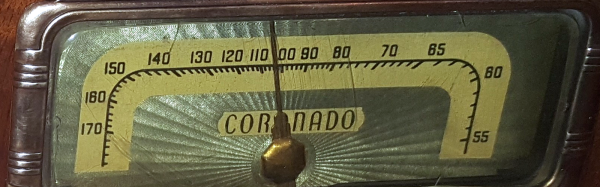
[James Bellafaire] wanted a good looking old radio with a modern sound. Granted, you could hollow the case out and replace it with an iPod. Or you could convert the thing to an Internet radio. But where’s the fun in that?

[James] took a different approach. Part woodworking project, part Raspberry Pi project, and part microcontroller project, he wound up with a hard drive-based music player in a 1930’s case with knobs that control the playback.

Continue reading “Raspberry Pi Plays All That Jazz” →

Water-Cooled LED Light

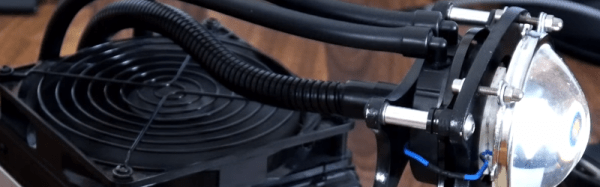
[Matt] wanted to drive a Yuji LED array. The LED requires 30 V and at 100 watts, it generates a lot of heat. He used a Corsair water cooling system made for a CPU cooler to carry away the heat. The parts list includes a microphone gooseneck, a boost converter, a buck converter (for the water cooler) and custom-made brackets (made from MDF). There’s also a lens and reflector that is made to go with the LED array.

This single LED probably doesn’t require water cooling. On the other hand, adding a fan would increase the bulk of the lighted part and the gooseneck along with the water cooling tubes looks pretty cool. This project is a good reminder that if you need to carry heat away from something with no fans, self-contained water cooling systems are fairly inexpensive now, thanks to the PC market.

Continue reading “Water-Cooled LED Light” →

Would You Like A Satellite Dish?

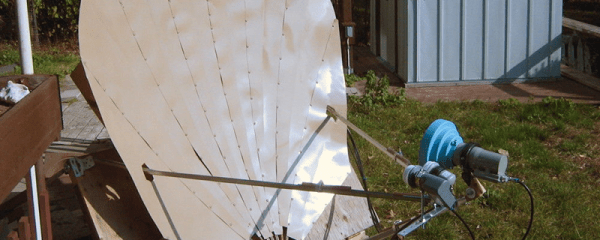
Satellite dishes are a common site these days, although admittedly most of them are Ku- and Ka-band dishes. The older C-band dishes are still around, though, just less frequently in people’s yards. [Greenish Apple] decide to cut the cable and start watching free TV so he built a C-band dish. The trick is, he made the dish out of wood.

The design is the offset type, not a prime focus dish–that is, the electronics are not in the center of the dish but on the side. Wood isn’t particularly good at reflecting RF, of course, so over the wooden skeleton, he used flashing.

Continue reading “Would You Like A Satellite Dish?” →

Retrotechtacular: Home Video Recording

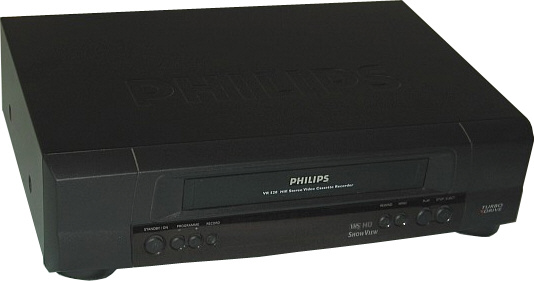
The news has been full of reports that the last company manufacturing consumer VCRs will cease making them this year. I think most of us are surprised that the event is only happening now. After all, these days, video recording is likely to be on a hard drive, a USB stick, or on a server somewhere. Even recording to DVDs seems a bit quaint these days.

VCR-03Back before there were web sites, people had to get information from magazines like Popular Electronics, Radio Electronics, and a few others. In the late 1960s and early 1970s, it was common to see these magazines predict that this would be the year of the home video recording system. For example, in 1971, [Lou Garner] wrote: “…they [Sony] hope will put home videotape playing in the same living room as conventional high-fidelity sound systems.” You should know that the video cassette he was talking about was 8 inches wide by 5 inches deep (a big larger than a VHS tape) and contained 3/4 inch magnetic tape (VHS used 1/2 inch tape). The 32-pound player had a retail price of about $350 (about $2,000 in today’s dollars; remember gas was $0.36 a gallon and eggs were $0.53 a dozen). It would be several years before VHS and Betamax would duke it out for home supremacy.

Continue reading “Retrotechtacular: Home Video Recording” →

Hand Waving Unlocks Door

Who doesn’t like the user interface in the movie Minority Report where [Tom Cruise] manipulates a giant computer screen by just waving his hands in front of it? [AdhamN] wanted to unlock his door with hand gestures. While it isn’t as seamless as [Tom’s] Hollywood interface, it manages to do the job. You just have to hold on to your smartphone while you gesture.

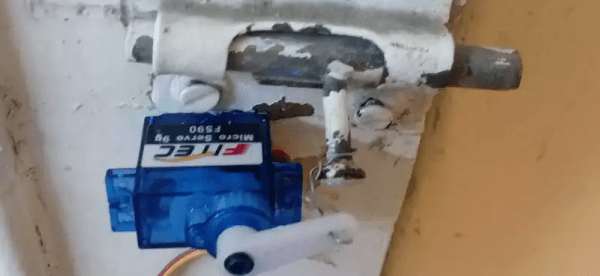
The project uses an Arduino and a servo motor to move a bolt back and forth. The gesture part requires a 1sheeld board. This is a board that interfaces to a phone and allows you to use its capabilities (in this case, the accelerometer) from your Arduino program.

The rest should be obvious. The 1sheeld reads the accelerometer data and when it sees the right gesture, it operates the servo. It would be interesting to do this with a smart watch, which would perhaps look a little less obvious.

We covered the 1sheeld board awhile back. Of course, you could also use NFC or some other sensor technology to trigger the mechanism. You can find a video that describes the 1sheeld below.

Continue reading “Hand Waving Unlocks Door” →