Convert Any USB Keyboard To Bluetooth

[DastardlyLabs] saw a video about converting a PS/2 keyboard to Bluetooth and realized he didn’t have any PS/2 keyboards anymore. So he pulled the same trick with a USB keyboard. Along the way, he made three videos explaining how it all works.

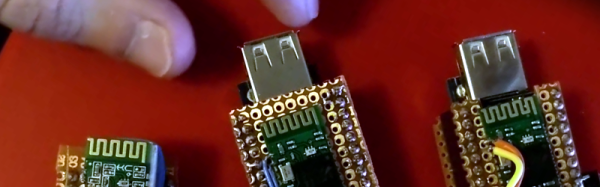
The project uses a stock DuinoFun USB mini host shield with a modification to allow it to work on 5V. An Arduino mini pro provides the brains. A FT-232 USB to serial board is used to program the Arduino. A standard Bluetooth module has to have HID firmware installed. [Dastardly] makes a homemade daughterboard–er, shield–to connect it to the Arduino.

The result is a nice little sandwich with a USB plug, a Bluetooth antenna, and some pins for reprogramming if necessary. Resist the urge to solder the Bluetooth board in–since it talks on the same port as the Arduino uses for programming, you’ll have to remove it before uploading new code.

If you need help reprogramming the HC-05 Bluetooth module, we’ve covered that before. This project drew inspiration from [Evan’s] similar project for PS/2 keyboards.
Continue reading “Convert Any USB Keyboard To Bluetooth” →

Talking DIY Z-80 Retrocomputer Complete With Dev Tools

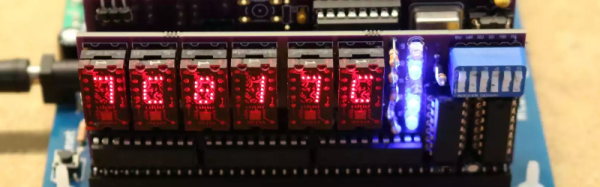
[Scott Baker] wanted to take on a new retrocomputing project. He decided to build an RC2104. Lucky for us, he documented everything along the way. In addition to the main board, [Scott] built bus monitoring and debugging tools, a front panel, a real time clock, an analog to digital converter, and a speech synthesizer.

You can follow along in the 8-part post that includes videos. He started with the basic kit:

  • CPU – The Z80
  • ROM – 27C512 64 KB ROM, selectable in 8KB banks
  • RAM – 62256 32 KB RAM
  • Clock – 7.3728 Mhz crystal that drives a 74HC04 hex inverter (for the CPU and the UART)
  • Serial I/O – MC68B50 UART

In addition, he picked up a digital I/O board.

Continue reading “Talking DIY Z-80 Retrocomputer Complete With Dev Tools” →

Mini Plasma Cutter

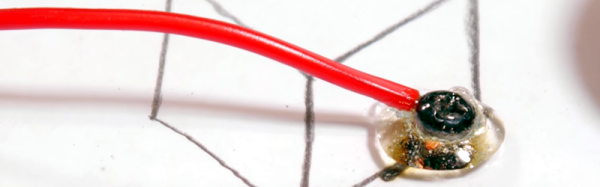
What do you get when you combine an arc cigarette lighter and some scrap glass and metal? [NightHawkInLight] created a simple plasma cutter project along with some hot glue and a few simple tools.

If you aren’t a smoker, an arc lighter uses a high voltage spark to light the cigarette. He essentially cannibalizes it for use as a power supply. Any similar high-voltage power supply should work just as well. He also uses the same cigarette lighter power supply for an arc pen, that we covered earlier.

Continue reading “Mini Plasma Cutter” →

High-Voltage Fractals

Int 1777, Georg Lichtenberg found that discharging high voltage on an insulating surface covered with a powder, a fractal-like image appears, sometimes known as a lightning tree. Incidentally, this is a crude form of xerography, the principle that lets copiers and laser printers operate.

[PaulGetson] had a high voltage power source from his Jacob’s ladder experiments and decide to see if he could create Lichtenberg figures. Turns out, he could.

Continue reading “High-Voltage Fractals” →

How To Use Docker To Cross Compile For Raspberry Pi (and More)

It used to be tedious to set up a cross compile environment. Sure you can compile on the Raspberry Pi itself, but sometimes you want to use your big computer — and you can use it when your Pi is not on hand like when on an airplane with a laptop. It can be tricky to set up a cross compiler for any build tools, but if you go through one simple step, it becomes super easy regardless of what your real computer looks like. That one step is to install Docker.

Docker is available for Linux, Windows, and Mac OS. It allows developers to build images that are essentially preconfigured Linux environments that run some service. Like a virtual machine, these images can run together without interfering with each other. Unlike a virtual machine, Docker containers (the running software) are lightweight because they share the same underlying kernel and hardware of the computer.

The reality is, setting up the Raspberry Pi build environment isn’t any easier. It is just that with Docker, someone else has already done the work for you and you can automatically grab their setup and keep it up to date. If you are already running Linux, your package manager probably makes the process pretty easy too (see [Rud Merriam’s] post on that process). However, the nice thing about the images is it is a complete isolated environment that can move from machine to machine and from platform to platform (the Windows and Mac platforms use a variety of techniques to run the Linux software, but it is done transparently).

Continue reading “How To Use Docker To Cross Compile For Raspberry Pi (and More)” →

Antenna Rotation Arduino Style

Back in the days when you didn’t pay for your TV programming, it was common to have a yagi antenna on the roof. If you were lucky enough to have every TV station in the area in the same direction, you could just point the antenna and forget it. If you didn’t, you needed an antenna rotator. These days, rotators are more often found on communication antennas like ham radio beams. For terrestrial use, the antenna only needs to swing around and doesn’t need to change elevation. However, it does take a stout motor because wind loading can put a lot of force on the system.

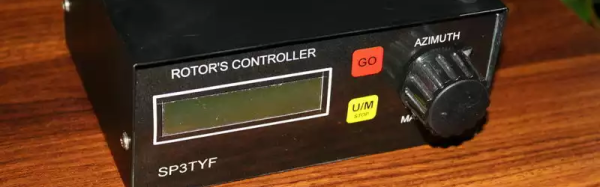
[SP3TYF] has a HyGain AR-303 rotator and decided to build an Arduino-based controller for it. The finished product has an LCD and is able to drive a 24 V motor. You can control the azimuth of the antenna with a knob or via the computer.

Continue reading “Antenna Rotation Arduino Style” →

Circuit Design? Spread The Joy

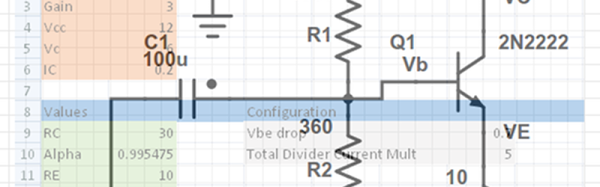
Accountants and MBAs use spreadsheets to play “what if” scenarios with business and financial data. Can you do the same thing with electronic circuits? The answer–perhaps not surprisingly–is yes.

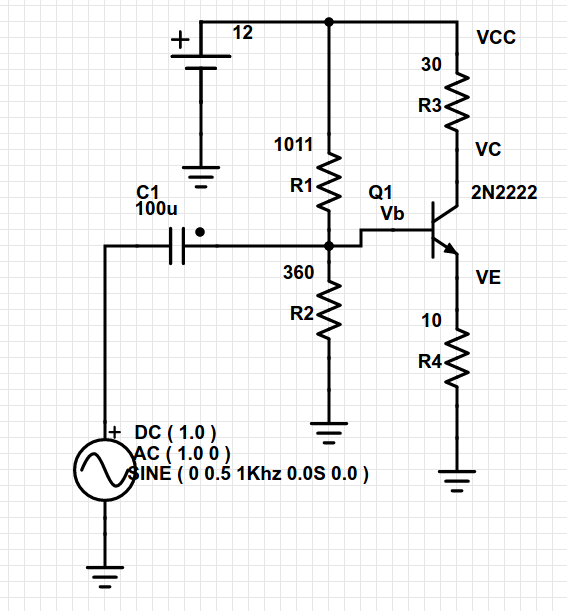
Consider this simple common emitter amplifier (I modeled it in PartSim, if you’d like to open it):

In this particular case, there are several key design parameters. The beta of the transistor (current gain) is 220. The amplifier has an overall voltage gain of about 3 (30/10). I say about, because unless the transistor is ideal, it won’t be quite that. The supply voltage (Vcc) is 12 volts and I wanted the collector voltage (VC) to idle at 6V to allow the maximum possible positive and negative swing. I wanted the collector current (IC) to be 200mA.

Continue reading “Circuit Design? Spread The Joy” →