Hackaday Links Column Banner

Hackaday Links: December 20, 2020

If development platforms were people, Google would be one of the most prolific serial killers in history. Android Things, Google’s attempt at an OS for IoT devices, will officially start shutting down on January 5, 2021, and the plug will be pulled for good a year later. Android Things, which was basically a stripped-down version of the popular phone operating system, had promise, especially considering that Google was pitching it as a secure alternative in the IoT space, where security is often an afterthought. We haven’t exactly seen a lot of projects using Android Things, so the loss is probably not huge, but the list of projects snuffed by Google and the number of developers and users left high and dry by these changes continues to grow. Continue reading “Hackaday Links: December 20, 2020”

Lidar House Looks Good, Looks All Around

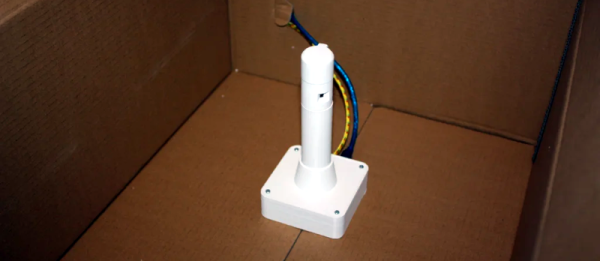
A lighthouse beams light out to make itself and its shoreline visible. [Daniel’s] lighthouse has the opposite function, using lasers to map out the area around itself. Using an Arduino and a ToF sensor, the concept is relatively simple. However, connecting to something that rotates 360 degrees is always a challenge.

The lighthouse is inexpensive — about $40 — and small. Small enough, in fact, to mount on top of a robot, which would give you great situational awareness on a robot big enough to support it. You can see the device in action in the video below. Continue reading “Lidar House Looks Good, Looks All Around”

Status Display Lets Them Know You Can’t Play

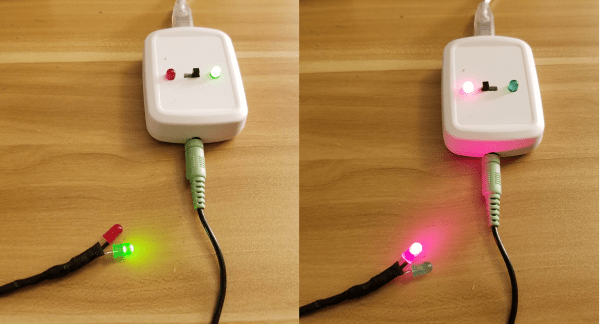
All this ongoing forced togetherness is great, but sometimes you just need to be able to pretend you’re alone so you can get some work done. So, how do you keep family members out of your home office? Our own [Bob Baddeley]’s free/busy indicator is about as simple as it gets.

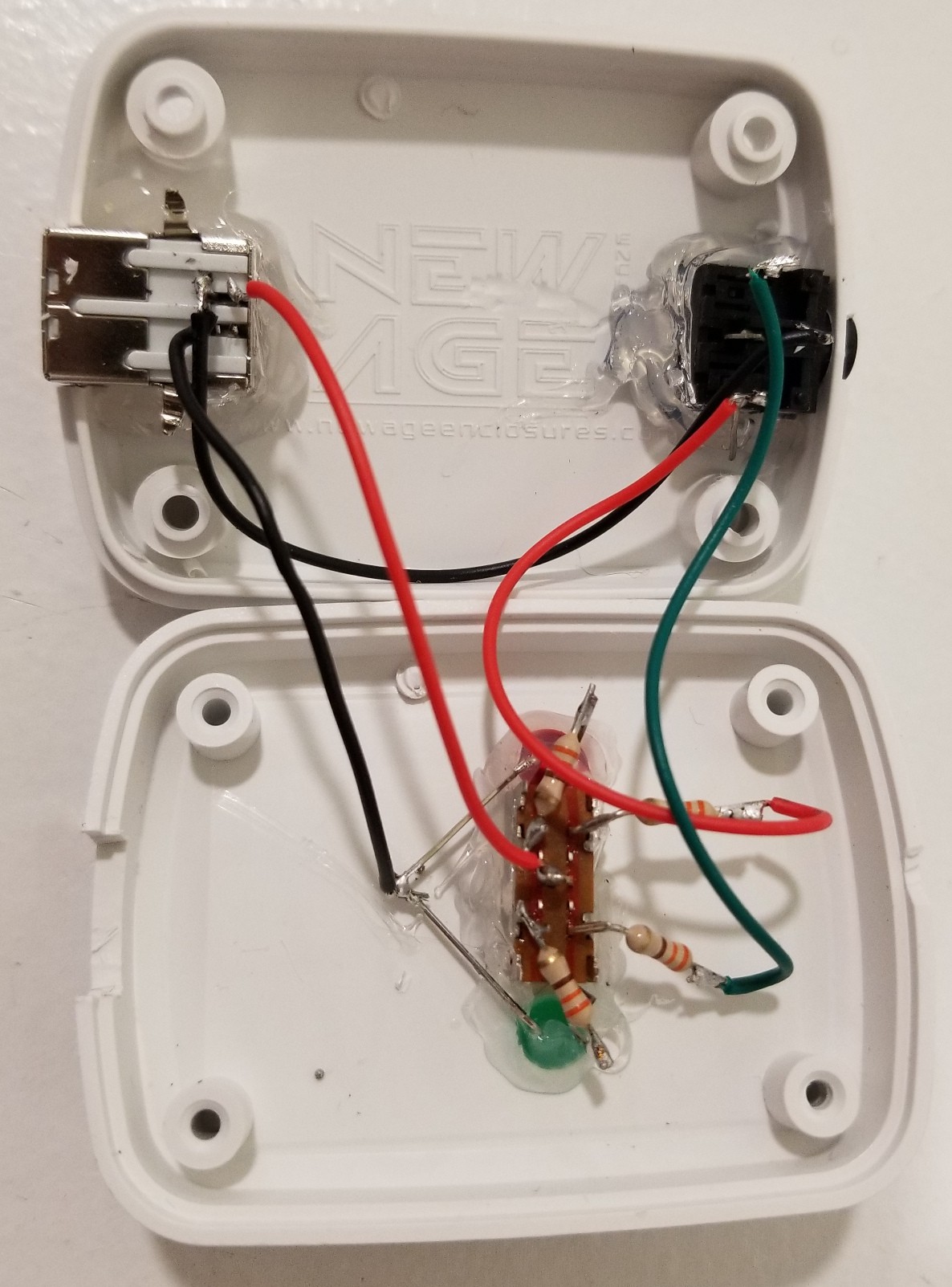
The best part is that the status can been seen on both sides of the door so you don’t forget to keep it updated. Or maybe it’s the super-low part count. There’s no BLE, LoRa, or Wi-Fi, just two sets of red and green LEDs, a three-way switch, and a power source. Well, and current-limiting resistors of course.

[Bob] already had all the components on hand, including the nifty enclosure, which is another great thing about this build. Like [Bob] says, you could house the control side of this circuit in just about anything you’ve got lying around.

Young children might abuse this one, but this status indicator that lets the family request your presence with the push of a button.

This Expedient Microfiche Reader Illuminates Retro Datasheets

You have to be of a certain vintage to remember doing research on microfilm and microfiche. Before the age of mass digitization of public records, periodicals, and other obscure bits of history, dead-tree records were optically condensed onto fine-grain film, either in roll form or as flat sheets, which were later enlarged and displayed on a specialized reader. This greatly reduced the storage space needed for documents, but it ended up being a technological dead-end once the computer age rolled around.

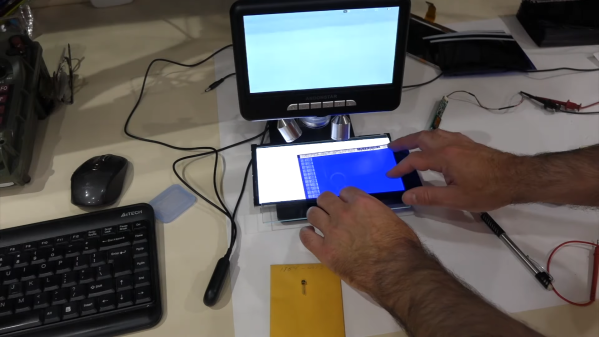
This was the problem [CuriousMarc] recently bumped into — a treasure trove of Hewlett-Packard component information on microfiche, but no reader for the diminutive datasheets. So naturally, he built his own microfiche reader. In a stroke of good luck, he had been gifted a low-cost digital microscope that seemed perfect for the job. The scope, with an HD camera and 5″ LCD screen, was geared more toward reflective than transmissive use, though, so [Marc] had trouble getting a decent picture of the microfiches, even with a white paper backing.

Version 2.0 used a cast-off backlight, harvested from a defunct DVD player screen, as a sort of light box for the stage of the microscope. It was just about the perfect size for the microfiches, and the microscope was able to blow up the tiny characters as well as any dedicated microfiche reader could, at a fraction of the price. Check out the video below for details on the build, as well as what [Marc] learned from the data sheets about his jackpot of HP parts.

With the wealth of data stored on microforms, we’re surprised that we haven’t seen any readers like this before. We have talked about microscopic wartime mail, though.

Continue reading “This Expedient Microfiche Reader Illuminates Retro Datasheets”

Making A Little Smalltalk

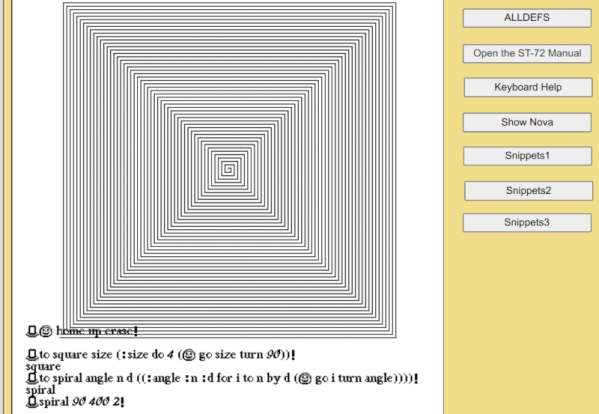
While things like object oriented computing and model-view-controller are old hat these days, when Smalltalk burst on the scene, many people had never heard of these new ideas. While the little language with roots at Xerox and based on Simula never caught fire, it was very influential in a number of ways. Now Smalltalk luminary [Dan Ingalls] has the Smalltalk Zoo, a collection of Smalltalk-related items including several historical simulations you can run in your browser.

We were especially impressed with the AltoSmalltalk-72 simulation since our chances of running a real Alto are pretty slim. The JavaScript behind it actually implements the Alto’s Nova instruction set. The emulator then runs a 45-year old memory dump from a real Alto. According to [Dan], there’s no file system and the microcoded music and animation instructions are missing, but he hopes someone will add them as a spare-time project.

Continue reading “Making A Little Smalltalk”

A Synth Of Your Own, For Not A Lot

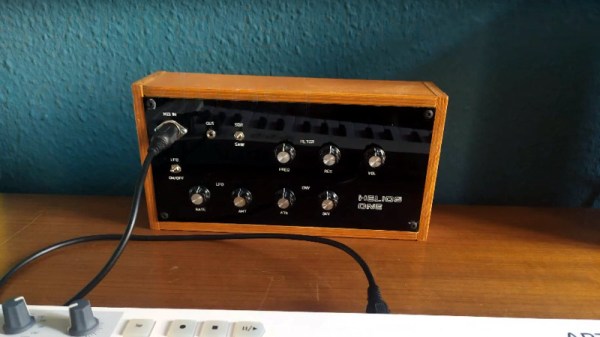
Despite the lingering reality that most of us don’t have what it takes to make it to the upper reaches of the Hit Parade, there remain many who still harbour a secret desire to make music. What better way to realise this dream, than by making [Blog Hoskins’] $20 MIDI synth project!

The write-up goes into a staggering level of detail to ensure that it’s accessible at all levels, to the extent that a complete beginner could probably assemble a working synth by following it. For some of the fancier parts of front panel there’s a reliance on a laser cutter, but even without such wizardry the Average Joe with an electric drill could still do a pretty good job.

Behind the panel though it’s not short on features it’s a surprisingly simple design. At its heart is an Arduino Nano, surrounded by potentiometers and switches for user control, and an opto-coupler for the MIDI lines. Sadly for analogue synth fans there’s not much else in the way of circuitry, but the point of a build such as this one is to create a playable instrument with the shortest path to usability. A video full fo those glorious synth sounds is below the break.

MIDI synthesisers are a frequent feature here at Hackaday. A recent favourite is this four-voice instrument that uses servos as its active element.

Continue reading “A Synth Of Your Own, For Not A Lot”

Old Thermostat Gets Smarts

A smart thermostat is nothing new. But making one built a decade or more ago takes a few tricks. If you want to upgrade your thermostat without replacing it, [geektechniquestudios] shares their solution using a Raspberry Pi Zero to smarten up that dumb controller.

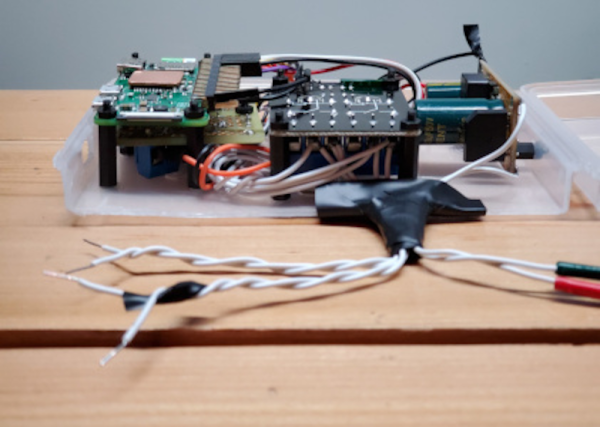
The hardware is decidedly simple: just a Pi Zero and a pair of relays. The relays act as button presses to the old thermostat. The software, though, is decidedly complex. There’s a React server and a Redis database along with some other bits and pieces.

Continue reading “Old Thermostat Gets Smarts”