Hackaday Prize Worldwide LA: The Ultimate Workshop, Party, And Hackathon

The Zero to Product workshop, held at the Hackaday Design Lab in Pasadena two weeks ago, was a packed house of talented people seeking to expand their skill set with professional PCB layout tips and tricks. [Matt Berggren] didn’t disappoint, bringing his professional experience to the table in a way that anyone with basic electronic knowledge can grasp. Learning the things that make a board reliable and manufacturable can be done with a simple design. In the case, the culmination of the workshop is development board to host the ESP8266 WiFi modules that have been so popular over the last half-year.

This isn’t the first time we’ve pulled off a massive hardware hackathon and meetup, and it certainly won’t be the last. You have another chance to participate in the workshop in San Francisco on June 13th. If you can’t catch that one, we’ll be in Shenzhen for the Shenzhen Maker Fare, a Zero to Product workshop, and a meetup.

The completed ESP8266 breakout presented during the talk

Of course Hackaday events are never “all work and no play”. The day crept into night and the the chairs were cleared out for hightop tables and tasty beverages. The atmosphere was festive and everyone still made it back early the next morning for an entire day of hardware hacking, tinkering, and general futzing around with circuits and electrons. If you check out [Rich Hogben]’s photo log of the weekend, you’ll find some an impressive collection of hackers were there. I see at least one person who’s job is flying space probes, a Hackaday Prize judge, and a security researcher who can crack a Master Lock in 30 seconds.

The display for [Steve]'s LIDAR
The display for [Steve]’s LIDAR

Bar-time Show and Tell

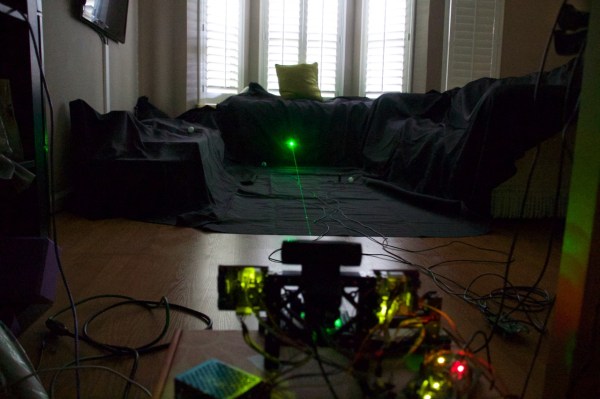
The meetup Saturday night wasn’t technically a bring-a-hack event, but we walwasy want to see people’s latest and greatest contraptions. [Steve Collins] brought a homebrew LIDAR. This project was based on a SparkFun Time of Flight breakout board that scans the room with a cheap hobby servo, reads the data into an Arduino and displays the rangefinding data on a small TFT. The LIDAR is good enough to scan the entire Hackaday Design Lab, with more than enough resolution for any robotics project you have in mind.

Also at the Saturday night gathering was our very own mythical creature [Sophi Kravitz], [Elecia White] who is and embedded.fm podcaster, engineer, and Hackaday Prize judge two years in a row, and [Samy Kamkar] known for his privacy and security research and for building the KeySweeper. They gave a series of lightning talks about the latest things they’re working on:

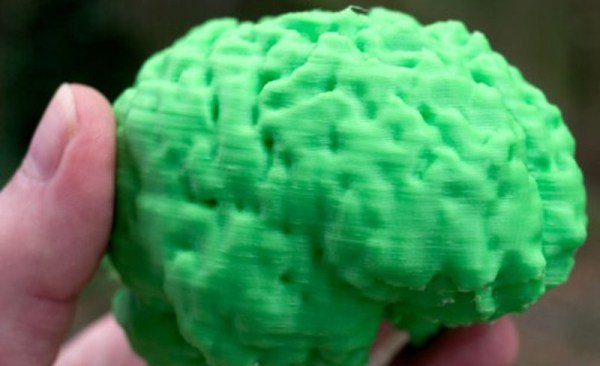
We rented Galaga and Ms. Pac Man machines for the entire weekend, but that wasn’t the only electronic entertainment for the party. Two Bit Circus was there with a game that could only be described as highly disorganized electronic chess. FLED, the exceedingly large, high-resolution RGB LED display was behind the bar, and Deezmaker took over a room to 3D scan people and print out miniature clones on a pair of 3D printers.

The Hackathon

The events continued on until Sunday evening with a hardware hackathon. This isn’t your run-of-the-mill software hackathon where people sit behind their MacBooks the entire time; we had soldering irons, components, solder, solder wick (important!) and dozens of hardware hackers tinkering away at their latest electronic doodad.

Foreground: A moisture vaporator
A vast assortment of dev boards

The amount of hardware on hand was spectacular. Hackaday Prize sponsors Atmel, Freescale, Microchip, and TI all provided some hardware. Everything from ATMega328 boards from Atmel, TI Launchpads bristling with goodies like the Sharp Memory Display booster packs, Seeed Studio starter packs, to insanely powerful Freescale Freedom boards were available to build on at the event. The Sunday hackathon also had several gigantic boxes from Mouser filled to the brim with components and breadboards available to everyone to clobber into submission, letting their inner electronics geek shine.
3673211431363553025
chipWhen taking a break from the build there was plenty to look at. People were showing off already completed projects they brought along with them. [Jeff] from Circuitry & Poetry was there with a bunch of circuit bent synths. A number of people were also finishing up the ESP8266 breakout boards that were presented the day before; some soldering and some laying out a PCB in Eagle. It was an incredible event, with dozens of groups going off to do their own thing, but still welcoming to anyone else who wanted to tinker. This type of community isn’t found everywhere and we’re thankful for the people that make Hackaday events like this one so special.

We need to take the time to give a big shoutout to SGVHAK. We honestly couldn’t have done this event without them. I’d personally like to thank [Michael Proctor-Smith] for bringing his amazing livestreaming box. He is the reason I am not currently (still) editing down seven hours of video from the PCB design workshop and the lightning talks. Big ups to [Lan], [Scoops] and everyone else who helped out. If you came to the Hackaday event, check out their meetups. If you’re in the area, we also have regular informal meetups somewhere around the hackerspace. Come on out!


The 2015 Hackaday Prize is sponsored by:

printrbot simple metal fix

Cheap Hot End Modification Allows Easy Future Repairs

We’ve seen a lot of experimenting with 3D printers over the years, and that is a good thing. However, [Tyler] has had a bad experience with experimenting. He has a Printrbot Simple Metal and decided to try nylon weed wacker line. Since he wanted to get straight to printing, he skipped the apparently important step of drying the trimmer line before printing. This experimentation ended in several clogged nozzles. Removing and cleaning the nozzle several times put undo stress on the Ubis hot end wires and they broke. Things were not going well.

In an effort to make his printer more repairable, [Tyler] ordered up an aluminum RepRap heater block, heating resistor and thermistor. The heater block was tapped with standard M6 threads but the Ubis was 1/4 inch. This was remedied by drilling and tapping the M6 hole to 1/4-20.

Now for the nozzles, [Tyler] bought a handful of cheap brass acorn nuts. He drilled a hole for the molten plastic to exit the nozzle, then used a Dremel to grind the acorn nut’s dome into a cone. He reports it only took him about 5 minutes per nozzle.

It looks like [Tyler] got back to printing with a little creative thinking. Unfortunately, the Ubis and J-Head hot ends are not interchangeable. A couple of other ex-Ubis users have made J-Head adapters for their Printrbots.

Hackaday Prize Entry: Dr. DAC

The theme of this year’s Hackaday Prize is. ‘build something that matters.’ A noble goal, but there’s also a second prize – the Best Product prize – that is giving $100k to one lucky team who can appeal to people with open jaws and wallets. It’s a fabulous prize that also includes a six month residency at the Hackaday Design Lab, but right now there aren’t many contenders for this part of The Hackaday Prize.

[drewrisinger]’s DrDAC USB Audio DAC is one of those project that’s in the running for the Best Product prize. He’s solving the problem of terrible low-quality built-in soundcards that seem to be everywhere. Yes, it’s a simple idea, but the execution is great.

The electronics for DrDAC are pretty much what you would expect for a DIY audio sound card; A PCM2706 takes USB audio and sends it out over I2S. A PCM1794 converts the I2S to analog audio, and an OPA2836  amplifies it and sends everything out through a 1/8″ jack or a pair of RCA plugs.

[drewrisinger] started DrDAC as a school project, and after receiving the PCBs, he noticed a problem. MultiSim’s footprint for a TQFP-32 package was too small, meaning the IC simply wouldn’t fit on the board. It was too late in the semester to order a new board, meaning some sort of rework needed to happen. [drew] fixed this problem by soldering jumper wires between the pads to the leads of the chip. Yes, it looks crazy, but apparently it works. You can check out a video of that whole process below.


The 2015 Hackaday Prize is sponsored by:

Continue reading “Hackaday Prize Entry: Dr. DAC”

Optimizing AVR LCD Libraries

A while ago, [Paul Stoffregen], the creator of the Teensy family of microcontrollers dug into the most popular Arduino library for driving TFT LCDs. The Teensy isn’t an Arduino – it’s much faster – but [Paul]’s library does everything more efficiently.

Even when using a standard Arduino, there are still speed and efficiency gains to be made when driving a TFT. [Xark] recently released his re-mix of the Adafruit GFX library and LCD drivers. It’s several times faster than the Adafruit library, so just in case you haven’t moved on the Teensy platform yet, this is the way to use one of these repurposed cell phone displays.

After reading about [Paul]’s experience with improving the TFT library for the Teensy, [Xark] grabbed an Arduino, an LCD, and an Open Workbench Logic Sniffer to see where the inefficiencies in the Adafruit library were. These displays are driven via SPI, where the clock signal goes low for every byte shifted out over the data line. With the Adafruit library, there was a lot of wasted time in between each clock signal, and with the right code the performance could be improved dramatically.

The writeup on how [Xark] improved the code for these displays is fantastic, and the results are impressive; he can fill a screen with pixels at about 13FPS, making games that don’t redraw too much of the screen at any one time a real possibility.

Hot Swappable Raspberry Pi Rack

The Raspberry Pi has inspired many a hacker to take the inexpensive (~$35) microcomputer to the enterprise level. From bitcoin miners to clusters, the Raspberry Pi has found itself at the heart of many large-scale projects.

On hackaday.io [Dave] served up his own contribution with his Raspberry Pi Rack. Inspired by enterprise blade servers, he wanted to house multiple Raspberry Pi boards in a single enclosure providing power and Ethernet. The spacing between the blades and the open sides allow for each Pi to cool without the additional power and cost of fans.

Starting with an ATX power supply and Ethernet switch, Dave created a base that housed the components that would be shared by all the Pis. Using a 3D model of a Pi he found online, he began working on the hotswap enclosures. After “dozens of iterations” he created a sled that would hold a Pi in place with clips rather than screws and slide into his rack to connect to power and Ethernet.

Like most projects, some mistakes were made along the way. In his write up [Dave] describes how after printing the bottom plate he realized he hadn’t accounted for the holes for the Ethernet cable runs. Instead the cables run along the back wall in a way he now prefers.

You can find all the details and download the 3D models on his project page.

Intel Buys Altera For $16.7 Billion

Intel, CPU manufacturer we all know and love, will buy Altera, makers of fine FPGAs, for $16.7 Billion.

While most of the news about this deal focuses on the future of FPGAs in the datacenter, getting Altera IP into Intel fab houses is equally interesting. Intel is the current king of putting transistors on a piece of silicon, and Intel’s ability to put a massive amount of transistors on a chip means FPGAs will become even more capable – more gates, more blocks, and more memory. The most capable Altera FPGAs are being made with a 28nm process; Intel could theoretically double the number of gates with the 14nm process used on the new Broadwell CPUs. There is most likely someone at Xilinx tearing their hair out right now, chain-smoking next to a pot of coffee.

News of this buy out comes about a week after Avago bought Broadcom in the biggest semiconductor deal ever, and a few months after NXP and Freescale merged. Cash Rules Everything Around Semiconductors, it seems.

Hackaday Retro Edition: The RadioShack Roomba

A few years ago, Roombas — everyone’s favorite robotic trash can — graced the pages of Hackaday with reverence. There was nothing this little robot couldn’t do, save for going up stairs. Roomba hacks have died off since then, and these little trash cans have been swallowed up by dumpsters. It’s all very sad, really.

[Mike] has had one of these Roombas around for a while, sitting in a closet, waiting for someone to make use of it. He recently dug it out, looked it over, and watched the LEDs light up after troubleshooting a problem with the batteries. Then the problem was how to control it.

He had wanted to connect it to a VIC-20, but the handy serial port on the Roomba only accepted baud rates between 19.2k and 57.6k. The VIC-20, with the ancient 6522 VIA, could only bitbang a serial port up to 2400bps. Then the idea hit him. In his closet of ancient technology, [Mike] had a Tandy 102, a slightly upgraded TRS-80 Model 100 that could easily drive a serial port at 19.2k.

When it comes to a mobile retro robotics platform, [Mike] couldn’t have found a better computer. The Tandy 102 has a display, a BASIC interpreter, enough RAM to run a Roomba, and is powered by a few AA batteries. He did need a little bit of level conversion for the serial port, but a MAX232 took care of that easily.

With everything put together, [Mike] had a robot and a computer that is at least as good as the old Heathkit HERO robot. You can check out a video of the Tandy bot below.

Continue reading “Hackaday Retro Edition: The RadioShack Roomba”