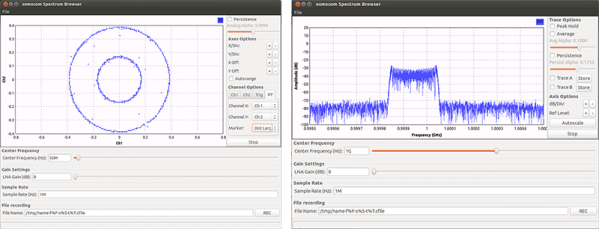
RTL-SDR, the USB TV tuner turned software-defined radio is an amazing device, capable of listening to nearly anything from 25MHz to 1750MHz, fits in your pocket, and costs about $20. Even more astonishing is that it’s also a kinda-okay spectrum analyzer. [Kerry D. Wong] tested out one of these USB TV tuner, and the results are exactly what you would expect: it lacks a little precision, and sampling bandwidth is only a tiny bit terrible, but it does work.
A stock USB TV tuner doesn’t come with a connector that would normally be used for spectrum analysis. A BNC connector can be easily attached, as can a terminator to match the 75Ω impedance of the SDR. This isn’t really necessary; the frequencies being measured are low enough that you can get away without one.
As far as software goes, [Kerry] first pulled out the usual suspects of the SDR world; rtlsdr-scanner distorted the measured spectrum, as did a lot of other SDR receivers. Gqrx SDR was the first one that worked well, but the king of this repurposing of USB TV tuners was OSMOCOM. There’s a huge number of tools for spectrum analysis right out of the box with this package.
How did the RTL SDR fare as a spectrum analyzer? Feeding some stuff in from a signal generator, [Kerry] discovered the LO in the RTL SDR was off by a hair. Also, OSMOCOM only measures amplitude in dB, not the dBm found in every other spectrum analyzer ever made. By measuring a 0 dBm signal whatever value displayed can be shifted up or down.
So, does it work? Yes, it does. If, for some reason, you need a spectrum analyzer now, can you use this? Yep. Pretty cool.
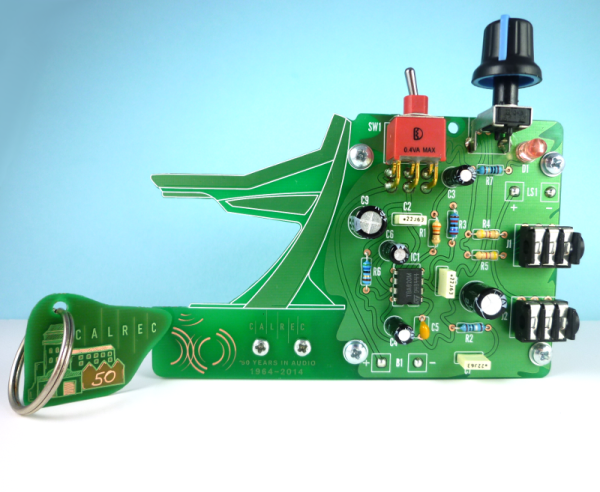
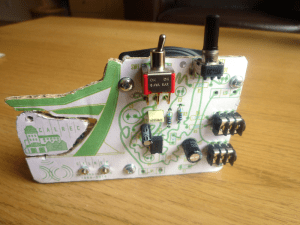 For the special occasion of their 50th anniversary, Calrec Audio contacted [Saar] requesting he create something a bit more enticing than their standard rectangular design from previous years. With their schematic as a starting point, [Saar] used cardboard to mock-up a few of his ideas in order to get a feel for the placement of the components. Several renditions later, [Saar] decided to implement the exact proportions of the company’s iconic Apollo desk into the heart of the design as an added nod back to the company itself. In the negative space between the lines of the Apollo desk there is a small perforated piece depicting the mill where the Calrec offices are located. The image of the mill makes use of different combinations of copper, silk and solder mask either absent or present to create shading and depth as the light passes through the board. This small piece that would have otherwise been removed as scrap can be snapped off from the body of the PCB and used as a commemorative keychain.


![[Sprite_TM] came into the space and found a broken Twilight Zone game. 30 minutes later, it was fixed.](https://i0.wp.com/hackaday.com/wp-content/uploads/2014/11/sprite.jpg?w=375&h=342&ssl=1 "Sprite")



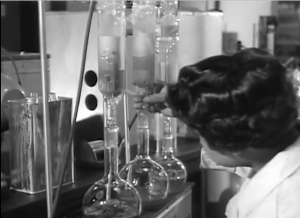 We then tour the R&D facility where new tank materials and components are developed and tested. It is here that the drive gears are put through their paces on a torsion machine. Air cleaners are pitted against each other to decide which can filter out the finest dust and sand. After careful analysis, different tank shell materials are test welded together with various, well-documented electrodes, and these panels are taken outside so their welds can be directly fired upon.