Super-precise Light Painting From A Delta Robot

delta-robot-light-painting

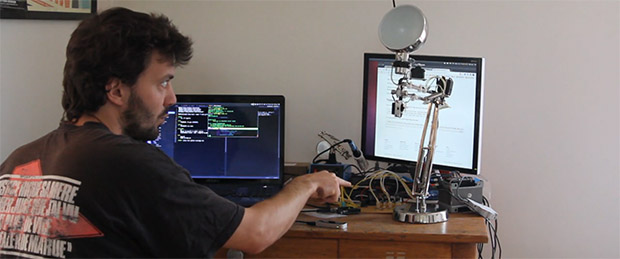
The points of those geometric shapes line up perfectly thanks to the delta robot arm controlling the light source. The source is a simple LED that can be switched on and off as it moves. A camera is set up in a dark room to keep the shutter open while the arm moves. We’re assuming that all of the light for the stationary objects in this image comes from the LED as well.

[Sick Sad] built the delta bot for just for this purpose. Check out the video below to see, and perhaps more importantly hear, the thing in motion. Seriously, the whine of the stepper motors is pretty awesome on this one.

The delta concept uses a central head on three arms angled down from above. If the LED is also pointed down it won’t light up the hardware and that’s why it doesn’t show up in the image. We’ve seen similar accuracy when using this style of machine for 3D printing. But if you don’t want to build a complicated machine you can try this out with a simple string plotter.

Continue reading “Super-precise Light Painting From A Delta Robot”

Seeing Plant Health In Infrared

aerial

Since the 70s, NASA, NOAA, and the USGS have been operating a series of satellites designed to look at vegetation health around the world. These satellites, going under the name Landsat, use specialized camera filters that look at light reflecting off chlorophyll to gauge the health of forests, plains, oceans, and even farms. It’s all very interesting technology, and a few very cool people want to put one of these near infrared cameras in the hands of everyone.

The basic idea behind gauging the health of plants from orbit, or the Normalized Difference Vegetation Index, is actually pretty simple: absorb red and blue light (thus our verdant forests), and reflect nearly all infrared light. By removing the IR filter from a digital camera and adding a ‘superblue’ filter, the NDVI can be calculated with just a little bit of image processing.

The folks behind this have put up a Kickstarter with rewards including a modified webcam, a custom point and shoot camera, and a very low-cost source of one of these superblue filters. Just the thing to see how your garden grows or how efficiently you can kill a houseplant.

Raspberry Pi, Now In A Mini-ITX Form Factor

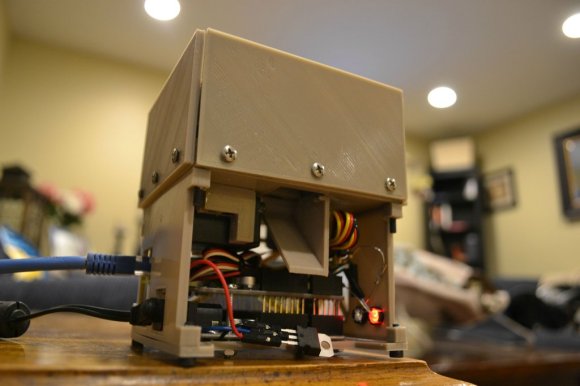
Shown above is a fairly simple Raspberry Pi setup. There’s the Raspi itself, a 2.5″ hard drive, a USB hub, GPIO expansion, and wireless and Bluetooth adapters. Throw in the power supplies for all these devices, and you’ve got a real mess on your hands. There is a solution to this problem of a Gordian knot of USB and power cables: the Fairywren, a board that turns your Raspberry Pi into a Mini-ITX computer.

The basic idea behind the Fairywren is to take the basic outline of a Mini-ITX motherboard and add goodies like a real-time clock serial port, and USB hub while providing a secure mounting place for a Raspberry Pi. It turns a Raspberry Pi into a proper computer, with all the ports in the rear, and is compatible with a whole slew of Mini-ITX cases.

At £40, the Fairywren isn’t exactly cheap. In fact, it’s more expensive than the Raspberry Pi itself. That being said, you do get a whole lot of hardware for the price, and if you already have a small Mini-ITX case lying around, it may be just the thing to clean up the mess on your electronics bench.

Family Pulls Together To Build Dad’s Casket

build-your-own-casket

In these modern times we don’t often hear about families building their own caskets. But this project log documenting the deceased’s brother and sons fabricating a top of the line casket is really heartwarming. You may be thinking that they wouldn’t be able to include all the features you’d find on a commercially produced model. However, we remember seeing an episode of How It’s Made about caskets and there’s not much more than carpentry and simple upholstery involved.

The build starts with a plywood box lined with thin wooden ribs for added strength. The group then wrapped it with thin strips of dimensional lumber (maybe flooring?) which look great after a coat of stain. We’re not sure where the metal brackets for the two side rails came from. If you recognize them we’d love to hear about it in the comments.

The bottom line here is that for families used to working with their hands this is a great tribute and a way to commune with each other after the recent loss.

[via Reddit]


Salvaging Lithium Cells And Circuits

Lithium cells outperform Nickel Cadmium and Nickel Metal Hydride in almost every way. But they also need a little bit more babysitting to get the most out of them. That comes in the form of control circuitry that charges them correctly and won’t let them get below a certain voltage threshold during discharge. We enjoyed reading about [Carlos’] Lithium cell salvage efforts as it discusses these concerns.

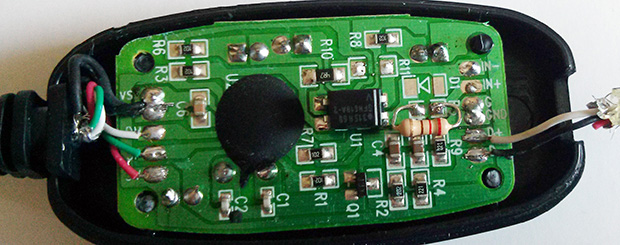
He wanted to salvage a Lithium power source for his projects. He had the three cell pack from a dead Macbook Pro seen in the upper left, as well as the single blown cell from a digital picture frame shown on the right. The three-pack didn’t monitor each cell individually, so the death of one borked the entire battery. He desoldered them and probed their voltage level to find one that was still usable. To prevent his project from draining the source below the 2.7V mark he scavenged that circuit board from the digital picture frame. A bit of testing and the system is up and running in a different piece of hardware.

Don’t be afraid of this stuff. If you learn the basics it’ll be easy to use these powerful batteries in your projects. For more background check out this charging tutorial.

Unlocking A Rigol Scope Once Again

Rigol scopes are finding their way onto the workbenches of makers the world over. There’s a reason for that – they’re so easily upgraded. With a simple software update, you can turn the 50 MHz Rigol o’scope into a model with 100 MHz of bandwidth. Design decisions in one model are sometimes carried over to different product lines, so eventually someone would figure out how to turn the 70 MHz DS2072 scope into the 200 MHz DS2202. A great mod that turns an $800 oscilloscope into one with the features of a $1600 scope.

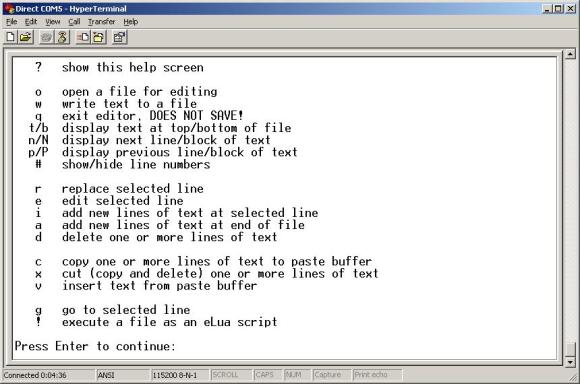
There’s no internal modifications necessary for this mod; it works simply by sending a few engineering unlock codes to the scope over USB, a simple task that [Blair] implemented with a Raspberry Pi and a bit of Python code. The only fault of the hack is the scope resetting each time it’s powered off. This can, in fact, be accomplished with just about any microcontroller with a Python interpreter.

A fairly uninformative demo video is available below, or you could check out the EEVBlog thread where this mod was conceived here.

We here at Hackaday expect a small, cheap USB/microcontroller dongle thingy that automagically updates the DS2072 to show up in our inbox any day now. We thank whoever sends that in.

Continue reading “Unlocking A Rigol Scope Once Again”

Custom Handmade Boxes, Made With Steam

box factoryFrom tea sets to CD box sets, you’ll see the work of the Phillips Brothers mill on shelves all across the country. They make wooden boxes for just about any product imaginable. Interestingly, they do it the old-school way, with the entire factory powered by steam.

The wood for the boxes comes from the on-site mill, resawn and planed to the proper dimensions. These thin boards are then cut to size for each of the sides.

Most of the clients like to put their logo on their boxes, and the Phillips Brothers mill is more than happy to oblige. They brand one side of the box with a custom-made iron, permanently marking the box for the client.

The boxes are assembled with either staples or nails, enough to last for many, many years. No, there aren’t finger joints on these boxes, but with generations worth of experience in this factory, we’ll assume they know what they’re doing.