NXT Android Telepresence Robot

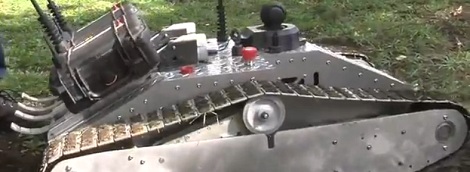
Here is a telepresence robot that uses an Android device and LEGO NXT parts. [Wolfgang] had an extra phone on hand and decided to put it to good use. The Mindstorm parts make it really easy to produce a small robot, and adding the phone really ups the computing and connectivity options available to him.

The Android device is able to control the NXT bot via Bluetooth. [Wolfgang] didn’t go into detail on that part, but you can get some pointers on the topic from this other Android controlled Mindstorm project. [Wolfgang] wanted the ability to check in at home when he’s travelling. He uses nanohttpd on the Android device to serve up a simple web interface. It uses HTML5 to push a snapshot from the phone’s camera as user feedback, and provides a set of directional arrows which let him drive the bot around.

Obviously this thing is going to run out of juice if he’s away for too long. To combat that problem he included a battery which powers both the NXT parts and the phone. Now he just needs to build an inductive charging station and he’ll really be set.

Continue reading “NXT Android Telepresence Robot”

Electric Paint Brush Loads Itself With Paint

Meet [Jahangir Ahmad]. He’s a 19-year-old from India who recently won third place in a contest put on by the National Innovation Foundation. Here he’s posing with the electric paint brush which he developed after seeing some local painters struggling with brushes and buckets at the top of a ladder.

His system uses a 1 hp motor to pump paint from the bucket directly into the brush. Once it enters the handle a distributor splits the flow into four parts so that it reaches the bristles evenly. The pump of the paint is actuated by a controller which can be worn on the painter’s belt. When you get a little low on paint, just hit the button and you’ll get boost. Since the base of the bristles is meant to hold a small reservoir of paint, this has the potential to be better than dipping in a bucket.

[via Reddit via Home Harmonizing via Damn Geeky]

Android 4.0 On Raspberry Pi

The folks over at the Raspberry Pi foundation are showing off their latest wares. This time around it’s Android 4.0 running on the Raspberry Pi. Although this is a pre-release announcement, it sounds like the work is rather far along. Hardware acceleration for video playback is in place, but there are still some audio issues that need to be fixed before it will be ready.

We know the foundation isn’t the first one to pull this kind of thing off. Look around and you can see some other proof-of-concept videos which show Ice Cream Sandwich running on the board in one stage or another. But the demo from the video after the break gives us hope that rock solid support is just around the corner. After all, Netflix runs on Android and so does XBMC. Both running on the RPi brings the device one step closer to the holy grail of dirt cheap and mostly-open set top boxes. The one thing we haven’t seen yet is the killer control method for the device. If you’ve got one up your sleeve you should post some details and send us the link.

Continue reading “Android 4.0 On Raspberry Pi”

Never Miss A Roadside Photo-op With An Easy Camera Hack.

When you’re driving for days on the highway, you see some interesting things. If you’re like me, you usually don’t have the time to get your camera out and snap a picture. Especially if it is just a goofy looking car, or an interesting tree or something. This hack will make it really easy to get pictures of sights on the highway by allowing you to snap a picture at the press of a button.

Continue reading “Never Miss A Roadside Photo-op With An Easy Camera Hack.”

Hacking The Computer Interface Of A Ford Focus Mk2

You can do some neat stuff to the way your Ford Focus Mk2 works, but first you have to gain access to the data system. If you know some Russian, and don’t mind a bit of dongle rewiring, this guide will have you hacking the car’s CAN bus in no time. It was written by [Preee] and he has already added Radio RDS and CD Track information to the speedometer display panel, implemented hands free control for his cellphone, disabled the sounds the car makes when he goes into reverse, changed the door locking speed from 5mph to 10mph, and much more.

To gain access to the system you need hardware to bridge from a computer to the CAN bus. He hit eBay and bought an ELM327 cable which plugs into the On-Board Diagnostics port (ODBII). There are two different ways these dongles can be configured and since this isn’t the right one for the Focus he had to alter it. His hardware changes are illustrated in the second post of the forum thread. Instead of just switching over to the other configuration, he wired up a toggle switch to select between the two.

With hardware in place he grabbed some software and started hacking away. But as we hinted above, it’s not as simple as you might think. The software is in Russian. [Preee] did his best to add translations to a few screenshots, but it’s still going to be a bit of a bother trying to find your way around the GUI.

[Thanks Fred]

Digital TV Converter Reverse Engineering

Back when broadcast television was first switching over from analog to digital most people needed to get a converter box to watch DTV broadcasts. Remember that abomination that was “HD-Ready”? Those TVs could display an HD signal, but didn’t actually have a digital tuner in them. Nowadays all TVs come with one, so [Craig] found his old converter box was just gathering dust. So he cracked it open and reverse engineered how the DTV hardware works.

The hardware includes a Thompson TV tuner, IR receiver for the remote control, and the supporting components for an LGDT1111 SoC. This is an LG chip and after a little searching [Craig] got his hands on a block diagram that gave him a starting place for his exploration. The maker of the converter box was also nice enough to include a pin header for the UART. It’s populated and even has the pins labeled on the silk screen. We wish all hardware producers could be so kind. He proceeds to pull all the information he can through the terminal. This includes a dump of the bootloader, readout of the IR codes, and much more.

Hackaday Has Won 1st Place In The RedBull Creation Contest!

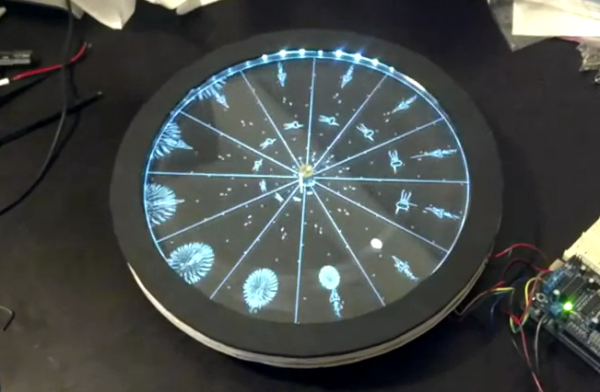
The people have spoken. Hackaday has won the Redbull creation challenge by popular vote.  Despite a few bumpy spots in the voting process, our project, the Minotaur’s Revenge (gameplay footage around the 2min mark in the video), got the most votes from the public winning us $5000 for our hackerspace and a trip to the World MakerFaire in New York.

Thanks to everyone who was able to actually vote, and we totally understand about those who didn’t.