Classic Game Emulation On The Dockstar

[Hunter Davis] is playing games like Contra, Monkey Island, and Quake 3 by running them on a Seagate Dockstar. We were shocked after seeing how well these run in the video after the break. [Hunter], who used the ZipIt for game emulation in the past, added a couple of hardware peripherals to get everything running. For sound he picked up an inexpensive USB sound card which was no problem to get up and running. Next he picked up a USB to DVI adapter and fired up the Linux USB DisplayLink driver. With the peripherals running he loaded up Fluxbox and the rest was history. Not bad for a small network storage adapter. Continue reading “Classic Game Emulation On The Dockstar”
Reverse Geocaching Christmas Gift Box

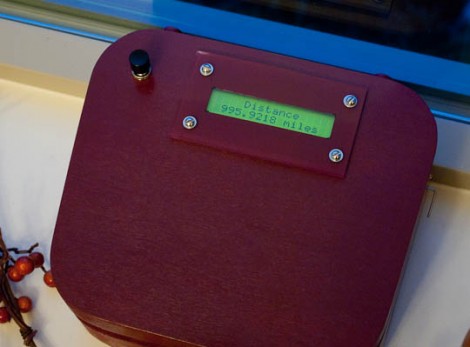
This is the reverse geocache box that [William Dillon] built as a Christmas gift this year. He started with an interestingly shaped wooden box from the craft store. The clasp to keep it shut uses a servo motor on the lid with a wooden arm that grasps a screw on the base. As with the original geocache box, the Frustratomatic, and the smaller geocache, the box is designed to open only when in the correct geographic location thanks to the GPS module inside. That was a problem for [William] when a bug in his firmware locked the box during development while the key location was 1000 miles away. Luckily the box uses hinges that are attached from the outside with screws. We wonder how feasible it would be to use the mounting screws from the LCD screen to implement a coded emergency entry, using one as ground and the others as paths to microcontroller pins.

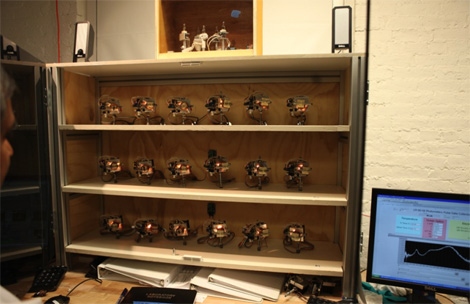
512 LED Cube

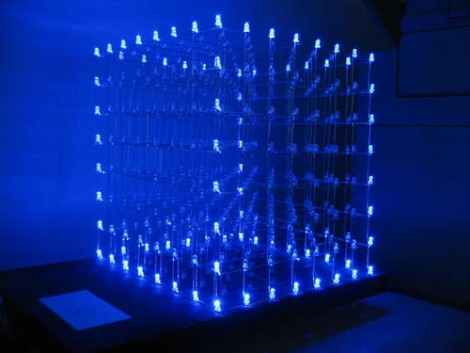
Get out the soldering iron and clear your schedule, it’s going to take you a while to assemble this 8x8x8 LED matrix which contains a total of 512 LEDs. We’ve looked in on a 3x3x3 cube, and [Chr], who is responsible for this one, has assembled a 4x4x4 cube before, but this one is quite a leap in complexity. It isn’t just physical assembly problems that increase with scale, you’ll need to consider a power supply too since one layer of a 3x3x3 cube would need at 90 mA, but a single layer of the cube above requires 640 mA to light all of the diodes. Multiplexing is handled per-layer, controlled by  ICs which share 8 data lines and are latched by a shift register. This means the display only requires 11 microcontroller pins for addressing. It is striking how well [Chr] explains the design process, and how cleanly he builds the driver circuits on protoboard. There’s a lot to look at and a lot to learn, not to mention the stunning results which can be seen in the video after the break.

Continue reading “512 LED Cube”

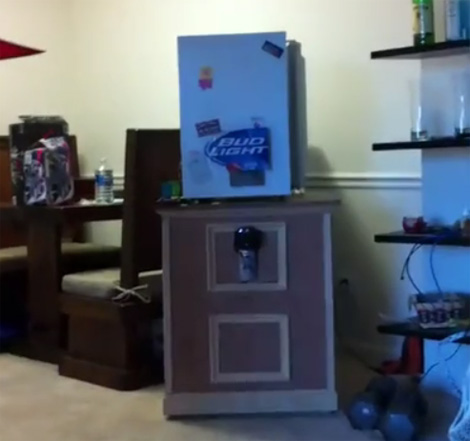
Beer Shooting Dorm Fridge

blunt force traumomatic

When we first heard the parts list for this project, we weren’t too impressed. It has an iPhone connecting to an IObridge etc… But then we heard the next, and most important part, an air cannon and an assortment of beer. We were sold.  As you can see in the video after the break, a fancy iPhone interface lets you select your beer, then dispense it into the cannon for delivery. The next step is to aim using a web cam mounted at the cannon and let ‘er rip! The beer is fired across the room and into your hands. We suspect that the amount of cranial injury, holes in the drywall, and shattered glass will greatly increase in frequency as the night goes on. Awesome.

Continue reading “Beer Shooting Dorm Fridge”

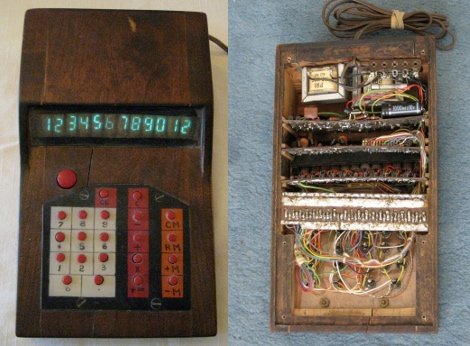
Calc Is High-tech For 1970’s Homebrew

Just one look at that banner image and you’ve got to be thinking “that’s old”! This 1970’s era home made calculator used a 4-function calculator IC that was quite advanced for its time. The only problem is that the chip couldn’t do anything other than calcuations, which left it up to the maker of this dinosaur to get the display and keypad working. Circuit boards were made by drawing on copper clad with resist marker. These controlled the VFD digits for the IC’s output and also fed it the user inputs.

[Thanks Brian]

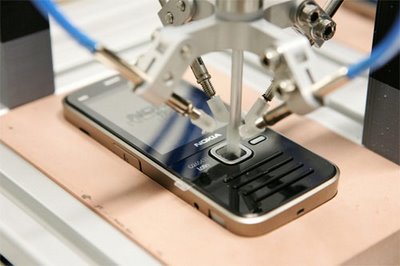
Cell Phone Endurance Tests


Gone are the days when a phone would last you a lifetime and enter the days of glass covered mobile phones built to be sexy and sophisticated. With these new phones come new testing methods. Companies like Nokia are still dedicated to making the best phones possible and making them durable through vigorous testing. The example shown in the article, is simulating a phone dropping from a shirt pocket onto the floor. Nokia claims to use 200 endurance tests encompassing temperature, extreme usage (use this button pusher for you own test), physical drops, and exposure to humidity on each new model in their product line. Makes one wonder what other companies are using for their endurance tests. There’s video of the Nokia N8 Drop Test is after the break, and don’t forget to leave a comment if you know about other interesting test methods.

Continue reading “Cell Phone Endurance Tests”