Analog Style LED Clock

Almost named this LED analog clock, like others have... the first comment would have corrected us.

We spied this pretty LED clock this morning and were impressed with how cleanly it was constructed. It was built to mimic an analog clock, so you have the typical hour markings and a minute and hour hand. The minute hand stays in each position for roughly 2 to 3  minutes. The brains behind all those LEDs are a PIC 16f877 with a DS1307 realtime clock. Over all, [WellyBoot] soldered 169 LEDs into place, and did it in a nice clean fashion. We suspect that if we had done it, it would resemble a spaghetti pile. You can see the schematics and build pictures on his site, or watch a video of it in action after the break.

[via HackedGadgets]

Continue reading “Analog Style LED Clock” →

unbelievably simple

Home Made T.E.A. Lasers

[Nyle] was interested in building lasers at home but felt that the exotic parts list was just too daunting. That was, until he discovered T.E.A. lasers. T.E.A. lasers can be constructed from a few bits of aluminum and some high voltage. They emit UV light, as you can see in his examples where he shoots them through a jar full of water with highlighter ink mixed in.

He has posted several variations of different sizes as well as numerous images of them in action. You can see a video of one in action after the break. We also have to point out the fantastic music in the video. It reminds us of those school videos left over from the 50s.

Continue reading “Home Made T.E.A. Lasers” →

Building A Power Supply Around A DC-DC Converter

The EEVblog is on a roll with interesting topics lately. In the latest episode [Dave] takes us through the nitty-gritty of switch mode power supply design. Using DC-DC converter IC’s in not especially hard. The datasheets tend to have fairly good usage schematics but there’s always a bit of heartache that goes into figuring out which external components will make for an optimal design. Get your calculator out and, in the video after the break, he’ll walk you through choosing component values based on the formulas for the MC34063 converter chip.

[Dave] makes the point that this is an extremely common chip, available from several manufacturers, and often found in consumer electronics. In fact, the switchmode supply hack from last month was using a regulator based around the MC34063. So you can buy it or scavenge for it. One thing to note though, we checked Mouser and Digikey and they’re pretty short on these chips right now. Plan your projects accordingly.

Continue reading “Building A Power Supply Around A DC-DC Converter” →

Small CNC Gadget Draws What It Hears

This art piece makes drawings based on sound. [Mario Marchese], who is responsible for those illusion props back in february, built this little guy out of a bunch of junk he had lying around. It features four microphones that listen to ambient sound and feed the signal through some LM386 audio power amplifiers. The output is translated into forward, backward, left, and right movements of the writing platform while the pen is fixed in the same position. Despite what we said in the title of the post this isn’t strictly a CNC machine, but more the primordial cousin of one.

Cheap Cable Reused To Add USB To Your Project

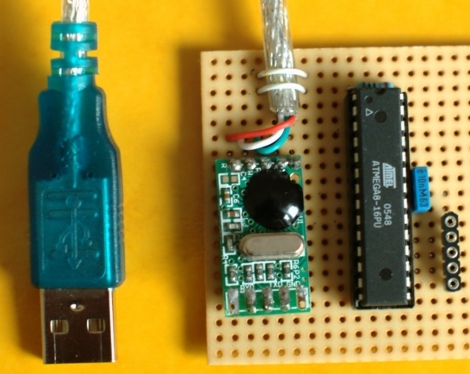
You get what you pay for. [Jkx] wanted to see how a USB to RS232 cable could be sold for just $1.70 and found out that it’s not actually RS232 compliant. The cable communicated as TTL levels, not the 12V expected of RS232 (although it can handle 12V incoming). He didn’t really want to use them for their intended purpose anyway. By betting rid of the DB9 plug and reusing the enclosed circuit board he now has a really cheap way to interface a microcontroller with the Universal Serial Bus. He worked out a couple of short subroutines that take care of receiving and sending data over the connection.

Keypad Door Lock, Better Than Last Years Keyfob?

It’s that time of the year again. The leaves are changing colors, it’s getting colder outside, and all the littler hackers are off to college. Which means we get to see an influx of dorm room locks and openers.

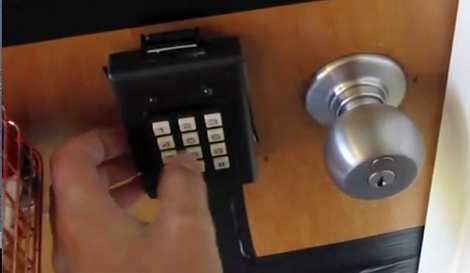
[Adam] is back at it again with a new keypad dorm room lock. Last year he had an exceptional setup using a car keyfob, so we’re a little curious as to why he would revert to such a low level system as a keypad that isn’t even color coded.

Perhaps its in his “new” way of presenting the hack. Rather than a blog or write up, he documents the entire most of the process in a little less than 20 YouTube videos. Watch him testing out the system after the jump.

Continue reading “Keypad Door Lock, Better Than Last Years Keyfob?” →

Macro Lens For A Nexus One

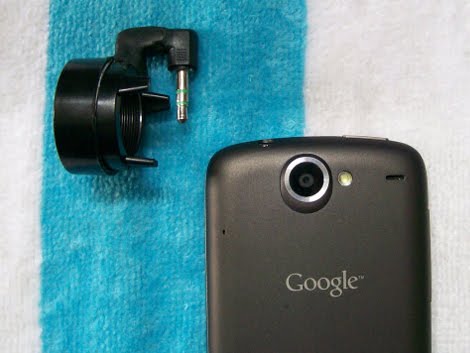
[Thomas] tipped us off about a macro lens attachment for his Nexus One. As you’d expect, adding the lens helps the phone’s camera bring tiny details into focus. He re-purposed a lens from a pair of mini binoculars, using epoxy putty to make a mounting bracket. Now the last time we saw this putty used with a phone it was for a snap-in bracket that cradled the phone and included a lens adapter. Rather than go that route [Thomas] made use of the headphone jack just above the camera lens. An old headphone plug has been epoxied to the macro lens ring, holding it in place securely while remaining easily removable.