DTMF And SelCall Signal Generator

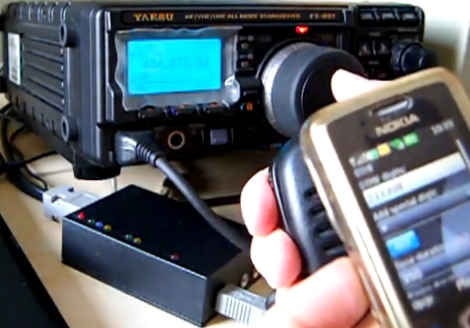
[Rogal] wrote a cell phone application called ToneTool that generates audio tone sequences. It can be used to output DTMF and SelCall sequences which are used by telephone systems and radio-telecommunication hardware. The software is written in J2ME so if you have a cell phone that can run Java apps it will probably work for you. This is like a digital-age Blue-box in everyone’s pocket. But we don’t think there’s too much opportunity for the mayhem seen with the original phone phreaking.

See him generating and sending DTMF commands over an Echolink network in the video after the break.

Continue reading “DTMF And SelCall Signal Generator”

Microchip’s PIC Development For IPhone And IPod

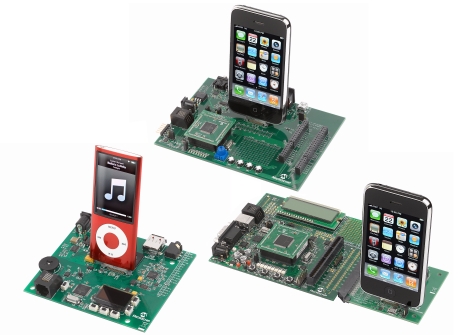
It seems a bit late to the party, but Microchip has just announced a family of PIC development boards for Apple products. The three offerings include a digital audio development kit, 8-bit accessory development and charging kit, and a 16-bit accessory development and charging kit for iPhone or iPod.

We’ve seen a lot of homebrew Apple addons that use microcontrollers. This not only takes the hardware interface to the next level, it does it with Apple’s blessing. But somehow that doesn’t seem like quite as much fun.

[Thanks Juan]

Trash Heap Projector

[youtube=http://www.youtube.com/watch?v=S5jymxi62RI]

Being hackers, sometimes we just want to hack something together, not engineer it. This projector is a great example. Made mostly out of cardboard and duct tape (or duck tape if you prefer). He picked up a 12v LED array, a cheap fresnel lens, an LCD from a “back up monitor” and a focusing lens taken from a magnifying glass. Sure, we’ve seen better, much better. But seeing an evenings worth of feverish wire twisting and taping is always pleasant. It may look pretty dim in the video, it may be as well, but keep in mind that it is common for them to appear much brighter in person or if shot with a night setting on a digital camera.

Flash Animations On Peggy2.0

[vimeo=http://vimeo.com/10453715]

The LED display toy known as the Peggy2.0 just keeps getting cooler and cooler.  [Leonard] is now sharing with us how we can stream flash animations to one. It requires some Java and an Arduino, but the final effect is quite fluid and responsive. We’ve seen the Peggy grow from basically an electronic litebright to doing video and even being chained together to make larger displays.

[via EMSL]

Leapfrog DIDJ

Since we first mentioned the Leapfrog DIDJ, a lot has happened. A number of avid readers of Hack a Day teamed up with a couple hackers experienced with the DIDJ, and have managed to make some huge progress into making a linux based game console on the cheap. For all the readers who missed out on the last sale on Woot, its about time for a second chance.

The team working over at the HackerFoundry forum have managed to gain serial console access, map the file system, create a fake update server, and are almost at a point where replacing the stock OS and firmware can be done with software alone. They have also designed and tested a homebrew cartridge with a slot for a microSD card and breakouts for expansion and debugging.

Right now they are looking for someone with experience snooping USB protocols to figure out how the device communicates to the computer, as well as anyone who is interesting in just testing or playing around with what they have done so far. There are a number of tutorials and walk-throughs on the eLinux wiki. Its amazing how far this group has come in just two months.

Guitar Echo Pedal Built With Mbed

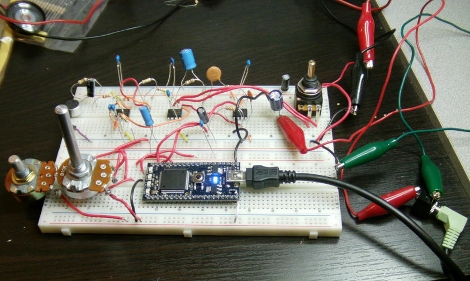
[Vsergeev] built an echo pedal for a guitar or with other audio manipulation applications. He used an mbed microcontroller for the project. You may remember Hackaday writer [Phil] labeling the mbed an ‘Arduino on steroids’, and it certainly handles this audio processing quite well. We’ve included a clip of the echo effect after the break. During the design process, [Vsergeev] used LTspice to simulate the analog circuitry and make things right before committing to the physical circuits.

Continue reading “Guitar Echo Pedal Built With Mbed”

Hackaday Links: March 28, 2010

Cardboard record player

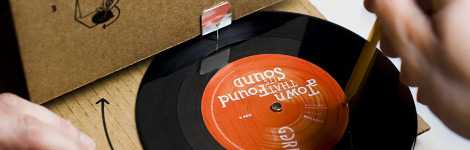
[Yen] tipped us off about this cardboard record player. It’s a marketing tool that you receive in the mail. Inside the cardboard packaging is a record and the packaging itself can be folded into a player.

Hackable handheld

The NanoNote is a tiny handheld housing a lot of power for a small price. It ships running openWRT and sports a full keyboard, 336MHz processor, 32 MB ram, and 2 GB of flash memory. Not bad for $99. [Thanks Drone via Linux Devices]

Virtual page flipping physical interface

Love reading ebooks but miss flipping through the pages? [Marcin Szewczyk] developed this interface that lets you flip a couple of sheets of plastic to turn and fan through pages on the screen.

Augmented reality tat

Not interested in supporting an ink artist or just can’t decide on the design? Perhaps you should get an augmented reality marker tattooed on your arm and have the art digitally added for those who have already made the switch away from using their analog-only eyes. [Thanks DETN8R via Asylum]

Cooking with a CPU

[Bo3bo3] is practicing the art of cooking with processors but he’s bumped things up a notch. Instead of cooking inside a computer case, he removed the processor from the board and made it USB powered. [Thanks Waseem]