Nimbus, Portable N64

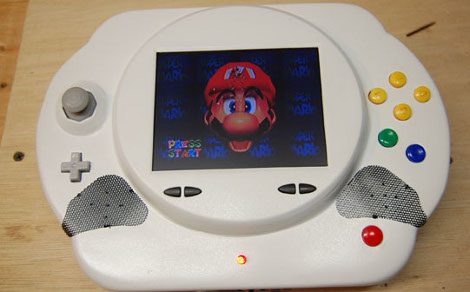
We love a beautiful and successful N64 portable mod, (In case that fact wasn’t already obvious). And today we would like to add [cndowning’s] Nimbus N64 to our list of favorites.

The base is made from vacuum formed plastic while the buttons come from a modified superpad and the screen is a Zenith 5inch. We couldn’t find word on battery life or weight, but for those that like a hunt, or have other questions, the build logs are available. Follow the jump for a video of the Nimbus in action.

[Thanks Fernando, and GaryC for our silly typo] Continue reading “Nimbus, Portable N64” →
XKCD Takes A Swipe At The Arduino

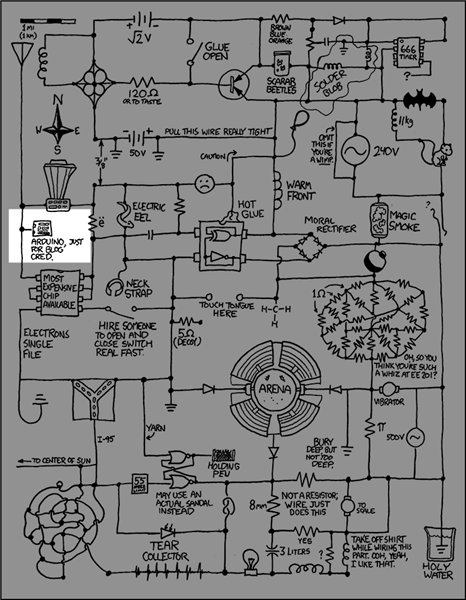
This XKCD comic takes a playful swipe and almost everything, including the Arduino. We’ve heard people claim that we have some sort of favoritism toward Arduino, and we don’t. People just submit a LOT of projects with them. But there is one point that we’ve seen a few times that should be addressed. In our categories we have an “Arduino hacks” section. That will not be going away, again, because we get so many submitted. However, shouldn’t we also add some categories for other stuff? Should there be a “pic hacks” category, or maybe just “microcontroller hacks” category?

Let’s not making this an Arduino bashing thread. Instead, give us some good ideas on other categories you would like to see for sorting.

[via littlebirdceo]

Making Magnetite Nanocrystals

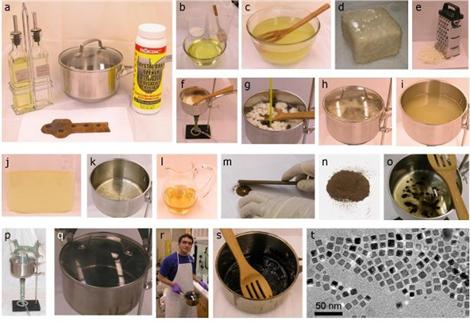
Unlike many chemistry projects we post here, making magnetite nanocrystals doesn’t require anything that can’t be found in a local grocery store. All that is required is oil, vinegar, crystal drain opener, and rust. We don’t recognize the specific brand of drain cleaner that they are using, but we’re sure that you could find one with the same ingredients. Magnetite nanocrystals  are used to remove arsenic from water. If you are in the USA or most of Europe, that’s not a big concern, but it can’t hurt can it?

[via Make]

Cornell Final Project List

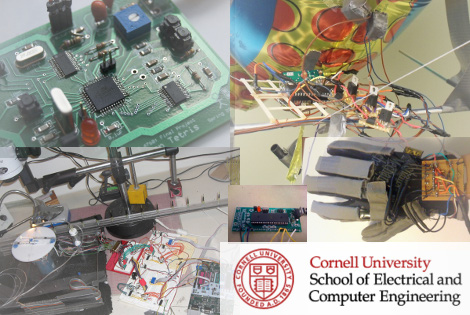
Looking for an interesting project to do using an Atmel Mega644? Students at Cornell University have got you covered. They were required to choose, design, and build a project using the microcontroller; and this year is quite promising with video object tracking, the always popular theremins, helicopters, Potentiostats, even Pavlovian conditioned mosquitoes, and more.

Of course all the previous years are included as well, making over 350 projects total.

[Thanks Bruce Land]

5×2 Patch Board

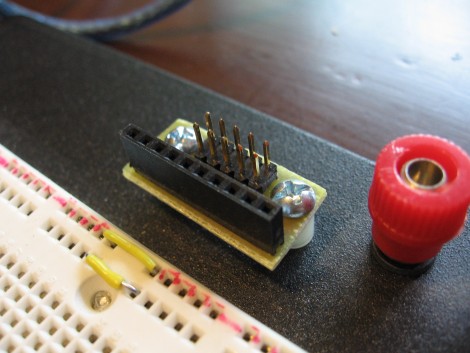
Sometimes we want to sit on the back porch, crack a beer, and do some prototyping. Other times we’d like to do the same but on the couch in the livingroom. To that end we added a 5×2 pin to 10×1 pin patch board to our solderless breadboard.

The 5×2 pin form factor is pretty common, used as an AVR programming header, on development boards like the Dragon Rider 500 and the STK 500, and in small prototyping devices like the Bus Pirate. We like the freedom of using IDC cables as interconnects and that’s where this board comes in. Now we can patch into the IDC cables yet still quickly disconnect them when moving to a different prototyping location. Check out the PCB artwork and this handy device in use after the break.

Continue reading “5×2 Patch Board” →

Reuse That PDA As A WRT Terminal

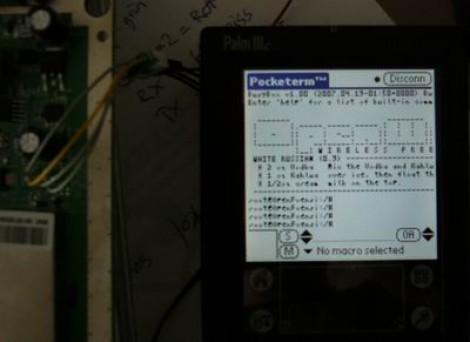
[Michu] used his old Palm IIIc to make a serial interface for his OpenWRT router. It’s a matter of cracking open both the router and the Palm device, then connecting the TTL lines from the router to the MAX 3386e level converter chip inside the Palm. From there, Pocketterm can connect to the router’s serial terminal.

A lot of us have old electronics lying around that work perfectly well. It’s nice to find hacks that make them useful again.

[Thanks Isama]

Toner Transfer Explained Step-by-step

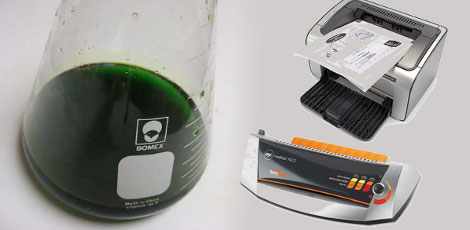
[Tanjent] send us a link to his tutorial on the toner transfer process for fabricating circuit boards. We’ve seen a lot of these in the past, but we liked how his is straight to the point while also sharing several tips and options along the way. Notably, he ”tints” the copper clad before trying to adhere the toner to it by swabbing on a bit of etchant. His reasoning for this is that the toner has more trouble sticking to the shiny copper. Just a bit of etchant will pit the surface and let the toner stick better.

He’s still using paper as a medium and not printing toner powder directly to the copper clad. His paper of choice is HP Brochure Paper while we use glossy pages from the union newspaper. But like us, he does use copper chloride as an etchant, which you can learn to make yourself. We’re still looking for a definitive solution for disposing of this chemical. We’ve been using the same batch for years and recently it’s turned cloudy with impurities. If you’ve got disposal tips let’s hear them in the comments section.