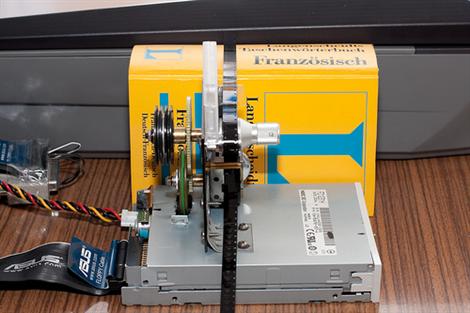
Automated Super8 Film Scanning

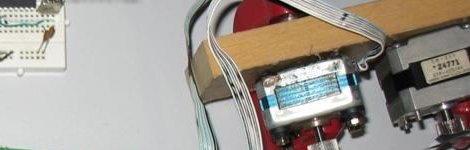
For those of you who have been dreading the day that you have to dig out those old family films in Super 8 format and take them to get digitized, dread no more. Now you could turn it into a cool project. [Photobsen] has posted pictures of an automated system for scanning and compiling the film into a digital movie. There was already software available, called CineToVid, which would take the scanned segments and create a video from them, but doing the actual scanning was quite laborious. [Photobsen] built a quick automated system using an old floppy drive connected to his computer via parallel port. He now scans about 80 seconds of film per hour, unattended.
Rotary Encoding With Your Soundcard

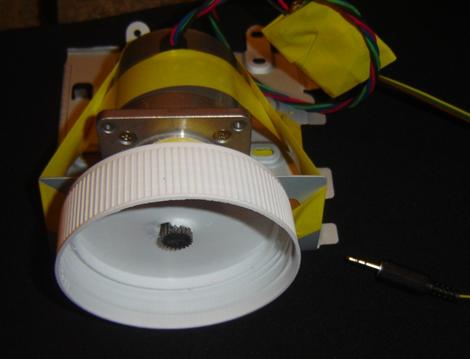
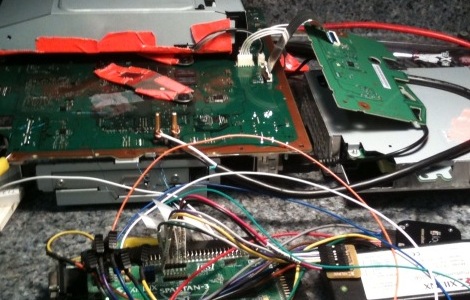
[Stefan] sent in this project writeup to show us how he used a stepper motor as a rotary encoder. Using a stepper motor as an encoder isn’t really that new, as [Stefan] points out, we’ve seen it several times before. He wanted to use this in the quickest simplest way with his computer though. Instead of doing any decoding on a separate microprocessor, he’s connected the stepper directly to his sound card and written code to do the rest. You can download that code and see a video of some practical applications on his site.

PS3 Hacked!

There is very little information out at the moment, but [geohot] has successfully hacked the PS3 to have full read and write access, bypassing the Hypervisor. At the moment he’s not revealing the exploit, but with this knowledge it wont be long before the PS3 finally gets whats coming. Keep track of [geohot’s] progress on his twitter, @geohot, and blog.

[Thanks Jack, Julio, Jeremy, Squisso, and Vor]

Hackaday Links: Sunday January 24

Everyone Remembers Free day right? [The Ideanator’s] Bus Pirate came in such a nice red box – he decided to make it his permanent case.

[Chico] is in the middle of making a CNC, but decided to make some music with the steppers in the mean time.

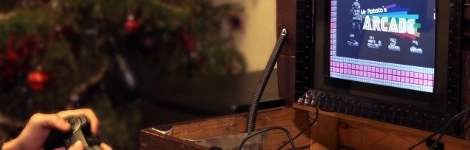
What looks like an old wooden box is actually [Ludvig’s] super sweet retro arcade cabinet. Complete with a giant emergency stop red button.

Who says Legos are dead? [Carl] used them to create a simple and cheap diffraction grating projector. Including video!

[Torchris] used an Ethernet shield exactly as it was designed, sending data over Ethernet. Still a nice hack for those needing help working with Ethernet shields and Arduino.

Finally [Robert] let us know about a friends Arduino Binary Clock. But we think his elegant use of tape and a sand blaster to engrave glass is cooler.

IPhone Look-alike On Your Kitchen Wall

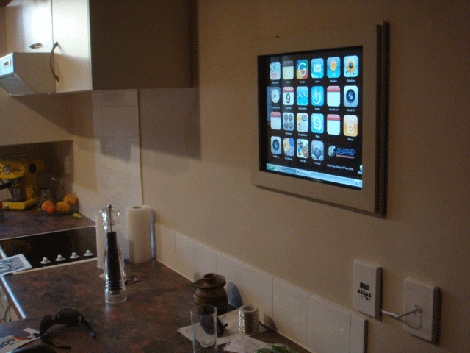
[Ryan] and his wife wanted to have a touchscreen interface in the kitchen to store their recipes and for various music, video, and Internet entertainment. We know where they’re coming from, we’re quite tired or cleaning flour (or worse!) off of our palm pilot screen after baking. The display you see on the wall is just the interface, a computer is stored in the cabinet below the counter. He’s running Windows 7 and using a custom graphic interface which is intended to mimic the looks of the iPhone. He’s sharing the UI as open source and has just started a forum for those interested in trying it out and adding to the available features.

One thing we noticed in his writeup, he prototyped this with an old 2 GHz computer but upgraded the hardware because it was too slow. This pushed to total build price to about $1350 USD. We can’t help but mention that using a Linux based system may have saved him from the upgrade. We know there’s some extremely powerful media software that runs on light hardware specs.

[Thanks Hannah]

C64 Interface For Your Computer

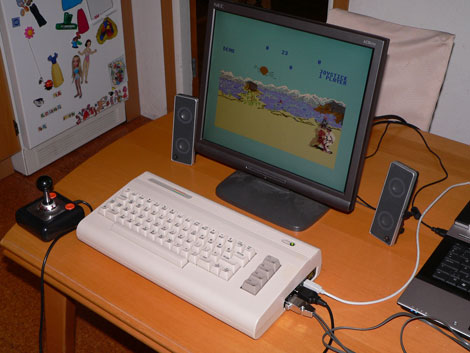
Before we get started, lets just point out that this C64 was broken. He did not take a functional C64 out of operation for this. What he did do, was to build a hardware interface for for his VICE system. For those unfamiliar, VICE is a cross platform C64 emulator. [Simon] points out that the old games just weren’t as much fun without the original hardware. Having a broken C64 lying around, he put it to good use. It now acts as the interface for all the original fun stuff.

If you are a fan of the hardware, but just want to interface it as a normal USB keyboard, that is possible as well.