Fisheye Lens For Your SLR

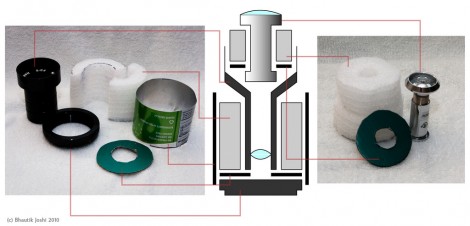
[Bhautik Joshi’s] fisheye lens hack works well and looks OK too. It uses a door peephole from the hardware store as the fisheye and a slide projector lens to enlarge the image for proper sizing on the camera’s sensor. He included an EOS lens adapter so that it is easy to install and remove, then grabbed a soda can and some foam for the rest of the build. This will take those fun bendy pictures but don’t forget that you can correct for that in software if you wish.
Twittering Pub Hanging

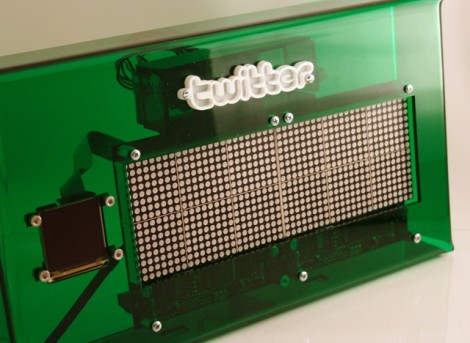
There’s nothing groundbreaking about this hack, called the TweetWall, but the craftsmanship is gorgeous! [Yergacheffe] had access to the right tools; an epilog laser and a thermoplastic bender (an item we didn’t know we needed until now… thanks a lot). It has the usual bits you’d expect in a Twitter ticker, an LED matrix and an Arduino. There is also an OLED screen that displays the avatar of the current Twitter feed. Because data is transferred over a serial connection the SD slot on that screen is used to cache images which helps to keeps the messages coming without delay. The end product is quite good, we’d expect to see it hanging on the wall of the pub down the street.

Just The Right Controller For Any Game

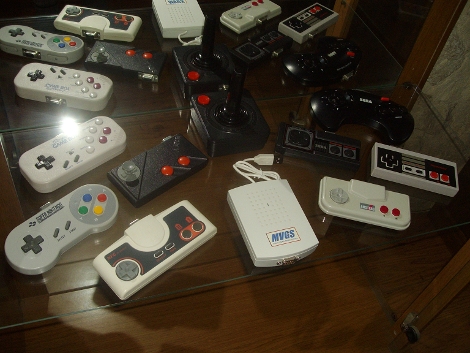
[Patrice] hacked all of his classic controllers for use when playing games on an emulator. He made the base station starting with a USB gaming controller. From there he soldered wires connecting the PCB pads for all of the buttons to the pins of a d-sub connector. The same is done on the classic controller, allowing him to switch them out at will. If you do the wiring correctly you only need to configure your emulator buttons once. This is a lot easier than trying to find and use classic controller connectors but you do have to alter that vintage hardware.

GPS Embedded In Visor

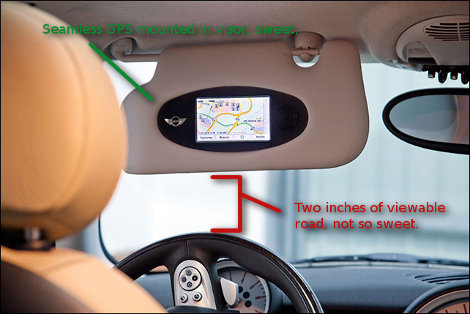
We’re all for putting a GPS where it doesn’t normally go, but we’re not sure [Roberto’s] version* is the best of locations. Take for example [Jair2k4’s] GPS. It doesn’t block out 50% of his vision of the road and the impending accident in front of him.

Regardless, the solid aluminum and seamless mounting really does make it look like part of the car, and props to him for making it ‘hidden’ when he’s out of the car to try and prevent thieves. But there are cheaper, easier, and dare we say better solutions out there.

*We found his site only works in Internet Explorer, gah!

Gently Stroke This Drum

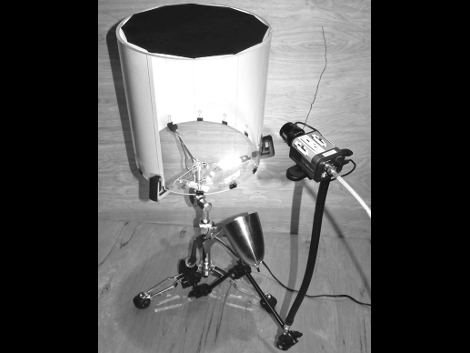
The silent drum is played with your hands. It acts as a midi device by analyzing the movement of the rubbery black drum head. As you can see in the photo, one side of the body is clear and the other is white. A light shines up into it to boost the contrast and a camera picks up the black head as it moves past the white side of the shell. [Jaime Oliver] has provided an interesting look at the analysis method used with this instrument and there’s also a system of notating a composition for future performance. See and hear it played in the demo after the break.

Continue reading “Gently Stroke This Drum” →

Build Your Own RFID Reader

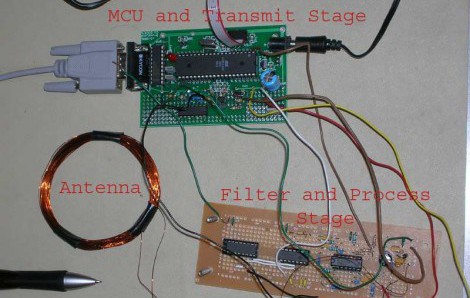
We asked for it and our readers delivered. [Klulukasz] left a comment pointing to this diy RFID reader that was a final project in 2006 for a class at Cornell University. It is well documented and includes not only a schematic and code, but an explanation of the design considerations used during the build. The project uses an ATmega32 and the parts list priced out at about $50 at the time. There were plenty of responses to the RFID spoofer post pointing out that there are readers available for $40, but we want the fun of building our own.

A bit more vague with the details but no less interesting is this other simple RFID reader design. Thanks to [Chuck] for his comment which pointed to that link.

Toaster Web Interface

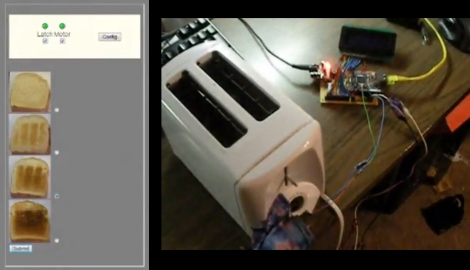
Within a ten-hour window [Wes Brown] threw together this toaster with a web interface for one of his classes. He sourced the WIZnet embedded webserver for the project but this could be pulled off with a homebrew webserver as well. When you point your browser to the correct address you’re greeted with images of bread that have been charred to various degrees. This greatly complicates the act of making breakfast while at the same time presenting a possible fire hazard. Check out the video after the break.

Continue reading “Toaster Web Interface” →