Wireless Bootloading

[vimeo= 2976417]

Tired of having to physically connect to your microprocessor to upload new code? Just do it over a wireless connection. [Nathan] takes us through the process of setting up a wireless bootloader for the ATmega168. He is using the XBee base and remote modules for the wireless communication. While people have been doing wireless bootloading with the Arduino already, [Nathan] found that it was common for them to have timeout issues. His remedy was to make his own custom one that is much faster. He’s asking for help though. At this point it is tested and working, but he needs someone with more programming knowledge to help him make it “drop-in” compatible with the Arduino IDE.

Don’t forget to submit projects to our tip line.

5 Cent Tilt Sensor

5cent

This is a 5 cent tilt sensor. We know it cost more than 5 cents, but it is in fact a tilt sensor that utilizes a 5 cent coin. We’ve all done quick hacks to make quick sensors for various projects. We’ve seen tons of them, from stealing springs out of pens and shoving a resistor through them for flexible contact switches, to tin foil touch sensors. This one is new to us though. The design is fairly simple, you insert 4 bits of wire to serve as contacts and the coin will make contact with only two at a time. It isn’t analog, it isn’t extremely precise, but it is super quick and easy. Thanks for sharing [ix].

Quake On The BUG

[youtube=http://www.youtube.com/watch?v=7tpAHjh7O2Y]

It seems like every piece of hardware has to earn its respect by going through some standard paces. One of which is having Quake ported to it. Much like an angel earning their wings, Bug Labs, with the help of community [CMW], has ported Quake to the BUG. Right now, the only add on needed is the BugView module. Controls are done through the base unit.

Thermosonic Wedge Bonding

hot

In the past, if we’ve been doing smd soldering, we’ve used pretty basic hot plates. This project takes that idea a bit further.  Since [kc6qhp] will be using parts that aren’t conducive to soldering, he has to use wire bonding. After locating a fairly cheap wire bonding machine and microscope, he built the heated stage to fit perfectly with his other tools.  You’ll notice that he has machined a lip around the heat plate for small custom C-clamps as well as made it adjustable height. Very nice work [kc6qhp].

Portable Wii

portablewii

Not content with Nintendo’s current portable video game offerings, fifteen year old hardware hacker [Xteaphn] (pronounced “Steven”) has come up with a series of hardware modifications to make a battery-operated Wii console. The hacked console features a folding laptop-like screen, which apparently includes the IR emitters necessary to make the Wiimote operate properly, as well as a set of tiny stereo speakers. To show how tiny the modified console is, [Xteaphn] provides size comparisons with thirteen- and fifteen-inch laptops as well as with a classic Nintendo Game Boy. The only potential hindrance to its long-term durability, as best as we can tell from the video, is that the battery pack and its associated connecting wires hang crudely off the back of the console like a sort of electric colostomy bag.

Check out [Xteaphn]’s YouTube video after the break.

Continue reading “Portable Wii” →

Sweat Bot

sweatbot

The future is here ladies and gentlemen,  robots are truly making our lives better.  The grueling job of sweating into clothing has been taken over by the latest in technology: the sweat bot. With water heated fake skin, and robotic sweat glands, this machine works tirelessly to test clothing. While emulating walking or jogging, it sweats into the clothing. This helps in the design of more breathable and sweat resistant fabrics. Though we know it is just a machine, choosing to put the water hoses through its face was just plain creepy.

[via BotJunkie]

Ferric Chloride Etching Chemistry

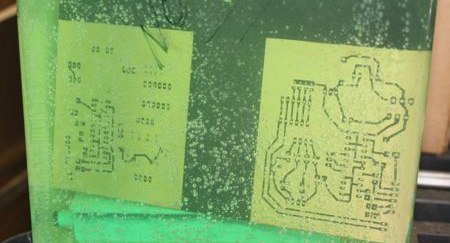
[ladyada] has republished an interesting snippet from the synthDIY mailing list. [David Dixon] discusses the actual chemistry behind ferric chloride based home circuit board etching. He concludes that ferric chloride is essentially a ‘one-shot’ oxidant. It can’t be regenerated and can be difficult to dispose of properly. The use of acidified copper chloride is a much better path and becomes more effective with each use, as long as you keep it aerated and top up the acidity from time to time. This etchant solution is actually the result of initially using hydrogen peroxide as an oxidant along with muriatic acid. You can see us using this solution in our etching how-to and while creating the board for our RGB lock. For more information on using hydrogen peroxide, check out [Adam Seychell]’s guide and this Instructable.

Aside: [ladyada] has added the receiver code to the Wattcher project page.