
Solar Batteries

solarbatt

[Knut Karlsen] put together a prototype set of solar rechargeable batteries. He always seemed to have batteries laying around on his worktable and figured they might as well be charging. The flexible solar cells were given to him by researchers at the IFE and are rated at 1.8V. He used superglue to secure them to the C cells. A silver conductive pen plus flat wires from a Canon lens connect the solar cells to the battery terminals. The batteries just trickle charge for now, but he’s going to try to build cells with built in charge controllers in the future.

Molten Metal LED Display

[youtube=http://www.youtube.com/watch?v=gMuDudCiPR8]

firstly, we don’t know why they are doing this, and we don’t care. You are watching an LED panel, controlled by molten metal. The panel has the leads sticking down below the bottom of the board, so the metal can make connections as it flows past. They are using Wood’s metal, not mercury so it has to be heated to about 159 degrees Fahrenheit to be fluid. This has been representing problems as the metal tends to stick to whatever container he is holding it in. That actually seems to be what most of the writeup and discussion are about, rather than, what it will be used for.

[Thanks Andre]

Parts: I2C Audio Volume Potentiometer (DS1807)

ds1807ii

The DS1807 contains two logarithmic digital potentiometers (pots) for audio volume adjustment. Each pot has 64 volume levels plus a mute setting. The volume level of each pot is set over a two-wire I2C serial interface. We’ll show you how to connect and interface the DS1807 below.

Continue reading “Parts: I2C Audio Volume Potentiometer (DS1807)” →

VHS Toaster

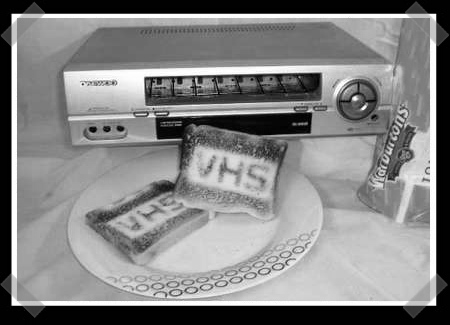
Though the inspiration was said to have come from a clip of The Young Ones, we all know this was bound to happen eventually. [lemonie] has turned a VHS deck into a toaster. They’ve done a fantastic job, it looks almost perfectly stock. We can imagine that maintaining the look of the VCR was pretty difficult especially getting everything to line up correctly. Finally, we have a use for our old VHS deck. You can see a video of it in action after the break.

Continue reading “VHS Toaster” →

Rear Projection TV Multitouch

proj

[Dave] sent us these fantastic instructions on how to hack a rear projection tv to be a multitouch interface. They’ve converted a 67″ inch TV by adding a couple of PS3 eye cameras and an infrared laser plane. There’s lots of great information, like how to replace the lenses on the PS3 eye cameras and how to create the custom fittings needed to make it all fit nicely. You can download the code, but it is Mac only.  They claim that this is the first conversion of a commercial rear projection TV to multitouch, but we know better. You can see a video of it in action after the break.

Continue reading “Rear Projection TV Multitouch” →

Flexible Circuit Valentine

valentine

[xander] built this LED valentine for his loved one. It’s interesting because he used Pyralux, a flexible circuit board material from DuPont. He describes the consistency as “tough plastic tissue-paper”, but had no trouble using standard toner transfer etching. It has an ATtiny45 microcontroller that pulses the 16 LEDs at an approximation of his heart beat. To avoid soldering a bunch of surface mount resistors, he used two constant current shift registers.

Voice Controlled Home Automation

stephanie

[Brian] sent in this writeup on his voice controlled home automation system. Starting with the Microsoft SAPI, a voice recognition system, he programmed some basic home automation. In a move that makes this project decidedly more awesome, he decided to build a physical representation of his automation system. This disembodied head is “Stephanie”. She responds to her name, has an articulated jaw that moves with the syllables in the words, and even ejects her “brain tray” on command. We want one.

There is lots of information on his site about the circuitry involved, as well as source code and a video. You can see the video after the break.

Continue reading “Voice Controlled Home Automation” →







