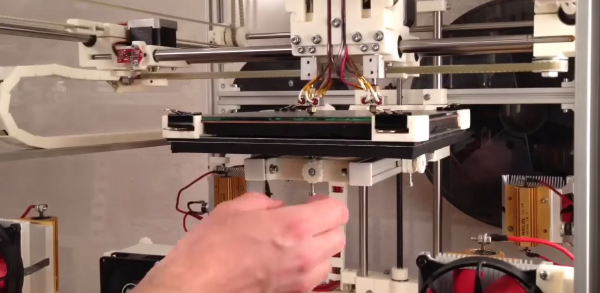
Two of the most important prerequisites for successful 3D printing is making sure the bed is level and correctly setting the Z=0 height. Getting both of these right almost guarantees great adhesion since the first print layer is not only at the right distance from the build platform but also at a consistent distance for the entire bottom surface of the part.
Manual bed leveling is tedious, requiring the user to move the print nozzle to different points around the build platform, adjust some screws and make sure the nozzle is a piece-of-paper’s thickness higher than the platform. If you want to get complicated, there is an automatic option that probes the build platform and makes height corrections in the software. The probes come in several flavors, two common methods being a deployed mechanical switch (usually mounted to a servo) or force sensors under the build platform that sense when the nozzle touches the build platform. This method also requires some fancy firmware finesse to get working correctly.
[Jonas] posted a video showing the semi-automatic bed leveling capability of his printer. The build platform is held a bit high by springs that surround each of the 3 screws that support the bed assembly. The nozzle is moved directly over one of the 3 screws and then moved down until it noticeably presses on the build platform, compressing the support spring. A thumb wheel is then tightened at that location, locking the bed in place. The same process is performed for the other 2 support points. The result is a perfectly level build surface. Check the video out after the break to see just how quick this procedure is!
We’ve seen a somewhat similar concept that uses a clever gimbal and lock system under the bed.
Continue reading “Semi-Automatic Bed Leveling Your 3D Printer”
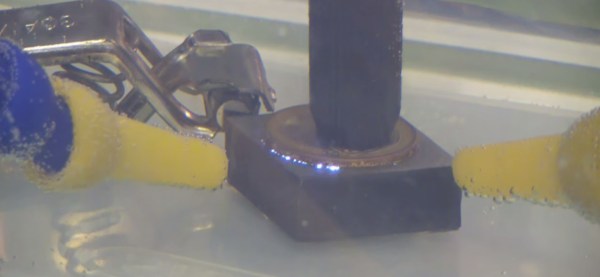
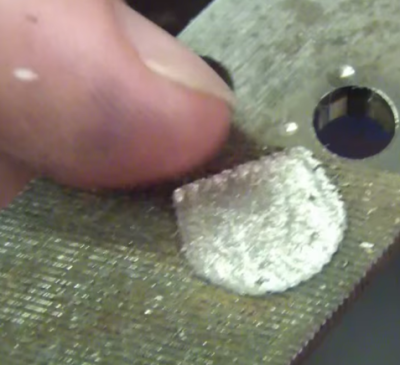 As you can imagine, a single spark won’t erode much metal. EDM machines fire tens of thousands of times per second. The exact frequencies, voltages, and currents are secrets the machine manufacturers keep close to their chests. [SuperUnknown] is zeroing in on 65 volts at 2 amps, running at 35 kHz. He’s made some great progress, gouging into hardened files, removing broken taps from brass, and even eroding the impression of a coin in steel.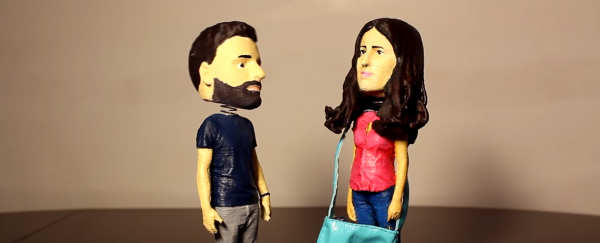
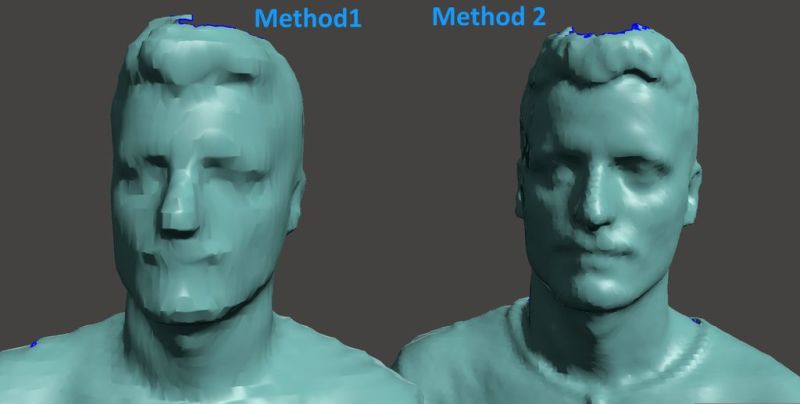 scans of large objects (including people) come out looking noticeably faceted. [Luis] came up with a work-around that results in a much finer detailed scan. Instead of scanning an entire person with one scan, he would do 4 separate scans. Since each individual scan can support 5,000 faces, the resulting merged model can be up to 20,000 faces. Check out the comparison, the difference between the two scanning methods is quite noticeable.