This excellent content from the Hackaday writing crew highlights recurring topics and popular series like Linux-Fu, 3D-Printering, Hackaday Links, This Week in Security, Inputs of Interest, Profiles in Science, Retrotechtacular, Ask Hackaday, Teardowns, Reviews, and many more.
So far in this brief series on in-band signaling, we looked at two of the common methods of providing control signals along with the main content of a transmission: DTMF for Touch-Tone dialing, and coded-squelch systems for two-way radio. For this installment, we’ll look at something that far fewer people have ever used, but almost everyone has heard: Quindar tones.
A trip to London, for provincial Brits, is something of an undertaking from which you invariably emerge tired and slightly grimy following your encounter with the cramped mobile sauna of the Central Line, its meandering international sightseers, and stampede of besuited commuters heading for the City. Often your fatigue after such an expedition will be that following the completion of a Herculean labour, but just sometimes it will instead be the contented tiredness of a fulfilling and busy time well spent.
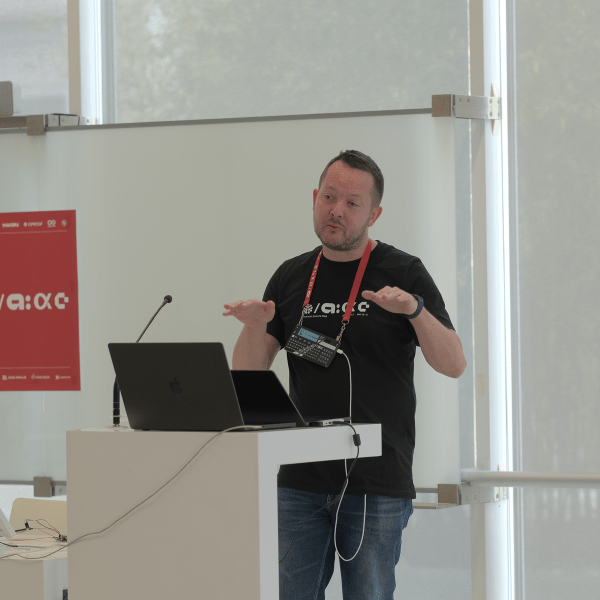
Such will be the state of the happy band of the Hackaday community who made it to London this weekend for our UK unconference held in association with our sponsor, DesignSpark. A Friday night bring-a-hack social in a comfortable Bloomsbury pub, followed by Saturday in an auditorium next to one of the former Surrey Commercial Docks for a day of back-to-back seven-minute talks laying out the varied and interesting work our readers are involved in.
In hacker circles, the “Internet of Things” is often the object of derision. Do we really need the IoT toaster? But there’s one phrase that — while not new — is really starting to annoy me in its current incarnation: AI or Artificial Intelligence.
The problem isn’t the phrase itself. It used to mean a collection of techniques used to make a computer look like it was smart enough to, say, play a game or hold a simulated conversation. Of course, in the movies it means HAL9000. Lately, though, companies have been overselling the concept and otherwise normal people are taking the bait.
The Alexa Effect
Not to pick on Amazon, but all of the home assistants like Alexa and Google Now tout themselves as AI. By the most classic definition, that’s true. AI techniques include matching natural language to predefined templates. That’s really all these devices are doing today. Granted the neural nets that allow for great speech recognition and reproduction are impressive. But they aren’t true intelligence nor are they even necessarily direct analogs of a human brain.
This is a busy, busy week for Tindie and Hackaday. We’re going to New York, and we have a ton of events planned.
First up is the monthly Hackaday meetup. This time, we’re teaming up with Kickstarter for a pre-Maker Faire Meetup. We’ll be hosting this at Kickstarter’s HQ, and already we have an impressive line of speakers set up to talk about Assistive Technology. These speakers include:
Anita Perr and R. Luke Dubois from the NYU Ability Project
Andrew Chepaitis from ELIA Life Technology
Also on deck for the for the Hackaday x Kickstarter meetup are live demos from WearWorks, who are developing the WAYBAND, a haptic navigation device and from Elia Frames, a tactile reading system.
The Hackaday x Kickstarter meetup will be Thursday, September 21st, starting at 6:30pm. Here’s the link to RSVP.
This weekend is also World Maker Faire New York and Tindie will be out in force showcasing all the wonderful bits and bobs developed by the Tindie community.
On deck will be [Jasmine] and [Brandon] from Tindie, and of course we’re inviting Tindie sellers to drop by the booth throughout the weekend and showcase their wares.
Also on deck for the World Maker Faire will be [Shulie], [Shayna] and myself. We’ll be tossing brand new Tindie stickers into the audience and giving out Tindie Blinky Badges. If you’ve ever wanted to show your enthusiasm for DIY hardware, now you can with an electronic blinky lapel pin. Solder it up and listen to Benchoff rationalize why it doesn’t need a current limiting resistor! Such fun!
BREAKING NEWS: APPLE HAS RELEASED A NEW RECTANGLE. IT IS BETTER THAN THE PREVIOUS RECTANGLE, WHICH WAS A LESSER RECTANGLE. SOME PEOPLE ARE UNHAPPY WITH THE NEW RECTANGLE BECAUSE OF [[CHANGES]]. THE NEW RECTANGLE HAS ANIMATED POO.
Mergers and acquisitions? Not this time. Lattice Semiconductor would have been bought by Canyon Bridge — a private equity firm backed by the Chinese government — for $1.3B. This deal was shut down by the US government because of national security concerns.
[Jan] is the Internet’s expert in doing synths on single chips, and now he has something pretty cool. It’s a breadboard synth with MIDI and CV input. Basically, what we’re looking at is [Jan]’s CVS-01 chip for a DCO, DCF, and DCA), a KL5 chip for an LFO, and an envelope chip. Tie everything together with a two-octave captouch keyboard, and you have a complete synthesizer on a breadboard.
As an aside relating to the above, does anyone know what the cool kids are using for a CV/Gate keyboard controller these days? Modular synths are making a comeback, but it looks like everyone is running a MIDI keyboard into a MIDI-CV converter. It seems like there should be a –simple, cheap– controller with quarter-inch jacks labeled CV and Gate. Any suggestions?
Way back in July, Square, the ‘POS terminal on an iPad’ company posted some data on Twitter. Apparently, fidget spinner sales peaked during the last week of May, and were declining through the first few weeks of summer. Is this proof the fidget spinner fad was dead by August? I have an alternate hypothesis: fidget spinner sales are tied to middle schoolers, and sales started dropping at the beginning of summer vacation. We need more data, so if some of you could retweet this, that would be awesome.
Remember [Peter Sripol], the guy building an ultralight in his basement? This is going to be a five- or six-part video build log, and part three came out this week. This video features the installation of the control surfaces, the application of turnbuckles, and hardware that is far too expensive for what it actually is.
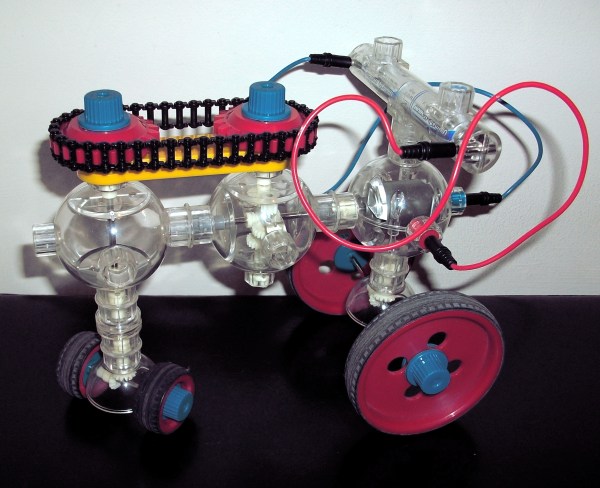
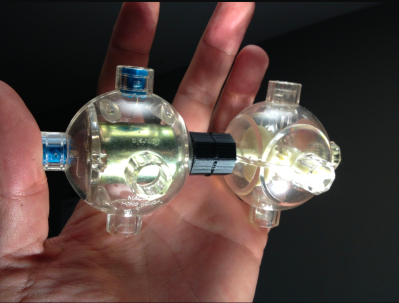
In the magical 80s, there was a building set that stood apart from the rest. Capsela, originally created by Mitzubishi Pencil Company (the Uniball folks) looked like a series of clear plastic spheres with gears and motors inside. The signature Capsela modules served as both enclosure and functional component. The set came with a variety of gear options like planetary gear, worm gear, and clutch capsules. You could use chain drives and propellers. A lot of the parts were water-resistant, and part of the toy’s shtik was that you could make boats out of it with pontoons keeping most of the robot out of the water.
Capsela’s sets were relatively simple, with only DC motors to make things move. However, as the product found success, the company built increasingly larger and more complicated sets with greater capabilities. For instance, in ’87 they released the Robotic Workshop that included an IR remote that could be configured with a Commodore 64. Later on the Capsela Voice Command 6000 was released, featuring a microcontroller that could understand 8 verbal commands as well as interpret IR signals within 25 feet.
I never got any of those fancy sets, but I still found a lot to do with the basic set my parents bought me for Christmas. The unique architecture of the set was both boon and bane–it certainly was a striking set, in terms of its appearance. However, there were only so many ways you could those spheres together. Also, if you weren’t making a boat the pontoons were fairly useless, with the most clever solution being to use one as a wheel substitute.
The thing that really did it for me, other than hacking out reconfigurable boats in my bathtub, was being able to see everything. All the gearboxes could be seen though the clear plastic. How many nerds learned about mechanical engineering by peering through Capsela spheres?
As with all things, Capsela had its peak and faded away. The product was licensed to a number of new manufacturers, but never found the same success. They tried focusing on the educational market but no dice.
Nevertheless, the product has retained a degree of nostalgia for those of us who outgrew it. A few years ago, software developer [José Romaniello] described how the toy set him on a path toward being an engineer. He started a Hacker News thread that engaged a bunch of fans in a nerdfest about how great the toy was and how one might 3D print new pieces. Not much was done in the 3DP world that I have seen, other than re-creating Capsela’s hex connectors and that sort of thing.
It’s Baaaaack….
“If they can remake Beauty and the Beast they can bring back Capsela”, is how I’m assuming the thought process went. Sure enough, a company emerged with a redesigned version of the set, available over the internet and in brick and mortar stores. Put out by a shell company called the Unitrust Development Company, the product has been renamed IQ Key.
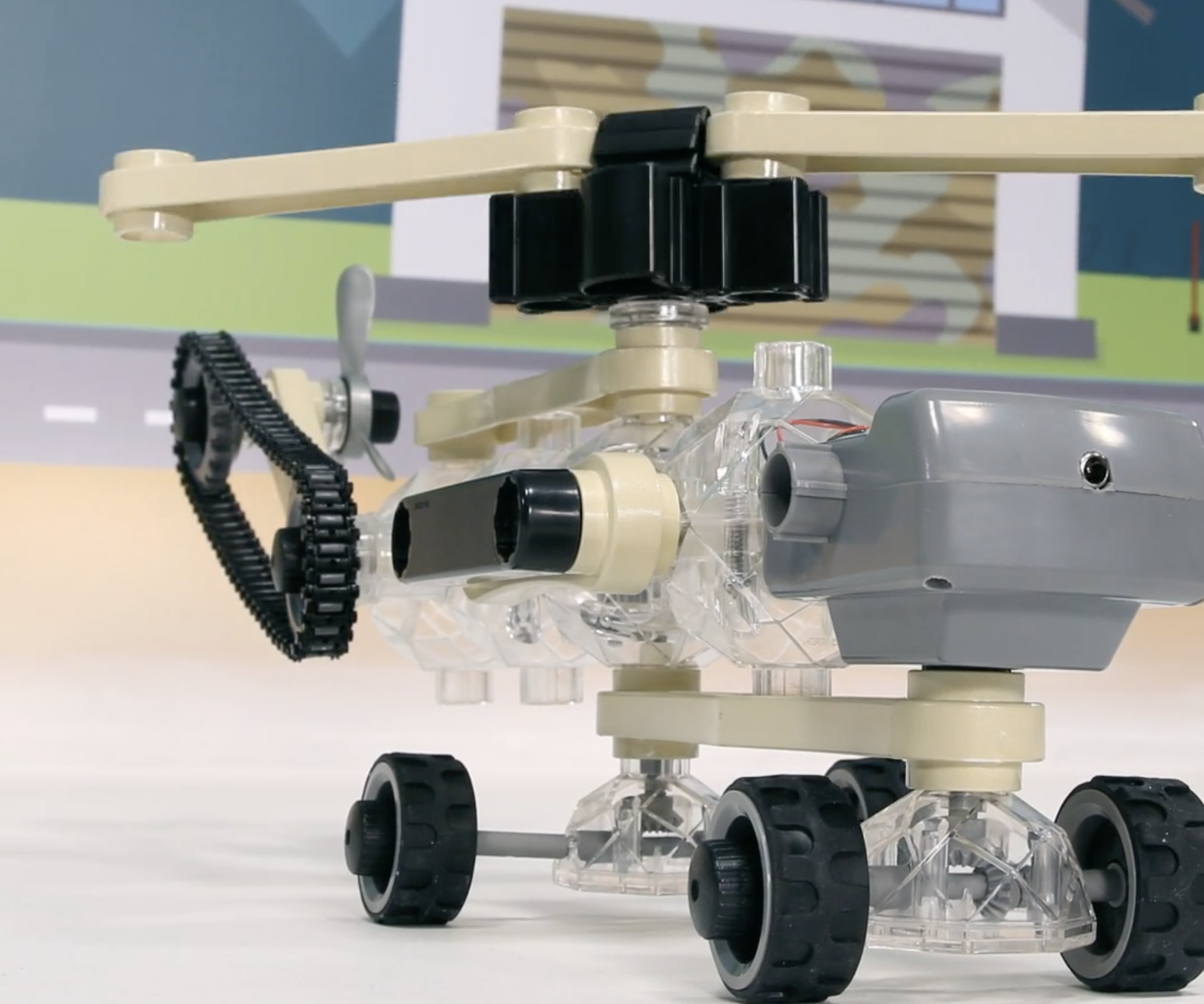
The new kits seem very similar to those classic sets from the 80s, other than superficial changes in the product’s appearance — the faceted geography of the pontoons and capsules suggest a refreshed product — it looks pretty much the same. The battery pack (slash switch) has also been redesigned, and looks like it may have an IR receiver built in. The company has also redesigned those hexagonal connectors and now they are circular and bayonet into place.
Is it the same old Capsela we knew and loved? Maybe, maybe not, but there’s only one way to find out: to hack the hell out of it!
If you want to found a company, you’ll find pages and pages of advice scattered around the Internet telling you exactly how to do that. What if you want to found an Open Source hardware company? That’s a bit harder — you can’t do hardware as a service, and that Open Source moniker will drive away investors.
[Zach Fredin] is one of the rare founders that are making an Open Source hardware company work. In 2015, he developed NeuroBytes, a system of electric neurons designed in such a way that if you get two hundred or so, you can replicate the brain of a flatworm. NeuroBytes was a finalist in the 2015 Hackaday Prize, the team received an NHS grant, and now these PCB neurons will be on the market late this year.
For this week’s Hack Chat, we’re going to be talking to [Zach] about the challenges about creating a company from nothing and doing it the Open Source way. Topics for this Friday’s Hack Chat will include the experience of building an Open Source hardware company, manufacturing, building a community around a product, and business spelled with dollar signs.