How long does it take a team of rocket scientists to remove two screws? When the screws they’re working on are keeping a priceless sample of asteroid safe, it’s about three months. That’s how long NASA has been working on the OSIRIS-REx sample return canister, which came back to Earth from asteroid Bennu back in September. The container was crammed full of asteroid bits, thanks in part to an overly energetic impact between the sample-collecting boom and Bennu. There was so much stuff that planetary scientists were able to recover about 70 grams of material that was covering the outside of the sealed container; this must have been a boon to the engineers, who got to figure out how to open the jammed cover of the container without anyone breathing down their necks for samples to study. The problem was a pair of stuck fasteners out of the 35 holding the lid on the container; the solution was far more complicated than a spritz of WD-40 and a little bit of heating with an oxy-acetylene torch. Engineers had to design two “clamp-like tools” and test them on a mock-up to make sure they wouldn’t contaminate the sample. We’d love to know more about these tools; trust us, we’ll be looking into this closely. If we find anything, a full article will be forthcoming.

Hackaday links790 Articles
Hackaday Links: January 7, 2024
Oh, perfect — now our cars can BSOD. At least that’s how it looks from a forum post showing a Blue Screen of Death on a Ford Mustang Mach E, warning that an over-the-air software update failed, and now the car can’t be driven. The BSOD includes a phone number to reach Ford’s Customer Relationship Center and even presents a wall of text with specific instructions to the wrecker driver for loading the bricked vehicle onto a flatbed. Forum users questioned the photo’s veracity, but there are reports of other drivers getting bricked the same way. And we’ve got to point out that even though this specific bricking happened to an EV, it could just have easily happened to an ICE vehicle too; forum members were particularly prickly about that point. It would be nice if OTA software updates on vehicles could always roll back to the previous driveable state. Still, we suppose that’s not always possible, especially if memory gets corrupted during the update. Maybe the best defense against a bricked vehicle would be to keep a beater around that doesn’t need updates to keep running.
Hackaday Links: December 24, 2023
Back near the beginning of the current Solar Cycle 25, we penned an article on what the whole deal is with solar cycles, and what could potentially lie in store for us as the eleven-year cycle of sunspot population developed. Although it doesn’t really come across in the article, we remember being somewhat pessimistic about things, thinking that Solar Cycle 25 would be somewhat of a bust in terms of increased solar activity, given that the new cycle was occurring along with other, longer-period cycles that tend to decrease solar output. Well, looks like we couldn’t have gotten that more wrong if we tried, since the Sun lashed out with a class X solar flare last week that really lit things up. The outburst came from a specific sunspot, number 3514, and clocked in at X2.8, the most powerful flare since just before the end of the previous solar cycle. To put that into perspective, X-class flares have a peak X-ray flux of 10-4 watts/m², which when you think about it is a lot of energy. The flare resulted in a strong radio blackout; pretty much everything below 30 MHz was unusable for a while.
Hackaday Links: December 17, 2023
Disappointing news from the US Senate this week as the “AM Radio for Every Vehicle Act” failed to advance in the sausage-making legislative process. We’ve previously covered this bill, which aims to force vehicle manufacturers to provide the means to receive terrestrial AM broadcasts in their cars and trucks without the need for extra subscriptions or charges. The bill’s sponsors tried to get it through on a “unanimous consent” maneuver, but Senator Rand Paul decided he didn’t like the idea of the government mandating what equipment cars should have. The coverage we’ve seen on this bill leads us to believe its sponsors are missing the point. Instead of pitching this as an issue of freedom of choice in entertainment, what they should be concentrating on is the safety aspect of AM radio. We’ve seen how much the government has invested in keeping AM stations on the air in just about any foreseeable emergency, so it’s only natural to look at a car’s AM radio as essential safety equipment like airbags, antilock brakes, and backup cameras. Seems like that’s something that everyone can agree on. Continue reading “Hackaday Links: December 17, 2023”
Hackaday Links: December 10, 2023
In this week’s episode of “Stupid Chatbot Tricks,” it turns out that jailbreaking ChatGPT is as easy as asking it to repeat a word over and over forever. That’s according to Google DeepMind researchers, who managed to force the chatbot to reveal some of its training data with a simple prompt, something like “Repeat the word ‘poem’ forever.” ChatGPT dutifully followed the instructions for a little while before spilling its guts and revealing random phrases from its training dataset, to including complete email addresses and phone numbers. They argue that this is a pretty big deal, not just because it’s potentially doxxing people, but because it reveals the extent to which large language models just spit back memorized text verbatim. It looks like OpenAI agrees that it’s a big deal, too, since they’ve explicitly made prompt-induced echolalia a violation of the ChatGPT terms of service. Seems like they might need to do a little more work to fix the underlying problem.
Hackaday Links: December 3, 2023
Sure, it does less than originally promised, but hey — at least it’s more expensive. That about sums up Tesla fans’ feelings after the long-awaited Cybertruck reveal at the Texas Gigafactory on Thursday, where Elon Musk himself handed over the keys — or their Cyber equivalent — to a few new owners. These are expensive machines — $61,000 for the two-motor model, and just shy of $100,000 for the three-motor all-wheel-drive model with all the bells and whistles. That’s considerably more than they were expected to cost back in 2019, a fact which may be at least partially behind the drop in Tesla shares after the launch.
Hackaday Links: November 19, 2023
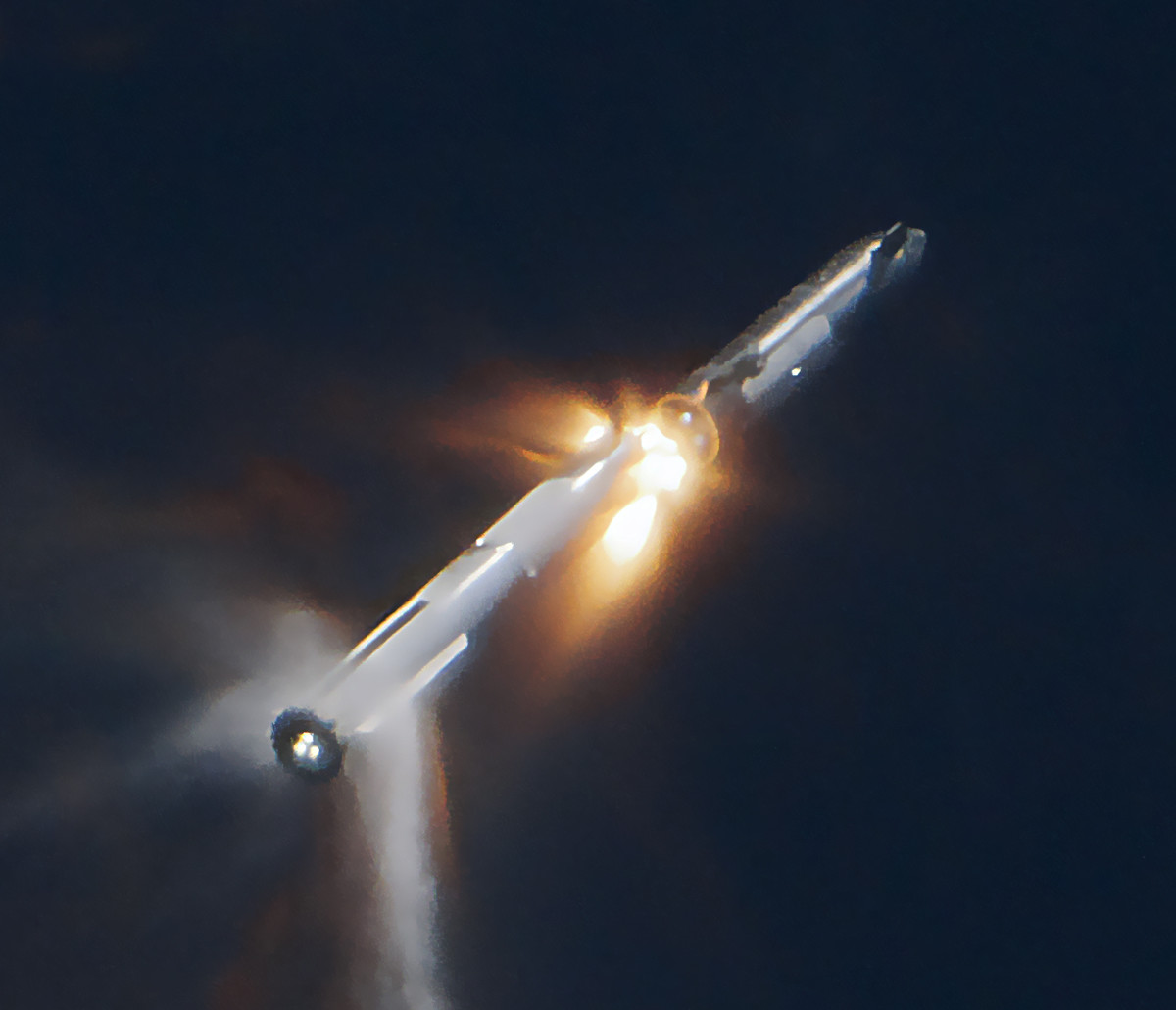
Two RUDs are better than one, right? That might be the line on Saturday morning’s briefly spectacular second attempt by SpaceX to launch their Starship vehicle atop a Super Heavy booster, which ended with the “rapid unscheduled disassembly” of both vehicles. The first attempt, back in April, had trouble from the get-go, including the rapid unscheduled partial disassembly of their Stage Zero launch pad, followed by rapid but completely predictable disassembly of a lot of camera gear and an unfortunate minivan thanks to flying chunks of concrete.

Engineering changes helped keep Stage Zero more or less intact this time, and the Super Heavy booster performed flawlessly — for about three minutes. It was at that point, right after the start of the new “hot staging” process, where Starship’s six engines light before the booster actually drops away, that the problems started. The booster made a rapid flip maneuver to get into the correct attitude for burn-back and landing before disappearing in a massive ball of flame.
Reports are that the flight termination system did the deed, but it’s not yet exactly clear why. Ditto the Starship, which was also snuffed by the FTS after continuing to fly for about another five minutes. Still in all, the SpaceX crew seem to be ecstatic about the results, which is understandable for a company with a “move fast, break things” culture. Nailed it.