Honor Thy Error

Musician Brian Eno’s Oblique Strategies are like a Tarot card deck full of whimsical ideas meant to break up a creative-block situation, particularly in the recording studio. They’re loads of fun to pick one at random and actually try to follow the advice, as intended, but some of them are just plain good advice for creatives.

One that keeps haunting me is “Honor thy error as a hidden intention”, which basically boils down to taking a “mistake” and seeing where it leads you if you had meant to do it. I was just now putting the finishing touches on this week’s Hackaday Podcast, and noticed that we have been honoring a mistake for the past 350-something shows. Here’s how it happened.

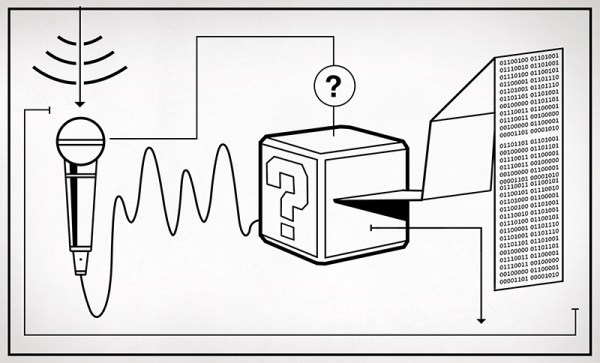
When Mike and I recorded the first-ever podcast, I had no idea how to go about doing it. But I grew up in Nashville, and know my way around the inside of a music studio, and I’ve also got more 1990s-era music equipment than I probably need. So rather than do the reasonable thing, like edit the recording on the computer, we recorded to an archaic Roland VS-880 “Digital Studio” which is basically the glorified descendant of those old four-track cassette Portastudios.

If you edit audio in hardware, you can’t really see what you’re doing – you have to listen to it. And so, when I failed to notice that Mike and I were saying “OK, are you ready?” and “Sure, let’s go!”, it got mixed in with the lead-in music before we started the show off for real. But somehow, we said it exactly in time with the music, and it actually sounded good. So we had a short laugh about it and kept it.

And that’s why, eight years later, we toss random snippets of conversations into the intro music to spice it up. It was a mistake that worked. Had we been editing on the computer, we would have noticed the extra audio and erased it with a swift click of the mouse, but because we had to go back and listen to it, we invented a new tradition. Honor thy error indeed.

The Death Of Baseload And Similar Grid Tropes

Anyone who has spent any amount of time in or near people who are really interested in energy policies will have heard proclamations such as that ‘baseload is dead’ and the sorting of energy sources by parameters like their levelized cost of energy (LCoE) and merit order. Another thing that one may have noticed here is that this is also an area where debates and arguments can get pretty heated.

The confusing thing is that depending on where you look, you will find wildly different claims. This raises many questions, not only about where the actual truth lies, but also about the fundamentals. Within a statement such as that ‘baseload is dead’ there lie a lot of unanswered questions, such as what baseload actually is, and why it has to die.

Upon exploring these topics we quickly drown in terms like ‘load-following’ and ‘dispatchable power’, all of which are part of a healthy grid, but which to the average person sound as logical and easy to follow as a discussion on stock trading, with a similar level of mysticism. Let’s fix that.

Continue reading “The Death Of Baseload And Similar Grid Tropes”

Secret Ingredients

We were talking on the podcast about rope. But not just any rope – especially non-stretchy rope for using in a mechanical context. The hack in question was a bicycle wheel that swapped out normal metal spokes for lighter and stronger high-density polypropylene weave, and if you can tension up a bike wheel and ride it around, you know it’s not your garden-variety twine.

Now, it just so happens that I’ve got basically the same stuff in my parts drawer: some 1 mm diamaeter Dyneema-brand rope. This is an amazing material. It’s rated to a breaking strength of 195 kg (430 lbs) yet it weighs just under one gram per meter, and if you buy the pre-stretched variant, it’s guaranteed to stretch less than 1% of its length under load. It’s flexible, wears well, and is basically in every way superior to braided steel wire.

It’s nearly magical, and it’s just what you need if you’re making a cable robot or anything where the extreme strength and non-elongation characteristic are important. It’s one of those things that there’s just no substitute for when you need it, and that’s why I have some in my secret-ingredients drawer. What else is in there? Some high-temperature tape, low-temperature solder, and ultra-light-weight M3 PEEK screws for airplane building.

But our conversation got me thinking about the parts, materials, and products that are unique: for which there is just no reasonable substitute. I’m sure the list gets longer the more interesting projects or disciplines that you’re into. What are your secret ingredients, and what’s the specific niche that they fit into?

Size (and Units) Really Do Matter

We miss the slide rule. It isn’t so much that we liked getting an inexact answer using a physical moving object. But to successfully use a slide rule, you need to be able to roughly estimate the order of magnitude of your result. The slide rule’s computation of 2.2 divided by 8 is the same as it is for 22/8 or 220/0.08. You have to interpret the answer based on your sense of where the true answer lies. If you’ve ever had some kid at a fast food place enter the wrong numbers into a register and then hand you a ridiculous amount of change, you know what we mean.

Recent press reports highlighted a paper from Nvidia that claimed a data center consuming a gigawatt of power could require half a million tons of copper. If you aren’t an expert on datacenter power distribution and copper, you could take that number at face value. But as [Adam Button] reports, you should probably be suspicious of this number. It is almost certainly a typo. We wouldn’t be surprised if you click on the link and find it fixed, but it caused a big news splash before anyone noticed.

Thought Process

Best estimates of the total copper on the entire planet are about 6.3 billion metric tons. We’ve actually only found a fraction of that and mined even less. Of the 700 million metric tons of copper we actually have in circulation, there is a demand for about 28 million tons a year (some of which is met with recycling, so even less new copper is produced annually).

Simple math tells us that a single data center could, in a year, consume 1.7% of the global copper output. While that could be true, it seems suspicious on its face.

Digging further in, you’ll find the paper mentions 200kg per megawatt. So a gigawatt should be 200,000kg, which is, actually, only 200 metric tons. That’s a far cry from 500,000 tons. We suspect they were rounding up from the 440,000 pounds in 200 metric tons to “up to a half a million pounds,” and then flipped pounds to tons.

Continue reading “Size (and Units) Really Do Matter”

Get Bored!

My son went over to a friends house this afternoon, when my wife had been planning on helping him with his French homework. This meant she had an hour or so of unexpected free time. Momentarily at a loss, she asked me what she should do, and my reply was “slack off”, meaning do something fun and creative instead of doing housework or whatever. Take a break! She jokingly replied that slacking off wasn’t on her to-do list, so she wouldn’t even know how to start.

But as with every joke, there’s more than a kernel of truth to it. We often get so busy with stuff that we’ve got to do, that we don’t leave enough time to slack, to get bored, or to simply do nothing. And that’s a pity, because do-nothing time is often among the most creative times. It’s when your mind wanders aimlessly that you find inspiration for that upgrade to the z-stage on your laser cutter, or whatever the current back-burner project of the moment is.

You don’t get bored when you’re watching TV, playing video games, or scrolling around the interwebs on your phone, and it’s all too easy to fall into these traps. To get well and truly bored requires discipline these days, so maybe putting “slack” into your to-do list isn’t a bad idea after all. My wife was right! And that’s why I volunteered to take my son to parkour on Sundays – it’s and hour of guaranteed, 100% uninterruptible boredom. How do you make sure you get your weekly dose of slack?

Ask Hackaday: Do You Curb Shop Components?

I’m not proud. When many of us were kids, we were unabashedly excited when trash day came around because sometimes you’d find an old radio or — jackpot — an old TV out by the curb. Then, depending on its size, you rescued it, or you had your friends help, or, in extreme cases, you had to ask your dad. In those days, people were frugal, so the chances of what you found being fixable were slim to none. If it was worth fixing, the people would have probably fixed it.

While TVs and radios were the favorites, you might have found other old stuff, but in those days, no one was throwing out a computer (at least not in a neighborhood), and white goods like refrigerators and washing machines had very little electronics. Maybe a mechanical timer or a relay, but that’s about it.

Continue reading “Ask Hackaday: Do You Curb Shop Components?”

For The Fun Of It

I was off at the Chaos Communication Congress last weekend, and one of the big attractions for one who is nerdily inclined is seeing all of the personal projects that everyone brings along with them. Inevitably, someone would ask me what my favorite is. Maybe it’s my decision paralysis, maybe it’s being forced to pick a favorite child on the spot, or maybe it’s just that I’m not walking around ranking them, but that question always left me drawing a blank.

But after a week of thinking about it, I’m pretty sure I know why: I don’t actually care what I think of other peoples’ projects! I’m simply stoked to talk to everyone who brought anything, and bathe in the success and failure, hearing about the challenges that they saw coming, and then the new challenges they met along the way. I want to know what the hacker thinks of their project, what their intention was, and how their story went. I’m just a spectator, so I collected stories.

The overwhelming, entirely non-surprising result of listening to a couple hundred hackers talk about their projects? They’re all doing it for the fun of it. Simply for the grins. And that held equally well for the supremely planned-out and technical projects as well as their simpler I-bought-these-surplus-on-eBay-one-night relatives. “We were sitting around and thought, wouldn’t it be fun…” was the start of nearly every story.

That’s what I absolutely love about our community: that people are hacking because it makes them happy, and that the amazing variety of projects suggests an endless possibility for hacker happiness. It’s hard to come away from an event like that without being energized. Some of that comes from the sharing of ideas and brainstorming and hanging out with like-minded folks, but what I find most important is simply the celebration of the joy of the project for its own sake.

Happy hacking!