Turbo Rascal Is The Retro Pascal Compiler We Always Wanted

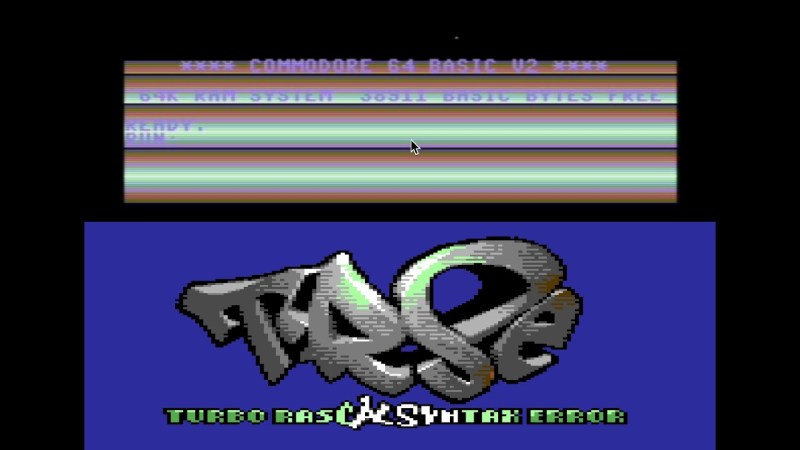
Pascal is not one of the biggest programming languages these days; it’s fallen into the background as the world moved on to newfangled things like C#, Python and Java. However, the language has its fans, one of whom put together a new compiler which targets retro platforms – and it goes by the name Turbo Rascal.

The list of supported platforms is extensive, with Turbo Rascal able to compile highly-optimized binaries for the C64, Amiga 500, BBC Micro, IBM PC, Atari ST, Game Boy, Amstrad, NES, ZX Spectrum, and more. There’s a usable IDE and even an included graphics editor for getting projects put together quickly. Also known by its full name of Turbo Rascal Syntax Error, or TRSE, it’s the work of one [Nicolaas Groeneboom].

The compiler runs on 64-bit Windows, Linux, and OS X, and there are extensive tutorial videos available on YouTube, too. Thus, there’s no excuse not to start developing a new retro game immediately. Check out the demo video below, and remember – as long as we keep using it, Pascal isn’t dead!

Continue reading “Turbo Rascal Is The Retro Pascal Compiler We Always Wanted”
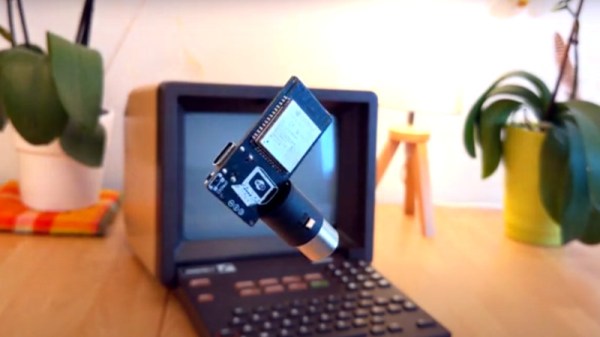
Bring A Minitel Terminal Back To Life WIth An ESP32

Most of us who are old enough are likely to have had our first experience of an online service some time in the 1990s, either through the likes of Compuserve or via an ISP. For our French readers the online experience will have come much earlier, as a forward-thinking telecommunications environment led to every household in the country receiving a viewdata terminal. The Minitel system as it was called was a runaway success, and was only finally turned off as late as 2012. Many of the terminals survive to make a great basis for projects, and it’s one of these that [Louis H] has taken and enhanced with an ESP32.

One of the special things about this project is that unlike so many other Minitel conversions it doesn’t involve tearing into the terminal itself. Instead the PCB plugs into the socket on the back of the unit and emulates the line for the terminal to talk to. It can then be used as an SSH terminal over WiFi, or as a serial terminal for the ESP32 itself for example running a MicroPython firmware. If you can handle the French AZERTY keyboard there is no easier way to drag a viewdata terminal into the 2020s, as you can see in the video below the break.

Chez Hackaday, we love these nostalgic gems from the 1980s. Indeed we like this classic French public network so much that we’ve featured it quite a few times. Here for example is a similar project using an Arduino. Continue reading “Bring A Minitel Terminal Back To Life WIth An ESP32”

PicoMite Gives Your Pico A Deluxe BASIC

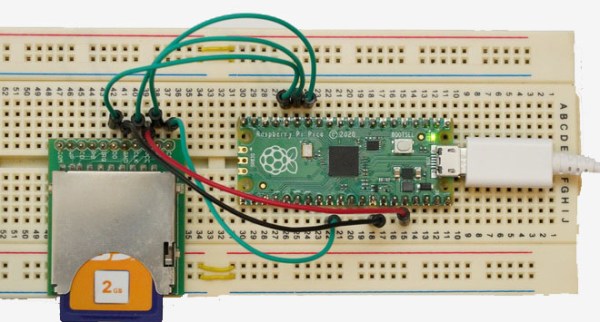
What makes developing a microcontroller project quick and easy? Tops on our list are an interactive shell and comprehensive libraries that handle all the low-level peripheral stuff. You think we’re talking MicroPython? Not today! MMBasic has just been ported to the Raspberry Pi Pico dev board, and it has all the batteries included.

Just to give you a taste, it has built-in support for SD cards, all sorts of displays, touch screens, real-time clocks, IR remotes, numerous sensors, and of course WS2812 LED strips. And because all of this is baked into the BASIC, writing code to use any of these peripherals is straightforward.

Now, there’s BASIC and there’s BASIC. This is a modern BASIC: it has loops, functions, arrays, floating point, and a built-in full-screen editor. You connect to the Pico via UART, and you’re off to the races. If you’ve got a Pico sitting around, flash it and give it a try. Or check out the GitHub repository if you want to poke around in the internals.

This is a port of the BASIC that’s used on the Maximite virtual retrocomputer platform, which means that there are many working examples out there for you to crib from, and even a forum. Add in the incredibly nice user manual and tutorial (PDF), and you’ve got the perfect weekend afternoon.

Think MicroPython killed BASIC? Think again. BASIC is small enough that it can run where Python can’t, but that’s of course a more minimal experience. In contrast, MMBasic looks like it’s got all the toppings. The whole enchilada. It’s like BASIC Deluxe.

Build Your Own HP41C

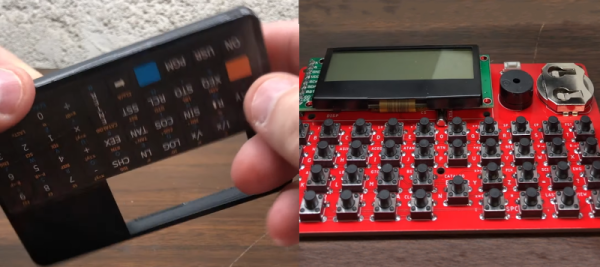
There was a time when engineers carried slide rules. Then there was a time when we all carried calculators. Sure, calculators are still around, but you are more likely to use your phone. If you really need serious number crunching, you’ll turn to a full computer. But there was that awkward time when calculators were very important and computers were very expensive that calculators tried to be what we needed from full-blown computers. The HP41C was probably the pinnacle of that trend. If you’ve ever had one, you know that is a marvel of the day’s technology with alphanumeric capabilities and four plug in ports for more memory or ROMs. It really was a little hand-held computer. Didn’t have one? Don’t worry, you can now build your own. In fact, the HP emulator will also act like an HP15C or 16C, if you prefer.

You can see the device in action in the video below. As you might expect, this version uses a through-hole ATMEGA328 and even at 8 MHz, the emulation is faster than the original calculator. The machine also has over double the memory the original calculator had along with a real-time clock built-in. The display is also backlit, something we all wanted in the original.

Continue reading “Build Your Own HP41C”

Retrotechtacular: Office Equipment From The 1940s

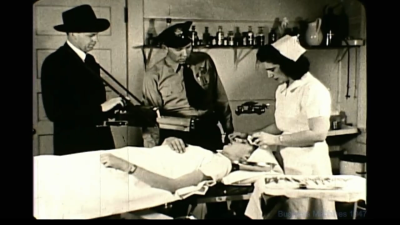
If you can’t imagine writing a letter on a typewriter and putting it in a mailbox, then you take computers for granted. But that’s just the tip of the iceberg. More niche applications begat niche machines, and a number of them are on display in this film that the Computer History Archives Project released last month. Aside from the File-o-matic Desk, the Addressograph, or the Sound Scriber, there a number of other devices that give us a peek into a bygone era.

One machine that’s still around, although in a much computerized form, is the stenograph. Not so popular these days is the convenient stenograph carrier, allowing a patient’s statement to be recorded bedside in the hospital immediately after a car accident. Wire recorders were all the rage in 1947, as were floppy disks (for audio, not data). Both media were used to time-shift dictation. Typing champions like Stella Pajunas could transcribe your letters and memos at 140 WPM using an electric typewriter, outpacing dot matrix printers but a snail’s pace compared to a laser jet.

Continue reading “Retrotechtacular: Office Equipment From The 1940s”

A PDP 11 By Any Other Name: Heathkit H11 Teardown And Repair

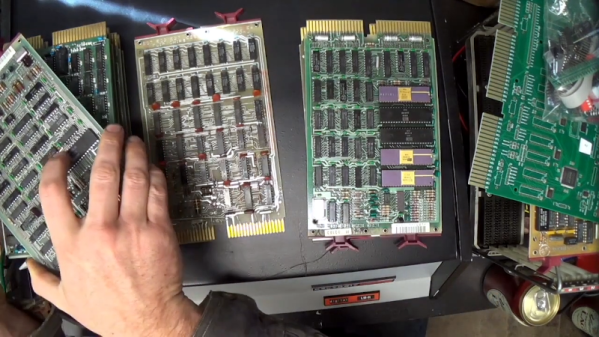
[Lee Adamson] is no stranger to classic computers. He recently picked up a Heathkit H11A which, as you might remember, is actually a PDP-11 from DEC. Well, technically, it is an LSI-11 but still. Like a proper LSI-11, the computer uses the DEC QBus. Unlike a lot of computers of its day, the H11 didn’t have a lot of switches and lights, but it did have an amazing software library for its day.

[Lee] takes us through a tour of all the different cards inside the thing. It is amazing when you think of today’s laptop motherboards that pack way more into a much smaller space. He also had to fix the power supply.

Continue reading “A PDP 11 By Any Other Name: Heathkit H11 Teardown And Repair”

Video Gaming Like It’s 1983: New Game Cartridges From Atari

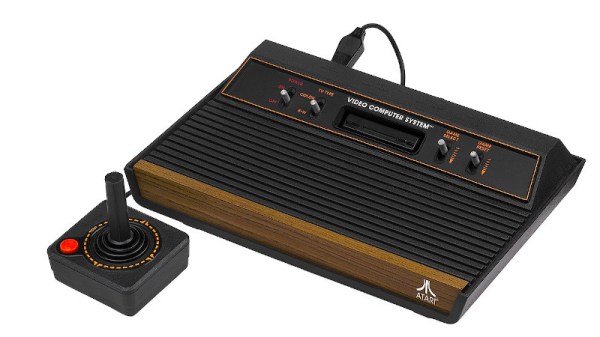
If you remember anything from 1983, it’s likely to be some of the year’s popular culture highlights, maybe Return of the Jedi, or Michael Jackson’s Thriller. For anyone connected with the video gaming industry though, it’s likely that year will stick in the mind for a completely different reason, as the year of the infamous Great Video Games Crash. Overcapacity in the console market coupled with a slew of low quality titles caused sales to crash and a number of companies to go out of business, and the console gaming world would only recover later in the decade with the arrival of the Japanese 8-bit consoles from Nintendo and Sega. You might expect Atari to shy away from such a painful period of their history, but instead they are embracing it as part of their 50th anniversary and launching three never-released titles on cartridges for their 8-bit 2600 console.

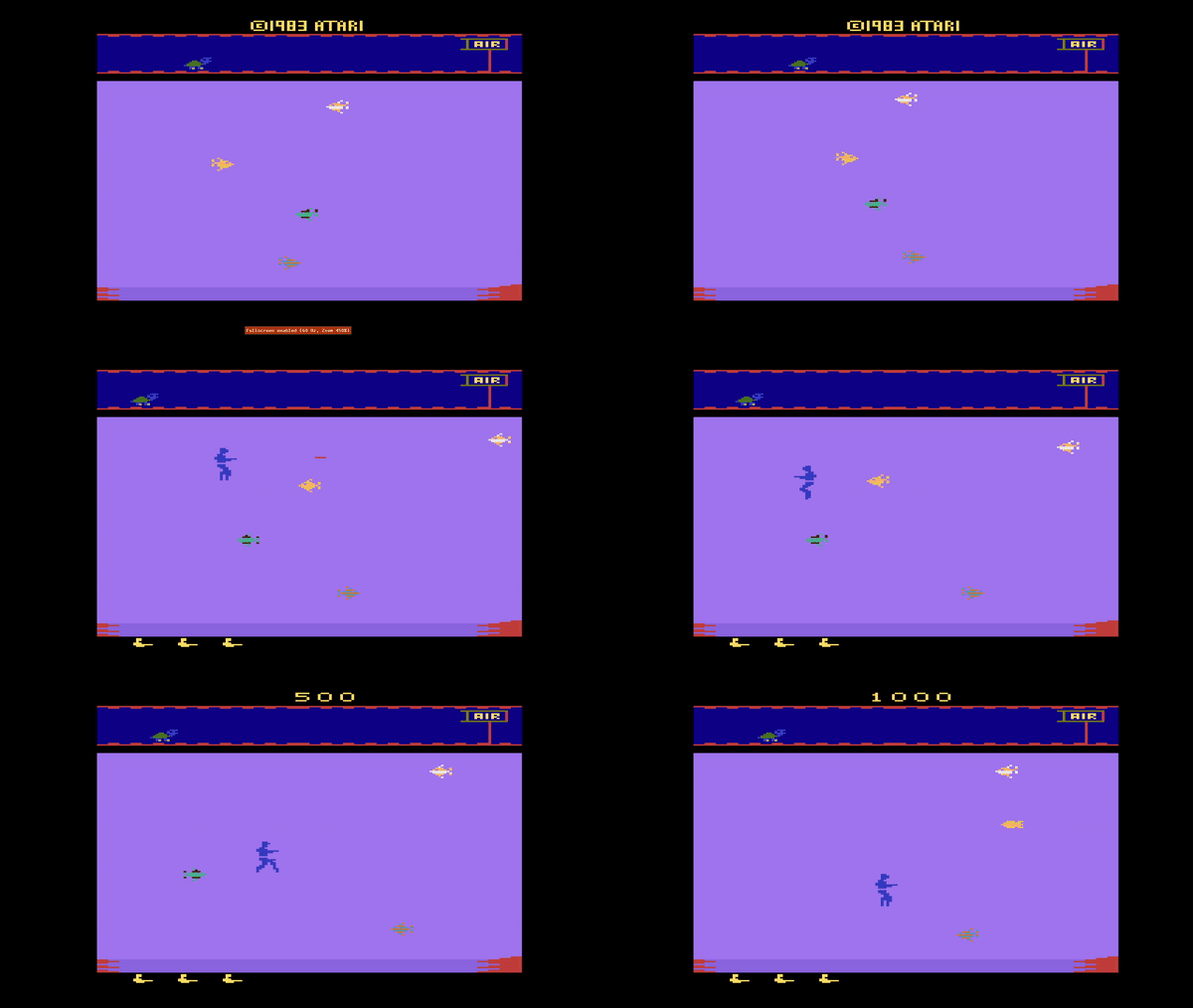
Game footage from Aquaventure.

The three games, Yars’ Return, Aquaventure, and Saboteur, are all unreleased titles from back in the day that never saw publication because of the crash, and are being released as limited edition specials through AtariXP, a new venture that the company says will offer “previously unreleased titles from Atari’s expansive library, rare-and-hard-to-find Atari IP physical media, and improved versions of classic games“. It’s fairly obviously an exercise in satisfying the collector’s market rather than one of video game publishing, but it will be interesting to see what emerges. In particular we hope someone will tear down one of these cartridges; will they find a set of old-school EPROMs inside or an EPROM emulator sporting a microcontroller and other 2020s trickery?

This is not of course the first time we’ve reported on collectable 2600 cartridges, but these ones haven’t spent 30 years in a landfill site.

Header image: Evan-Amos, Public domain.