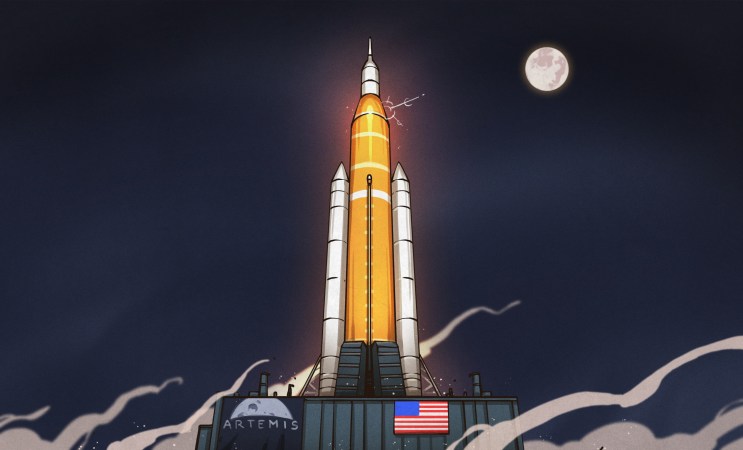
Humanity first reached the moon in 1969. We went back a few times, then lost interest within three short years, and we haven’t been back since. NASA has just flew a quartet of astronauts around the moon last week, and hopes to touch lunar soil by 2028. But the American space program is no longer the only game in town.
China has emerged as another major player in the second race for the Moon. Having mastered human spaceflight 23 years ago, the country’s space program has been moving from strength to strength. A moon landing is on the cards, with the country hoping to plant its boots, and presumably flag, in 2030.
Moon missions are hot again for the first bit since the space race. While the previous period had us land on the big lunar rock, the missions of tomorrow have us living on it. The initial problem of landing in one piece has been solved, but there are many more puzzles to solve. One major issue of living in the vacuum of space is the lack of breathable air, because, ya know, it’s space.
This brings us to today, where [Blue Origin] has announced a prototype method of turning Moon dust into the valuable gas we call oxygen. [Blue Origin] hasn’t posted much about the actual process behind this feat, terming the system “Air Pioneer”. What we do know is that it requires melting the regolith and then passing current through to release the O2 molecules from their rocky prison.
While some publications on this matter have been calling this a first in its entirety, this isn’t entirely true. NASA has worked on this technology for the past couple of years, called “Gaseous Lunar Oxygen from Regolith Electrolysis”, or (GaLORE). What [Blue Origin] has done, however, is complete the task under a for-profit motive. Perhaps this can introduce the drive needed to accelerate the development of the tech? (If anyone knows any more detail about the Blue Origins system, please let us know.)
Private space is certainly an exciting and quickly moving space in nearly all regards. It’s important to see how far we have come from the initial moon missions. If you want to check out some of the wackier lessons from that era, be sure to read up on the fight for moon cockroaches!
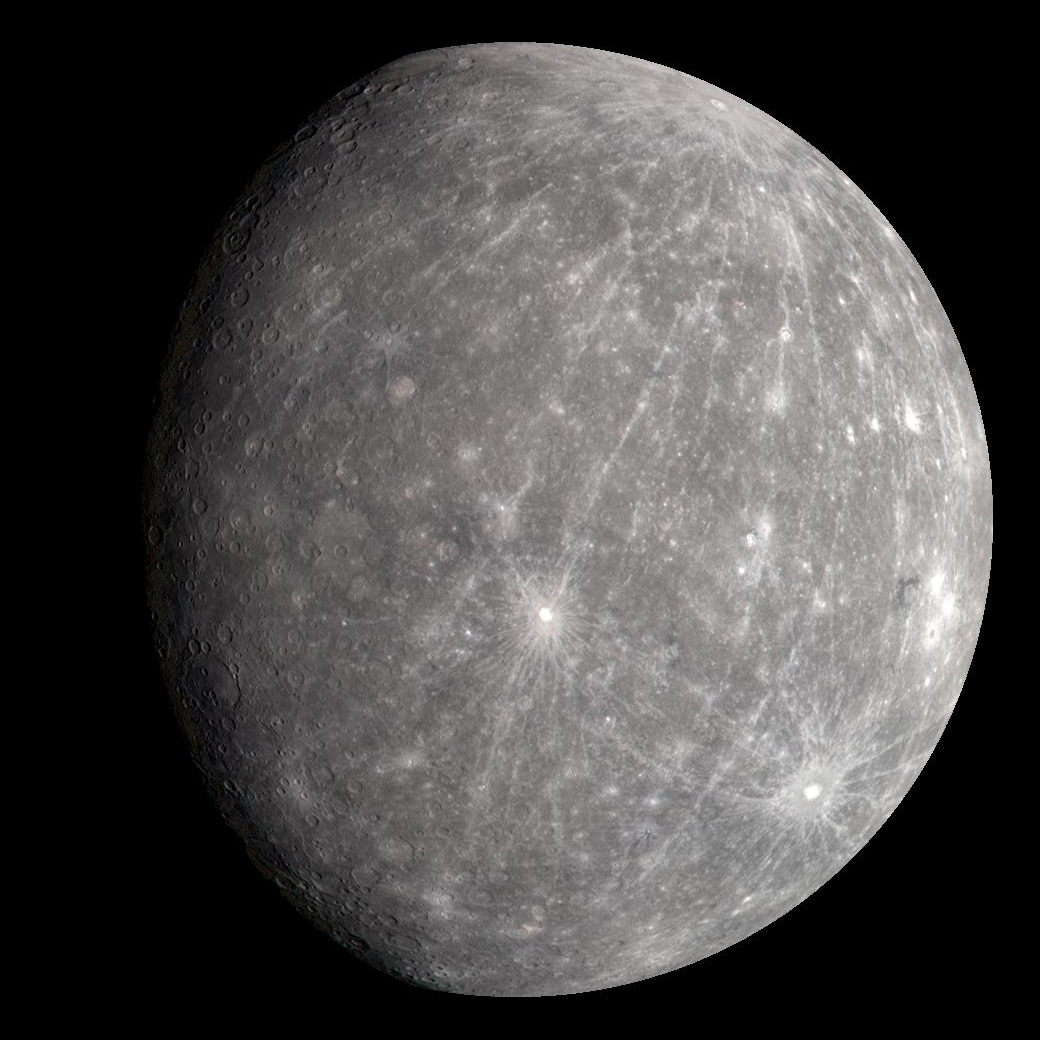
With multiple rovers currently scurrying around on the surface of Mars to continue a decades-long legacy, it can be easy to forget sometimes that repeating this feat on other planets that aren’t Earth or Mars isn’t quite as straightforward. In the case of Earth’s twin – Venus – the surface conditions are too extreme to consider such a mission. Yet Mercury might be a plausible target for a rover, according to a study by [M. Murillo] and [P. G. Lucey], via Universe Today’s coverage.
The advantages of putting a rover’s wheels on a planet’s surface are obvious, as it allows for direct sampling of geological and other features unlike an orbiting or passing space probe. To make this work on Mercury as in some ways a slightly larger version of Earth’s moon that’s been placed right next door to the Sun is challenging to say the least.
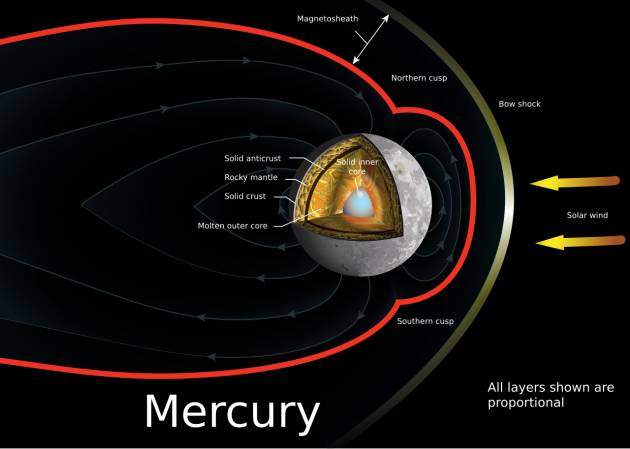
With no atmosphere it’s exposed to some of the worst that the Sun can throw at it, but it does have a magnetic field at 1.1% of Earth’s strength to take some of the edge off ionizing radiation. This just leaves a rover to deal with still very high ionizing radiation levels and extreme temperature swings that at the equator range between −173 °C and 427 °C, with an 88 Earth day day/night cycle. This compares to the constant mean temperature on Venus of 464 °C.
To deal with these extreme conditions, the researchers propose that a rover might be able to thrive if it sticks to the terminator, being the transition between day and night. To survive, the rover would need to be able to gather enough solar power – if solar-powered – due to the Sun being very low in the sky. It would also need to keep up with the terminator velocity being at least 4.25 km/h, as being caught on either the day or night side of Mercury would mean a certain demise. This would leave little time for casual exploration as on Mars, and require a high level of autonomy akin to what is being pioneered today with the Martian rovers.
Top image: the planet Mercury with its magnetic field. (Credit: A loose necktie, Wikimedia)
Like many long-established broadcasters, the BBC put out a selection of their archive material for us all to enjoy online. Their most recent may be of interest to Hackaday readers and has more than a bit of personal interest to your scribe, as it visits the Spadeadam rocket test range on the event of its closure in 1973. This marked the final chapter in the story of Blue Streak, the British intercontinental missile project that later became part of the first European space launcher.
It’s possible citizens of every country see their government as uniquely talented in the throwing away of taxpayer’s money, but the sad story here isn’t in Blue Streak itself which was obsolete as a missile by the time it was finished. Instead it lies in the closure of the test range as part of the ill-advised destruction of a nascent and successful space industry, just as it had made the UK the third nation to have successfully placed a satellite in orbit.
We normally write in the second person in our daily posts here at Hackaday, but for now there’s a rare switch into the first person. My dad spent a large part of the 1950s working as a technician for de Haviland Propellers, later part of Hawker Siddeley, and then British Aerospace. He was part of the team working on Blue Streak at Spadeadam and the other test site at RAF Westcott in Buckinghamshire, and we were brought up on hair-raising tales of near-disasters in the race to get British nukes flying. He’s not one of the guys in the video below, as by that time he was running his metalwork business in Oxfordshire, but I certainly recognise the feeling of lost potential they express. Chances are I’ll never visit what remains of the Spadeadam test stands in person as the site is now the UK’s electronic warfare test range, so the BBC film represents a rare chance for a closer look.
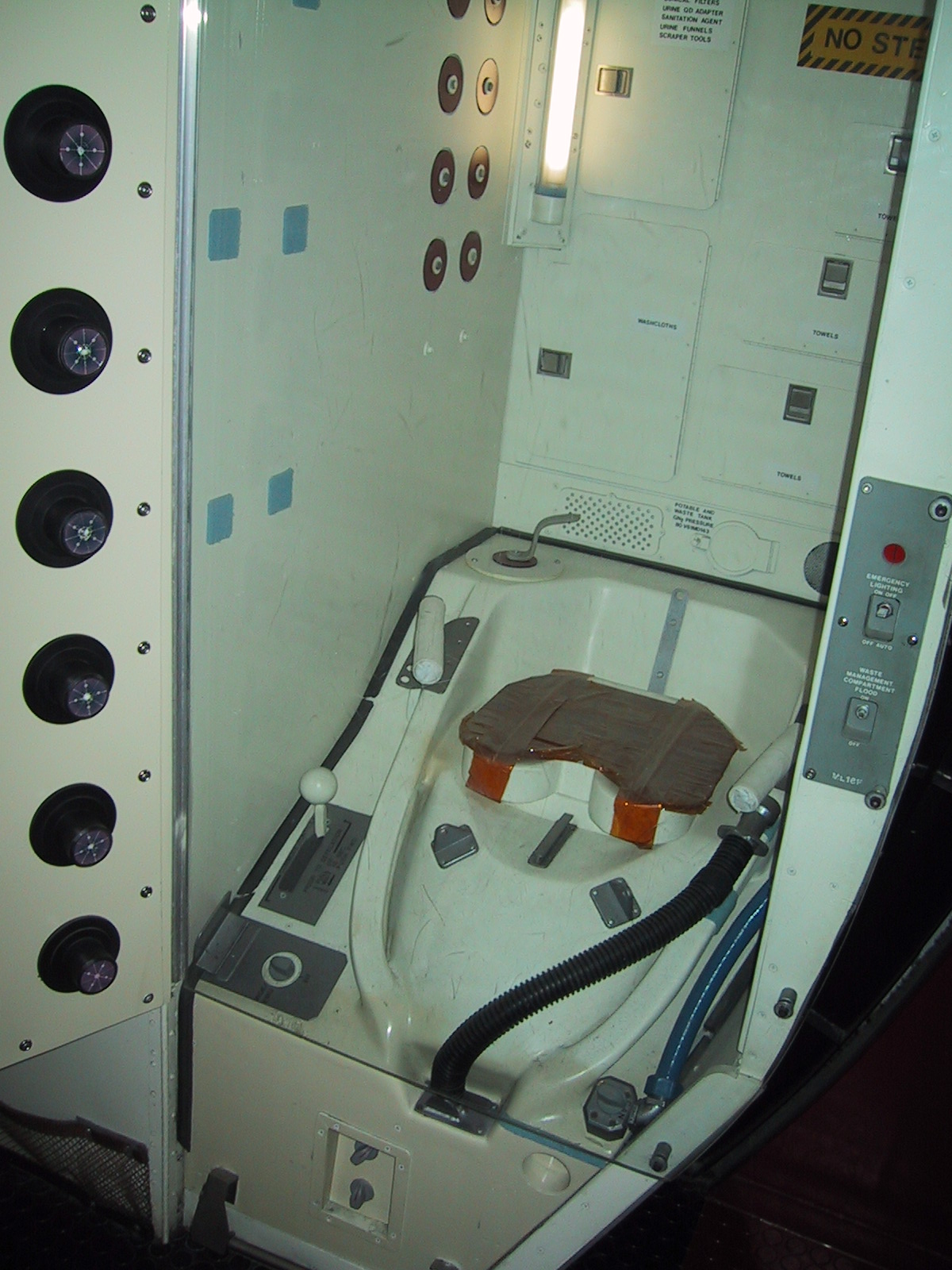
The news is full of reports from the moon-bound Integrity, otherwise known as Artemis II. Mostly, the news is good, but there has been one “Houston, we have a problem…” moment. The space toilet, otherwise known as the Universal Waste Management System or UWMS is making a burning smell while in use. While we would love to be astronauts, we really don’t want to go ten days without using the can, and it made us wonder how, exactly, the astronauts answered the call of nature.
The Old Days
Back in the Apollo-era, going to the bathroom was a messy business. The capsule wasn’t that big, and there were no women on board. So you simply strapped an adhesive-rimmed bag or tube to yourself and answered nature’s call with your two closest coworkers right there.
Space Shuttle facilities (by [Svobodat] CC BY-SA 3.0)To add insult to injury, the “#2 bags” needed some packet mixed in to keep it from going bad in the bag before it could return to Earth for — no kidding — scientific study.
The system was far from perfect. Apollo 8 and Apollo 10 both had to do some housekeeping due to leaky bags.
Astronaut Ken Mattingly reportedly said, “Man, one of the feats of my existence the other day was, in 42 minutes, I strapped on a bag, went out of both ends, and ate lunch…. I used to want to be the first man to Mars. This has convinced me that, if we got to go on Apollo, I ain’t interested.”
Still, it was better than the first Mercury launch, where Alan Shepard famously relieved himself in his spacesuit while sitting on the pad for over eight hours. Later missions used hoses.
Things got slightly better with Skylab, where there was more room. The Shuttle also had a toilet. You got a curtain for privacy, but you couldn’t go #1 and #2 at the same time. Also, apparently, the contraptions were not easily workable for females.
As I write this, four astronauts are on their way around the moon for the first time in 50 years. A lot us have asked ourselves just exactly why you’d send people out that far when the environment is so hostile and we have increasingly competent robots that could do the jobs in their place. If anything, that’s even more true now than it was back in the day of the Apollo program, when the remote operations capability was a lot more constrained. But having people, potentially in the near future, on the lunar surface remains qualitatively different.
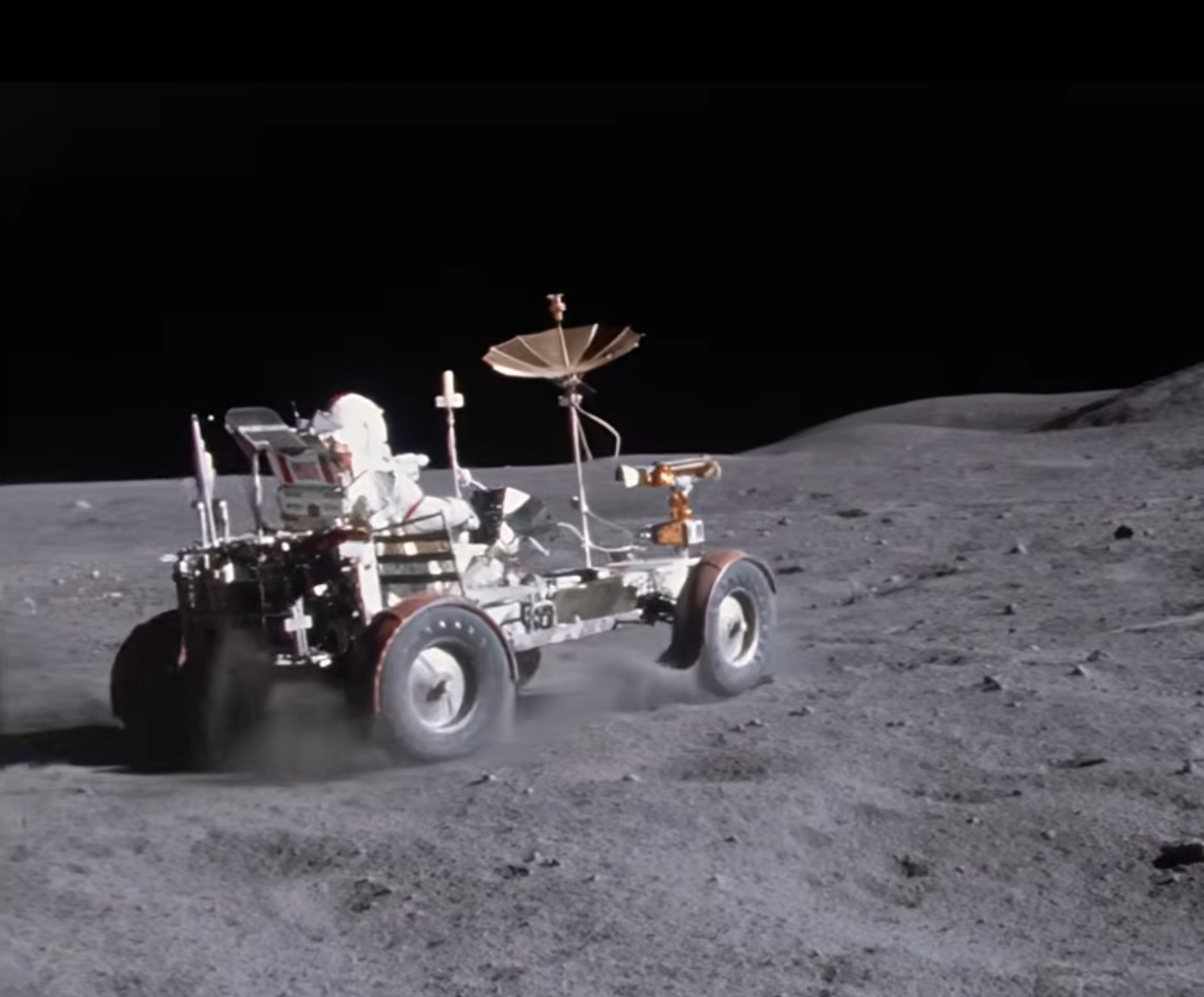
I was recently re-watching some of the footage from Apollo 16 when the astronauts were driving around in the Lunar Roving Vehicle, and the discussions that they’re having about the lunar geology that they can see for the first time with their own eyes is very convincing. Having people in situ tightens the loop of “hey, that’s interesting”, “let’s take a closer look”, and “I wonder what that means” in a way that minutes or hours of transmission time, and sterile observation of photos on a computer monitor just break. In comparison, our Mars rovers move excruciatingly slowly, the data comes back through a very thin pipe, and it takes months or years to analyze.
Of course, there is danger to human life; it’s a lot more expensive to get people safely to, and importantly back from, the moon than it would be with a disposable robot. Comparison with the Mars rovers is also unfair because travel to Mars is another scale entirely. Even if it does make sense to send humans for exploration on the moon, it may not make sense to do the same on the red planet, in the near future or ever. Given all that, I’m stoked that we can see through the robots eyes, but if all else were equal, I’m sure that we’d learn more from human explorers.
While in a lot of ways the Artemis I and now the Artemis II missions are underwhelming in comparison to the many “firsts” of Apollo, I absolutely appreciate them for what they are: a shakedown trial of a set of technologies and practices that we used to grasp, but which have atrophied over the last five decades. If a new generation of scientists is to put feet onto regolith, we need to learn to walk before they can run, or rover. In that spirit, I’ll be crossing my fingers for the future of manned spaceflight over the next week and a half.
This article is part of the Hackaday.com newsletter, delivered every seven days for each of the last 200+ weeks. It also includes our favorite articles from the last seven days that you can see on the web version of the newsletter.
Want this type of article to hit your inbox every Friday morning? You should sign up!