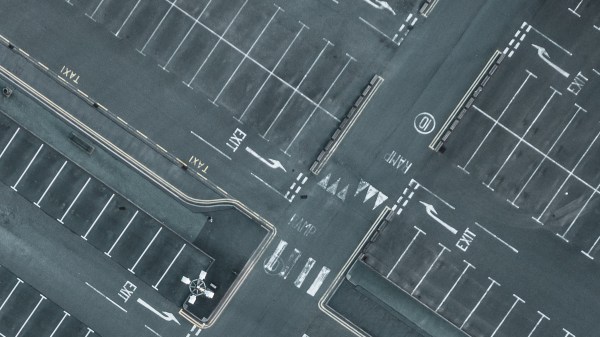
Tesla Begins “Full Self Driving” Public Beta As Waymo And Cruise Go Unattended

Self-driving technology is a holy grail that promises to forever change the way we interact with cars. Thus far, there’s been plenty of hype and excitement, but full vehicles that remove the driver from the equation have remained far off. Tesla have long posited themselves as a market leader in this area, with their Autopilot technology allowing some limited autonomy on select highways. However, in a recent announcement, they have heralded the arrival of a new “Full Self Driving” ability for select beta testers in their early access program.

Taking Things Up A Notch

Telsa’s update notes highlight the new “Full Self-Driving” capabilities. Drivers are expected to pay continuous attention and be prepared to take over at any time, as the system “may do the wrong thing at the worst time.”

The new software update further extends the capabilities of Tesla vehicles to drive semi-autonomously. Despite the boastful “Full Self Driving” moniker, or FSD for short, it’s still classified as a Level 2 driving automation system, which relies on human intervention as a backup. This means that the driver must be paying attention and ready to take over in an instant, at all times. Users are instructed to keep their hands on the wheel at all times, but predictably, videos have already surfaced of users ignoring this measure.

The major difference between FSD and the previous Autopilot software is the ability to navigate city streets. Formerly, Tesla vehicles were only able to self-drive on highways, where the more regular flow of traffic is easier to handle. City streets introduce far greater complexity, with hazards like parked cars, pedestrians, bicycles, and complicated intersections. Unlike others in the field, who are investing heavily in LIDAR technology, Tesla’s system relies entirely on cameras and radar to navigate the world around it. Continue reading “Tesla Begins “Full Self Driving” Public Beta As Waymo And Cruise Go Unattended”

Ethernet At 40: From A Napkin Sketch To Multi-Gigabit Links

September 30th, 1980 is the day when Ethernet was first commercially introduced, making it exactly forty years ago this year. It was first defined in a patent filed by Xerox as a 10 Mb/s networking protocol in 1975, introduced to the market in 1980 and subsequently standardized in 1983 by the IEEE as IEEE 802.3. Over the next thirty-seven years, this standard would see numerous updates and revisions.

Included in the present Ethernet standard are not just the different speed grades from the original 10 Mbit/s to today’s maximum 400 Gb/s speeds, but also the countless changes to the core protocol to enable these ever higher data rates, not to mention new applications of Ethernet such as power delivery and backplane routing. The reliability and cost-effectiveness of Ethernet would result in the 1990 10BASE-T Ethernet standard (802.3i-1990) that gradually found itself implemented on desktop PCs.

With Ethernet these days being as present as the presumed luminiferous aether that it was named after, this seems like a good point to look at what made Ethernet so different from other solutions, and what changes it had to undergo to keep up with the demands of an ever-more interconnected world. Continue reading “Ethernet At 40: From A Napkin Sketch To Multi-Gigabit Links”

Welcome To Solar Cycle 25; Our Sun Enters A New 11-Year Period

Most of us perceive time as an arrow, a one-way trip into the future. And while that’s true, nature has a way of interpolating circular patterns onto that linear model — day follows night, the seasons progress through the year, and generations are born, live, and die after creating the next generation to do experience the same cycles in the future.

Our star, too, follows this cyclical model, and goes through observable, periodic changes that are of keen interest to solar scientists. So it was with some fanfare that they recently announced that the sun had transitioned into Solar Cycle 25. But what exactly does that mean? Does the Sun’s changing face make much difference to the average person’s daily life? History shows that it can, so it pays to know what we’re in store for over the next couple of decades. Welcome to your primer on Solar Cycle 25.

Continue reading “Welcome To Solar Cycle 25; Our Sun Enters A New 11-Year Period”

Tesla’s New Tabless Batteries Unlock New Levels Of Performance

Telsa are one of the world’s biggest purchasers of batteries through their partnerships with manufacturers like Panasonic, LG and CATL. Their endless hunger for more cells is unlikely to be satiated anytime soon, as demand for electric cars and power storage continues to rise.

As announced at their Battery Day keynote, Tesla has been working hard on a broad spectrum of projects to take battery technology to the next level in order to reach their goal of 3 TWh annual production by 2030. One of the most interesting aspects of this was the announcement of Tesla’s new tabless 4680 battery, which will be manufactured by the company itself. Let’s take a look at what makes the 4680 so exciting, and why going tabless is such a big deal. Continue reading “Tesla’s New Tabless Batteries Unlock New Levels Of Performance”

Ask Hackaday: Is Windows XP Source Code Leak A Bad Thing?

News comes overnight that the Windows XP source code has been leaked. The Verge says they have “verified the material as legitimate” and that the leak also includes Windows Server 2003 and some DOS and CE code as well. The thing is, it has now been more than six years since Microsoft dropped support for XP, does it really matter if the source code is made public?

The Poison Pill

As Erin Pinheiro pointed out in her excellent article on the Nintendo IP leak earlier this year (perhaps the best Joe Kim artwork of the year on that one, by the way), legitimate developers can’t really make use of leaked code since it opens them up to potential litigation. Microsoft has a formidable legal machine that would surely go after misuse of the code from a leak like this. Erin mentions in her article that just looking at the code is the danger zone for competitors.

Even if other software companies did look at the source code and implement their own improvements without crossing the legal line, how much is there still to gain? Surely companies with this kind of motivation would have reverse engineered the secret sauce of the long dead OS by now, right?

Spy vs. Spy

The next thing that comes to mind are the security implications. At the time of writing, statcount pegs Windows XP at a 0.82% market share which is still going to be a very large number of machines. Perhaps a better question to consider is what types of machines are still running it? I didn’t find any hard data to answer this question, however there are dedicated machines like MRIs that don’t have easy upgrade paths and still use the OS and there is an embedded version of XP that runs on point-of-sale, automated teller machines, set-top boxes, and other long-life hardware that are notorious for not being upgraded by their owners.

Continue reading “Ask Hackaday: Is Windows XP Source Code Leak A Bad Thing?”

Community Testing Suggests Bias In Twitter’s Cropping Algorithm

With social media and online services are now huge parts of daily life to the point that our entire world is being shaped by algorithms. Arcane in their workings, they are responsible for the content we see and the adverts we’re shown. Just as importantly, they decide what is hidden from view as well.

Important: Much of this post discusses the performance of a live website algorithm. Some of the links in this post may not perform as reported if viewed at a later date. 

The initial Zoom problem that brought Twitter’s issues to light.

Recently, [Colin Madland] posted some screenshots of a Zoom meeting to Twitter, pointing out how Zoom’s background detection algorithm had improperly erased the head of a colleague with darker skin. In doing so, [Colin] noticed a strange effect — although the screenshot he submitted shows both of their faces, Twitter would always crop the image to show just his light-skinned face, no matter the image orientation. The Twitter community raced to explore the problem, and the fallout was swift.

Continue reading “Community Testing Suggests Bias In Twitter’s Cropping Algorithm”

Exploring The Clouds Of Venus; It’s Not Fantasy, But It Will Take Specialized Spacecraft

By now, you’ve likely heard that scientists have found a potential sign of biological life on Venus. Through a series of radio telescope observations in 2017 and 2019, they were able to confirm the presence of phosphine gas high in the planet’s thick atmosphere. Here on Earth, the only way this gas is produced outside of the laboratory is through microbial processes. The fact that it’s detectable at such high concentrations in the Venusian atmosphere means we either don’t know as much as we thought we did about phosphine, or more tantalizingly, that the spark of life has been found on our nearest planetary neighbor.

Venus, as seen by Mariner 10 in 1974

To many, the idea that life could survive on Venus is difficult to imagine. While it’s technically the planet most like Earth in terms of size, mass, composition, and proximity to the Sun, the surface of this rocky world is absolutely hellish; with a runaway greenhouse effect producing temperatures in excess of 460 C (840 F). Life, at least as we currently know it, would find no safe haven on the surface of Venus. Even the Soviet Venera landers, sent to the planet in the 1980s, were unable to survive the intense heat and pressure for more than a few hours.

While the surface may largely be outside of our reach, the planet’s exceptionally dense atmosphere is another story entirely. At an altitude of approximately 50 kilometers, conditions inside the Venusian atmosphere are far more forgiving. The atmospheric pressure at this altitude is almost identical to surface-level pressures on Earth, and the average temperature is cool enough that liquid water can form. While the chemical composition of the atmosphere is not breathable by Earthly standards, and the clouds of sulfuric acid aren’t particularly welcoming, it’s certainly not out of the realm of possibility that simple organisms could thrive in this CO2-rich environment. If there really is life on Venus, many speculate it will be found hiding in this relatively benign microcosm high in the clouds.

In short, all the pieces seem to be falling into place. Observations confirm a telltale marker of biological life is in the upper levels of the Venusian atmosphere, and we know from previous studies that this region is arguably one of the most Earth-like environments in the solar system. It’s still far too early to claim we’ve discovered extraterrestrial life, but it’s not hard to see why people are getting so excited.

But this isn’t the first time scientists have turned their gaze towards Earth’s twin. In fact, had things gone differently, NASA might have sent a crew out to Venus after the Apollo program had completed its survey of the Moon. If that mission had launched back in the 1970s, it could have fundamentally reshaped our understanding of the planet; and perhaps even our understanding of humanity’s place in the cosmos.

Continue reading “Exploring The Clouds Of Venus; It’s Not Fantasy, But It Will Take Specialized Spacecraft”