An Overview Of The Dreaded EMC Tests

There is one man whose hour-long sessions in my company give me days of stress and worry. He can be found in a soundless and windowless room deep in the bowels of an anonymous building in a town on the outskirts of London. You’ve probably driven past it or others like it worldwide, without being aware of the sinister instruments  that lie within.

The man in question is sometimes there to please the demands of the State, but there’s nothing too scary about him. Instead he’s an engineer and expert in electromagnetic compatibility, and the windowless room is a metal-walled and RF-proof EMC lab lined with ferrite tiles and conductive foam spikes. I’m there with the friend on whose work I lend a hand from time to time, and we’re about to discover whether all our efforts have been in vain as the piece of equipment over which we’ve toiled faces a battery of RF-related tests. As before when I’ve described working on products of this nature the specifics are subject to NDAs and in this case there is a strict no-cameras policy at the EMC lab, so yet again my apologies as any pictures and specifics will be generic.

There are two broadly different sets of tests which our equipment will face: RF radiation, and RF injection. In simple terms: what RF does it emit, and what happens when you push RF into it through its connectors and cables? We’ll look at each in turn as a broad overview pitched at those who’ve never seen inside an EMC lab, sadly there simply isn’t enough space in a Hackaday article to cover every nuance.

Continue reading “An Overview Of The Dreaded EMC Tests”

HackBusting: Can You Fake A TV Remote With A Lighter And Some Paper?

We recently published an article where someone apparently controlled their TV by simulating a remote with merely a lighter and a sheet of paper. The paper had a barcode like cutout for a supposed “Universal Standby Signal”. The video rightfully attracted a substantial crowd, some awestruck by its simplicity, others sceptical about its claims.

Coming from some generic “Viral Life Hack” production house, the characteristic blare of background music, more suited to an underground rave than a technical video, certainly did not do it any favours. As any moderately experienced campaigner would know, modern televisions and remotes have been carefully engineered  to prevent such mishaps. Many of us at Hackaday, were under the impression that it would take something slightly more sophisticated than a fluorescent-bodied lighter and a crisp sheet of A4 to deceive the system. So we tested it out. Our verdict? Unlikely, but not impossible. (And we’re pretty sure that the video is a fake either way.) But enough speculation, we’re here to do science.

Continue reading “HackBusting: Can You Fake A TV Remote With A Lighter And Some Paper?”

LTC4316 Is The I2C Babelfish

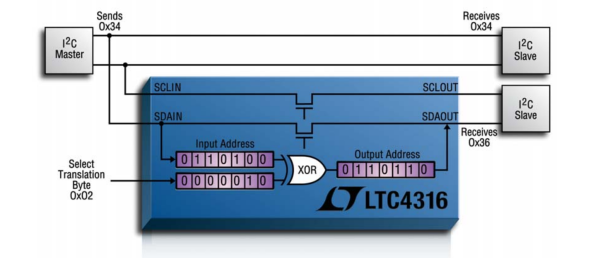
The LTC4316 is something special. It’s an I²C address translator that changes the address of a device that would otherwise conflict with another on the same I²C bus. Not a hack? Not so fast. Exactly how this chip does this trick is clever enough that I couldn’t resist giving it the post it rightfully deserves.

On-the-Fly Translation

What’s so special? This chip translates the address on-the-fly, making it transparent to the I²C protocol. Up until this point, our best bet for resolving address collisions was to put the clashing chip on a separate I²C bus that could be selectively enabled or disabled. In that department, there’s the PCA9543 and PCA9547 demultiplexers which we’ve seen before. Both of these devices essentially act like one-way check valves. To address any devices downstream, we must first address the multiplexer and select the corresponding bus. While these chips resolve our address collision problems, and while there’s technically a way to address a very large number of devices if we’re not time-constrained, the control logic needed to address various bus depths can get clunky for nested demultiplexers.

What’s so classy about the LTC4316 is that is preservers simplicity by keeping all devices on the same bus. It prevents us from having to write a complicated software routine to address various sections of a demultiplexed I²C bus. In a nutshell, by being protocol-transparent, the LTC4316 keeps our I²C master’s control logic simple.

How it Works

I mocked up a quick test setup to have a go at this chip in real life. Continue reading “LTC4316 Is The I2C Babelfish”

Down And Dirty With Contact Cleaners

I had a friend who was an engineer for a small TV station. I visited him at work once, and despite the fact that he wouldn’t let me climb the 1,200′ antenna tower, I had a great time. I was working for a video production studio at the time, so there was a fair amount in common about our jobs. One of the regular chores we faced was cleaning the heads on tape machines. He had a 5-gallon pail of cleaning solution under his bench that he told me was Freon, which he swore by for head cleaning and general contact cleaning. He gave me some for my shop in a little jar.

I never knew for sure if that stuff was Freon, but it was the mid-80s, shortly before CFCs were banned, so it might have been. All I know is that I’ve never found its equal for cleaning electronics gear. With that in mind, I thought I’d look at contact cleaners that are in use today, what’s really going on when you clean contacts, and why contacts even need cleaning in the first place.

Continue reading “Down And Dirty With Contact Cleaners”

How A Van De Graaff Generator Works

What I particularly like about the Van de Graaff (or VDG) is that it’s a combination of a few discrete scientific principles and some mechanically produced current, making it an interesting study. For example, did you know that its voltage is limited mostly by the diameter and curvature of the dome? That’s why a handheld one is harmless but you want to avoid getting zapped by one with a 15″ diameter dome. What follows is a journey through the workings of this interesting high voltage generator.

Continue reading “How A Van De Graaff Generator Works”

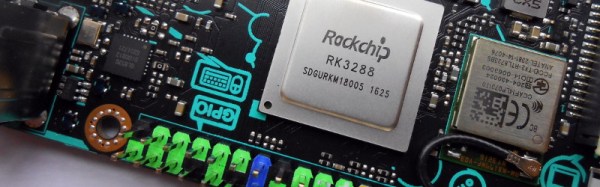
Review: The Asus Tinker Board (Updated)

In the years since the launch of the original Raspberry Pi we have seen the little British ARM-based board become one of the more popular single board computers in the hobbyist, maker, and hacker communities. It has retained that position despite the best efforts of other manufacturers, and we have seen a succession of competitor boards directly copying it by imitating its form factor. None of them have made a significant dent in the sales figures enjoyed by the Pi, yet they continue to appear on a regular basis.

We recently brought you news of the latest challenger in this arena, in the form of the Asus Tinker Board. This is a board that has made us sit up and take notice because unlike previous players this time we have a product from a giant of the industry. Most of us are likely to own at least one Asus product, indeed there is a good chance that you might be reading this on an Asus computer or monitor. Asus have made some very high quality hardware in their time, so perhaps this product will inherit some of that heritage. Thus it was with a sense of expectation that we ordered one of the first batch of Tinker Boards, and waited eagerly for the postman.

Update:

A member of the Asus Marketing team read this review and contacted Hackaday with some updated information. According to our discussion, the Tinker Board has not officially launched. This explains a lot about the current state of the Tinker Board. As Jenny mentions in her review below, the software support for the board is not yet in place, and as comments on this review have mentioned, you can’t source it in the US and most other markets. An internal slide deck was leaked on SlideShare shortly after CES (which explains our earlier coverage), followed by one retailer in the UK market selling the boards ahead of Asus’ launch date (which is how we got our hands on this unit).

Asus tells us that they are aiming for an end of February launch date, perhaps as soon as the 26th for the United States, UK, and Taiwan. Other markets might have some variation, all of this contingent on agreements with and getting stock to regional distributors. With the launch will come the final OS Distribution (TinkerOS based on Debian), schematics, mechanical block diagrams, etc. Asus tells Hackaday it is a top priority to deliver hardware video acceleration for the Rockchip on the Tinker Board. The Board Support Package which hooks the feature into Linux is not yet finished but will come either on launch day or soon after. This is the end of the update, please enjoy Jenny List’s full review below.

Continue reading “Review: The Asus Tinker Board (Updated)”

How Energy Gets Where Its Needed

Even if you’re reading this on a piece of paper that was hand-delivered to you in the Siberian wilderness, somewhere someone had to use energy to run a printer and also had to somehow get all of this information from the energy-consuming information superhighway. While we rely on the electric grid for a lot of our daily energy needs like these, it’s often unclear exactly how the energy from nuclear fuel rods, fossil fuels, or wind and solar gets turned into electrons that somehow get into the things that need those electrons. We covered a little bit about the history of the electric grid and how it came to be in the first of this series of posts, but how exactly does energy get delivered to us over the grid? Continue reading “How Energy Gets Where Its Needed”