The MakerBot Obituary

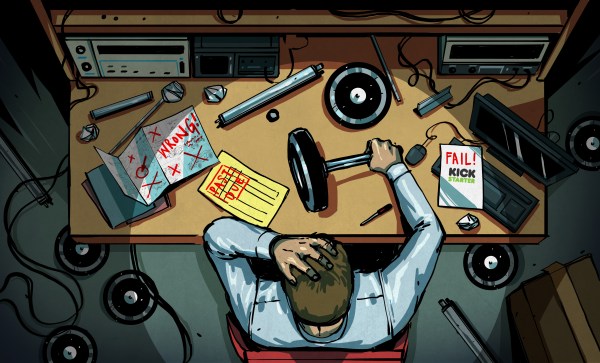
MakerBot is not dead, but it is connected to life support waiting for a merciful soul to pull the plug.

This week, MakerBot announced it would lay off its entire manufacturing force, outsourcing the manufacturing of all MakerBot printers to China. A few weeks ago, Stratasys, MakerBot’s parent company, released their 2015 financial reports, noting MakerBot sales revenues have fallen precipitously. The MakerBot brand is now worth far less than the $400 Million Stratasys spent to acquire it. MakerBot is a dead company walking, and it is very doubtful MakerBot will ever be held in the same regard as the heady days of 2010.

How did this happen? The most common explanation of MakerBot’s fall from grace is that Stratasys gutted the engineering and goodwill of the company after acquiring it. While it is true MakerBot saw its biggest problems after the acquisition from Stratasys, the problems started much earlier.

Continue reading “The MakerBot Obituary”

Evolving Our Ideas To Build Something That Matters

When Jeffrey Brian “JB” Straubel built his first electric car in 2000, a modified 1984 Porsche 944, powered by two beefy DC motors, he did it mostly for fun and out of his own curiosity for power electronics. At that time, “EV” was already a hype among tinkerers and makers, but Straubel certainly pushed the concept to the limit. He designed his own charger, motor controller, and cooling system, capable of an estimated 288 kW (368 hp) peak power output. 20 lead-acid batteries were connected in series to power the 240 V drive train. With a 30-40 mile range the build was not only road capable but also set a world record for EV drag racing.

jb-straubel-porsche
The “Electric Porsche 944” – by JB Straubel

The project was never meant to change the world, but with Tesla Motors, which Straubel co-founded only a few years later, the old Porsche 944 may have mattered way more than originally intended. The explosive growth between 2000 and 2010 in the laptop computer market has brought forth performance and affordable energy storage technology and made it available to other applications, such as traction batteries. However, why did energy storage have to take the detour through a bazillion laptop computers until it arrived at electro mobility?


You certainly won’t find that grail of engineering by just trying hard. Rather than feverishly hunting down the next big thing or that fix for the world’s big problems, we sometimes need to remind ourselves that even a small improvement, a new approach or just a fun build may be just the right ‘next step’. We may eventually build all the things and solve all the problems, but looking at the past, we tend to not do so by force. We are much better at evolving our ideas continuously over time. And each step on the way still matters. Let’s dig a bit deeper into this concept and see where it takes us.

Continue reading “Evolving Our Ideas To Build Something That Matters”

Hyperloops And Robot Cars, A Glimpse Into The Future

His mobile blooped at him with one of those noises a company spent money to get. A timer started on the screen as he rushed to put his shoes on. He finished and pushed open his door, running down the stairs two to a bound. By the time he reached the bottom of the stairs he had his backpack slung over both shoulders, which he mentally cursed himself for since he’d just have to take the dang thing off again.

It was morning on January first, and he was due at his parent’s house for a new year’s dinner fifteen hundred miles away. He should have booked a plane weeks ago, but now the Loop was his only option. The Loop didn’t really have peak rates, and while the plane would be a little faster, more direct, and cheaper IF he had remembered to book it in time, the Loop would take him the same distance today. Plus, the seats were comfier. They reclined nicely, and he intended to nap on the way. Hopefully, by the time he got there, the bleariness from last night’s celebration would be undetectable by parental senses.

He locked the door to his apartment complex, a reassuringly square assembly from the seventies, and walked to the sidewalk where a friendly light blue car waited for him. When he got close, his mobile vibrated and made another distressingly cheery noise. The doors of the car swung open opposite of each other to expose the space inside. The car displayed two rows of inward facing bench seats, a panoramic row of windows around the entire perimeter of the vehicle, and… yes, his nose was telling him before his eyes fixed on it, a very unsettling amount of vomit in the center of the floor.

He turned around, a bit squeamish, and took out his mobile. He navigated through the controls. Where is the menu option? What year is it now? Why is this still hard? Three awkward menus deep and he finally found and selected the option to let the dispatch know the car had an issue which made it uninhabitable. The car immediately began to chirp warnings and the doors soon started to close. In a moment, a human somewhere in the city would be looking at a video of the inside of the car, determining him a liar or not. As expected, a few seconds later, the little car began to drive off. The lights on the rear of the car turned from bright red to the yellow amber of headlights as it decided its front would be its back. It drove off to the dispatch center for cleaning and repair. Someone would be eating a 100 dollar cleaning bill today. He didn’t feel sorry for them.

His phone began to vibrate. He picked it up to answer a call from a bored customer service representative who was trying hard to sound earnest. “Sorry for the trouble sir, the ride today will be free. We have another car on its way”

Continue reading “Hyperloops And Robot Cars, A Glimpse Into The Future”

Dr Noirimetla, Private Failure Investigator And The Mystery Of Galileo’s Pillars

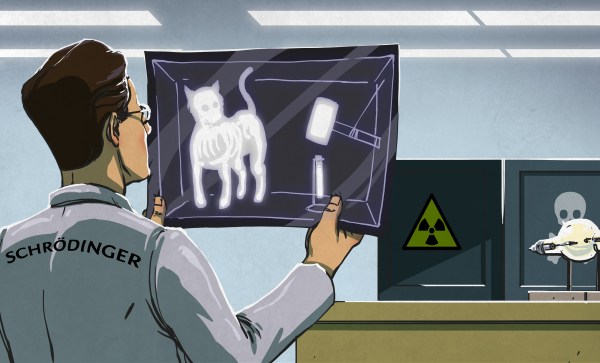
One dark and stormy morning, Dr. Richard Noirimetla, private failure investigator, was sitting at his desk nursing his morning cup of joe. It was an addiction, but life, and engineering was hard. Intense eyes sat in a round dark-skinned face. An engineering degree from the prestigious Indian Institute of Technology hung from the wall in his sparse office. Lightning flashed outside of his window, as the rain began to beat even harder against his corner office windows.

His phone rang.

“Hello, Dr. Noirimetla, Private Failure Investigator here.” He said in deep, polite voice. “How may I help you?”

“Ah, I’m Chief of Manufacturing for Galileo Concrete Pillars Inc. We have a bit of a problem here. We used to see a failure rate above 33% for our concrete pillar operation. As part of our lean manufacturing efforts we tried to reduce that number through various improvements. However, we see a failure rate of almost 50% now. We expect foul play… from one of our suppliers. Can you come right away?” a worried man’s voice sounded over the phone.

“I see, that’s very troubling,” Noirimetla rumbled. “I’ll send over the contract detail. There will be an increased fee, but I’m on my way.”

“Sounds good, we’ll pay anything! Just get our operation up to standards!” The man bid a polite goodbye and hung up.
Continue reading “Dr Noirimetla, Private Failure Investigator And The Mystery Of Galileo’s Pillars”

Citizen Scientist: Hedy Lamarr

For all the destruction and human misery unleashed during World War II, it was also a time of incredible creativity and ingenuity. In America, it was a time when everyone wanted to pitch in. Young men and women enlisted and were shipped overseas, and those left behind kept the factories running full tilt. Even Hollywood went to war, with its steady output of films that gave people a little glamour and provided an escape from the horror and loss of the war. Hollywood stars lined up to entertain troops and raise money for the war effort, and many joined up and fought too.

But one Hollywood star made an unconventional contribution to the war effort, and in the process proved that beauty and brains are not always mutually exclusive. This is the story of Hedy Lamarr, movie star and inventor.

“The Most Beautiful Woman in the World”

By the time she was 23 in 1937, Hedwig Eva Maria Kiesler was a genuine film star in her native Austria. She was also trapped in an unhappy marriage to a rich and powerful Austrian munitions magnate, Fritz Mandl. Hedy was miserable as a trophy wife, adorning the dining room as her husband entertained rich and powerful guests – including Mussolini and Hitler – over long dinners in one of his mansions. They dismissed her; clearly a woman so beautiful could have nothing else to offer, an empty head perched on a graceful neck. But she was far from stupid, and while her husband discussed business with the men who were building the Axis arsenal, Hedy listened and learned.

Continue reading “Citizen Scientist: Hedy Lamarr”

Can You Hear Me Now?

It’s great to build projects just to do something neat, to learn; to impress friends and other hackers. It’s even better to address a real need.

I’ve worn hearing aids for 40 some years. My response to the question “Can you hear me now?” is still all too often, “No.” Because of this I heartily applaud the Aegis Acoustics Headset currently active on Kickstarter. I’m happy to see it’s blown through its goal with over a month left.

The Aegis is targeted at prevent hearing loss, primarily in teens since they use headsets so often. It’s equally applicable to adults and pre-teens. The Aegis works by limiting the sound level emitted to 85db, which is a safe level. Above that the risk of damage to the tiny hairs in the cochlea – the inner ear – increases dramatically with a 3db increase cutting the safety time in half.

Future’s So Bright I’ve Got to Wear ‘Aids

My personal experience explains why this is important. At my first professional level job as a software developer I noticed that people at the other end of the table often mumbled during meetings. Not really, because everyone else understood them fine. I needed hearing aids.

My first hearing aids were analog devices. There were three frequency bands across the audio spectrum whose volumes could be custom set for my ears — resulting in crude and limited improvements in what I could hear. My current hearing aids are technological marvels of digital signal processing with a multitude of algorithms the audiologist can use to help me hear better. They even coordinate their actions by communicating between themselves.

I still need to ask people to repeat what they say at times. But who doesn’t? I had a successful career despite my loss. But it is still a royal pain-in-the-butt to miss out on one-third of the dialog in a movie, to not go to a local coffee house because I won’t understand the lyrics or comments by the musicians, and miss out on all the other small parts of life along these lines.

Hacking for Hearing

There are a range of areas where hackers could contribute and not just in assisting individuals, like myself, who personally gain from technological assistance.

Consider how the cell phone improved communications in developing countries. Using radio communications the countries avoided the need to string thousands of miles of wires. That saved the expense and the decades of construction time. It’s easier to get cell phone service than water in some locations. It’s important to notice that it didn’t come about because of a big plan. It came about as an unseen consequence of a technical development.

“We can rebuild him…we have the technology” is from the opening of an old TV series and movies, “The 6 Million Dollar Man” and has found it’s place in the pop-culture vocabulary. But it rings true. We have the technology. We have the tools. We have the expertise. We’re hackers and builders. We and the technology are all over the place. We’re a solution looking for a problem.

Devices that Extend the Body

All signs point to a coming revolution of devices that protect our bodies and make them work better. The 2015 Hackaday Prize theme is Build Something That Matters and that sentiment is obviously taking hold throughout the hardware hacker movement. The Aegis headphones I mentioned above are one example of preventive devices, but look around and there are many more like the UV-Badge which gives you feedback on safe levels of sunlight for your skin.

Surely we’re going to see further augmentation for the devices that help restore function. Wearables are all the rage, how long will it be before your smartwatch notification functions make it into my hearing aids? Imagine the improvements we will see in custom hearing profiles born of that smartphone-hearing aid connection. The foundations of this are user-controlled profile switching which is already in place for apps like Belltone’s HearPlus. If the advanced electronics in the smartphone can build a better noise profile and transfer it to the hearing aid my visits to the coffee shop just might get a lot better. And this doesn’t mean the devices need to look the same either. I love the Design Affairs Studio hearing aid concept that is shown at the top of this article. Hardware can be a status symbol after all.

This type of forward thinking easily extends to all assistive technologies such as wheelchair improvements and navigation systems for the blind.

As you look toward your next big hack, roll these concepts around in your mind. The tools, software, and talent have never been easier to connect for our group of citizen scientists who are hacking in basements and garages. It’s exciting to think about the change we can affect using the skills honed over the past decades of this hardware enlightenment we’re all living.

Teeny Tiny Very Small – Atomic Resolution And The Home Hobbyist

Atoms are small. Really small. You just won’t believe how minusculely microscopically mindbogglingly small they are. I mean you may think it’s a short way down the road to the chemist’s, but that’s just peanuts to atoms.

Atoms really are small. The atomic radius of a carbon atom is on the order of 0.1 nanometers, that’s 0.0000001 millimeters. It’s hard to grasp how fantastically small this is compared to objects we generally encounter, but as a starting point I’d recommend looking at the “Powers of Ten” video found below whose ability to convey the concept has been unrivaled since it was published in 1977.

The term nanometer might be most familiar from the semiconductor industry, and its seemingly unstoppable march to smaller feature sizes. Feature sizes currently hover somewhere around the 10 nanometer mark. So while these multi-billion dollar facilities can achieve 10nm precision it’s somewhat surprising that sub-nanometer feature size positioning, and fabrication techniques are available at relatively low cost to the hacker hobbyist.

In this article we’re going to review some of the amazing work demonstrated by hobbyists in the area of the very very small through use of cutting edge, but low cost techniques.

Continue reading “Teeny Tiny Very Small – Atomic Resolution And The Home Hobbyist”