M.2 For Hackers – Expand Your Laptop

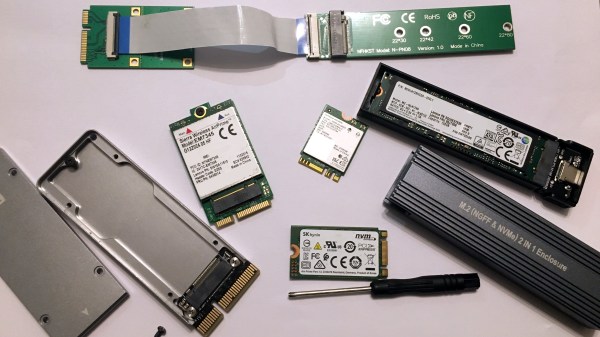
You’ve seen M.2 cards in modern laptops already. If you’re buying an SSD today, it’s most likely an M.2 one. Many of our laptops contain M.2 WiFi cards, the consumer-oriented WWAN cards now come in M.2, and every now and then we see M.2 cards that defy our expectations. Nowadays, using M.2 is one of the most viable ways for adding new features to your laptop. I have found that the M.2 standard is quite accessible and also very hackable, and I would like to demonstrate that to you.

If you ever searched the Web trying to understand what makes M.2 tick, you might’ve found one of the many confusing articles which just transcribe stuff out of the M.2 specification PDF, and make things look more complicated than they actually are. Let’s instead look at M.2 real-world use. Today, I’ll show you the M.2 devices you will encounter in the wild, and teach you what you need to know to make use of them. In part 2, I will show you how to build your own M.2 cards and card-accepting devices, too!

Well Thought-Out, Mostly

You can genuinely appreciate the M.2 standard once you start looking into it, especially if you have worked with mPCIe devices for some amount of time. mPCIe is what we’ve been using for all these years, and it gradually became a mish-mash of hardly-compatible pinouts. As manufacturers thought up all kinds of devices they could embed, you’d find hacks like mSATA and WWAN coexistence extensions, and the lack of standardization is noticeable in things like mPCIe WWAN modems as soon as you need something like UART or PCM. The M.2 specification, thankfully, accounted for all of these lessons.

Continue reading “M.2 For Hackers – Expand Your Laptop”

Computing Fluidly

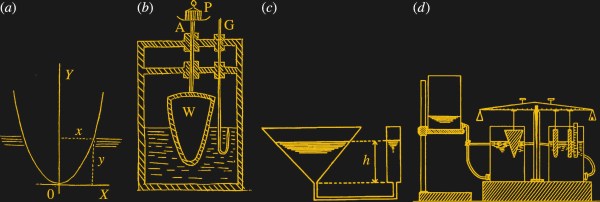
Computers come in many forms, depending on your definition. We’ve seen computers and computer gates built out of things as diverse as marbles, relays, and — of course — transistors. However, there are logic gate systems that use a property of moving fluids to form logic gates and a bistable element. That’s all the pieces you need to build a working computer.

It may sound far-fetched, but there have been general-purpose computers built using this technology. It is also used in specialized applications where fluids are already flowing, like shower heads, automotive transmissions, and in places where electronics are prone to misbehave. Many think the field will see a resurgence when we need to build logic at the molecular level for nanotech applications, too.

Basics

In its most basic form, a fluidic gate uses flow as a logic 1 and less flow to be a logic 0. Merging two streams together provides an OR gate. Using a supply stream that you can divert with a control stream provides a NOT function. Given enough inverters and OR gates, you can build everything else.

Continue reading “Computing Fluidly”

Robots Are Folding Laundry, But They Suck At It

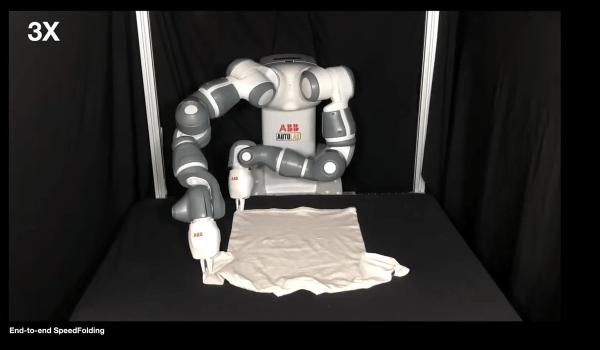
Robots are used in all sorts of industries on a wide variety of tasks. Typically, it’s because they’re far faster, more accurate, and more capable than we are. Expert humans could not compete with the consistent, speedy output of a robotic welder on an automotive production line, nor could they as delicately coat the chocolate on the back of a KitKat.

However, there are some tasks in which humans still have the edge. Those include driving, witty repartee, and yes, folding laundry. That’s not to say the robots aren’t trying, though, so let’s take a look at the state of the art.

Continue reading “Robots Are Folding Laundry, But They Suck At It”

Mastercard’s New Card: Safer From Quantum Attacks?

Quantum computers present a unique threat to many aspects of modern information technology. In particular, many cryptographic systems could be at risk of compromise in the event a malicious actor came into possession of a capable quantum computer.

Mastercard is intending to stay ahead of the game in this regard. It has launched a new contactless credit card that it says is impervious to certain types of quantum attack.

Continue reading “Mastercard’s New Card: Safer From Quantum Attacks?”

Bare-Metal STM32: Setting Up And Using SPI

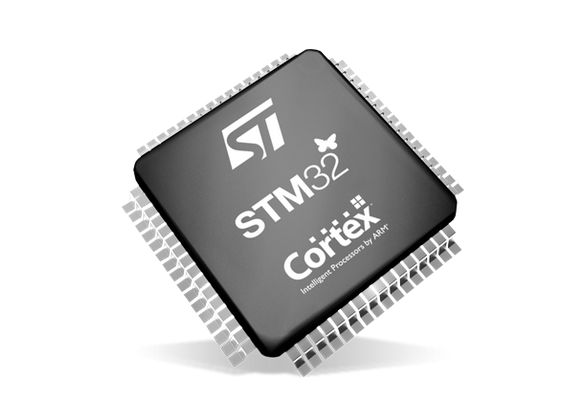
The Serial Peripheral Interface (SPI) interface was initially standardized by Motorola in 1979 for short-distance communication in embedded systems. In its most common four-wire configuration, full-duplex data transfer is possible on the two data (MOSI, MISO) lines with data rates well exceeding 10 Mb/s. This makes SPI suitable for high-bandwidth, full-duplex applications like SD storage cards and large resolution, high-refresh displays.

STM32 devices come with a variable number of SPI peripherals, two in the F042 at 18 Mb/s and five in the F411. Across the STM32 families, the SPI peripheral is relatively similar, with fairly minor differences in the register layout. In this article we’ll look at configuring an SPI peripheral in master mode.

Continue reading “Bare-Metal STM32: Setting Up And Using SPI”

Dancers Now Help Power Glasgow Nightclub

Humanity thus far has supplied most of its electricity needs by burning stuff, mostly very old stuff that burns great but is hard to replace. That stuff is getting increasingly expensive, and the pollution is a bother too, so renewable sources of energy are becoming more popular.

While wind or solar power are commonly used at the grid level, one Glasgow nightclub has taken a different tack. It’s capturing energy from its patrons to help keep the lights on.

Continue reading “Dancers Now Help Power Glasgow Nightclub”

Hackaday Links Column Banner

Hackaday Links: October 23, 2022

There were strange doings this week as Dallas-Forth Worth Airport in Texas experienced two consecutive days of GPS outages. The problem first cropped up on the 17th, as the Federal Aviation Administration sent out an automated notice that GPS reception was “unreliable” within 40 nautical miles of DFW, an area that includes at least ten other airports. One runway at DFW, runway 35R, was actually closed for a while because of the anomaly. According to GPSjam.org — because of course someone built a global mapping app to track GPS coverage — the outage only got worse the next day, both spreading geographically and worsening in some areas. Some have noted that the area of the outage abuts Fort Hood, one of the largest military installations in the country, but there doesn’t appear to be any connection to military operations. The outage ended abruptly at around 11:00 PM local time on the 19th, and there’s still no word about what caused it. Loss of GPS isn’t exactly a “game over” problem for modern aviation, but it certainly is a problem, and at the very least it points out how easy the system is to break, either accidentally or intentionally.

In other air travel news, almost as quickly as Lufthansa appeared to ban the use of Apple AirTags in checked baggage, the airline reversed course on the decision. The original decision was supposed to have been based on “an abundance of caution” regarding the potential for disaster from its low-power transmitters, or should a stowed AirTag’s CR2032 battery explode. But as it turns out, the Luftfahrt-Bundesamt, the German civil aviation authority, agreed with the company’s further assessment that the tags pose little risk, green-lighting their return to the cargo compartment. What luck! The original ban totally didn’t have anything to do with the fact that passengers were shaming Lufthansa online by tracking their bags with AirTags while the company claimed they couldn’t locate them, and the sudden reversal is unrelated to the bad taste this left in passengers’ mouths. Of course, the reversal only opened the door to more adventures in AirTag luggage tracking, so that’s fun.

Energy prices are much on everyone’s mind these days, but the scale of the problem is somewhat a matter of perspective. Take, for instance, the European Organization for Nuclear Research (CERN), which runs a little thing known as the Large Hadron Collider, a 27-kilometer-long machine that smashes atoms together to delve into the mysteries of physics. In an average year, CERN uses 1.3 terawatt-hours of electricity to run the LHC and its associated equipment. Technically, this is what’s known as a hell of a lot of electricity, and given the current energy issues in Europe, CERN has agreed to shut down the LHC a bit early this year, shutting down in late November instead of the usual mid-December halt. What’s more, CERN has agreed to reduce usage by 20% next year, which will increase scientific competition for beamtime on the LHC. There’s only so much CERN can do to reduce the LHC’s usage, though — the cryogenic plant to cool the superconducting magnets draws a whopping 27 megawatts, and has to be kept going to prevent the magnets from quenching.

And finally, as if the COVID-19 pandemic hasn’t been weird enough, the fact that it has left in its wake survivors whose sense of smell is compromised is alarming. Our daily ritual during the height of the pandemic was to open up a jar of peanut butter and take a whiff, figuring that even the slightest attenuation of the smell would serve as an early warning system for symptom onset. Thankfully, the alarm hasn’t been tripped, but we know more than a few people who now suffer from what appears to be permanent anosmia. It’s no joke — losing one’s sense of smell can be downright dangerous; think “gas leak” or “spoiled food.” So it was with interest that we spied an article about a neuroprosthetic nose that might one day let the nasally challenged smell again. The idea is to use an array of chemical sensors to stimulate an array of electrodes implanted near the olfactory bulb. It’s an interesting idea, and the article provides a lot of fascinating details on how the olfactory sense actually works.