Open Source And Giving Back

3D printing YouTuber [Thomas Sanladerer] made a fairly contentious claim in a video about the state of open source hardware and software: namely that it’s not viable “anymore”. You can watch his video for more nuance, but the basic claim is that there are so many firms who are reaping the benefits of open designs and code that the people who are actually doing the work can’t afford to make a living anymore.

[Thomas] then goes on to mention a few companies that are patenting their 3DP innovations, and presumably doing well by it, and he then claims that patenting is probably the right way forward from a business standpoint.

The irony that he says this with a Voron 3D printer sitting behind him was not lost on us. The Voron is, after all, a very successful open-source 3D printer design. It’s just rock solid, has lots of innovative touches, and an extensive bill of materials. They don’t sell anything, but instead rely on donations from their large community to keep afloat and keep designing.

At the same time, a whole bunch of companies are offering Voron kits – all of the parts that you’d have to source yourself otherwise. While not mass-market, these kit sales presumably also help keep some of the 3D printer enthusiast stores that sell them afloat. Which is all to say: the Voron community is thriving, and a number of folks are earning their livings off of it. And it’s completely open.

When [Thomas] complains that some players in the 3DP business landscape aren’t giving back to the open-source community effort, he’s actually calling out a few large-scale Chinese manufacturers making mass-market machines. These companies aren’t interested in pushing the state of the art forward anyway, rather just selling what they’ve got. And sure, there are a million Creality Enders for every Voron 2 out there. And yes, they reap the benefits of open designs and code. But they’re competing in an entirely different market from the real innovators, and I’m not sure that’s a bad thing.

Let us know what you think. (And if you’re reading this in the newsletter format, head on over to Hackaday on Saturday morning to leave us your comments.)


Hackaday Podcast 224: Star Wars Holograms, Tricorders, And Other Sensors

Elliot and Al got together to discuss this week’s projects, and you’re invited! You’ll hear news about replaceable batteries in the EU, along with some news about the Hackaday Op Amp Challenge winners and the start of a new contest. This week’s choice hacks ranged from a Star Wars-style volumetric display, navigation using cosmic rays, measuring car speed with microphones, and a crazy 3D printing technique that will blow you away.

There’s plenty more where that came from. Ever tried to land a model rocket vertically? How about building a punched card reader? The can’t miss articles this week cover a thermal camera review and the unintended consequences if AM radio bites the dust.

If you want to read along, the links are below for you to check out. Be sure to leave us your thoughts in the comments.

Click play to get started. Or download a non-AI-generated (we promise) file for your offline listening pleasure.

Continue reading “Hackaday Podcast 224: Star Wars Holograms, Tricorders, And Other Sensors”

This Week In Security: NOAuth, MiniDLNA, And Ticket To Ride

There’s a fun logic flaw in how multiple online services handle OAuth logins, that abuses Microsoft’s Azure Active Directory service to allow account takeovers. The problem is how a site handles the “Sign In With Microsoft” option, when there’s an existing account under the same email address. This is an irritating problem for an end-user, when a site offers multiple sign-in options. Trying to remember which option was used to set up an account is a struggle, so many services automatically merge accounts.

The problem is that the Microsoft Azure authentication information includes an email address, but Microsoft hasn’t done any verification that the account in question actually controls that address. And in fact, it’s trivial for the Azure admin to change that address at whim. So if the service accepts that email address as authoritative, and auto-merges the accounts, it’s a trivial account takeover. And it’s more than just a theoretical problem, as researchers at descope were able to demonstrate the attack, and have found multiple medium and large services that were vulnerable, as well as at least two authentication providers that themselves were vulnerable to this attack.

Microsoft has pushed updates to the Azure AD service to make the issue easier to avoid, though it seems that the unverified “email” field is still being sent on authentication transactions. There is a new flag, “RemoveUnverifiedEmailClaim” that eliminates the issue, and is enabled by default for new applications. Unfortunately this means that existing vulnerable applications will continue to be vulnerable until fixed on the application side. Continue reading “This Week In Security: NOAuth, MiniDLNA, And Ticket To Ride”

Ask Hackaday: The Turing Test Is Dead: Long Live The Turing Test!

Alan Turing proposed a test for machine intelligence that no longer works. The idea was to have people communicate over a terminal, with another real person and with a computer. If the computer is intelligent, Turing mused, most people will incorrectly identify the computer as a human. Clearly, with the advent of modern chatbots, that test is now broken. Despite the “AI” moniker, chatbots aren’t sentient or even pre-sentient, but they certainly seem that way. An AI CEO, Mustafa Suleyman, is proposing a new test: The AI has to take a $100,000 budget and earn $1,000,000.

We were a little bemused at this. By that measure, most of us aren’t intelligent, either, and it seems like this is a particularly capitalistic idea. We could probably write an Excel script that studied mutual fund performance and pull off the same trick, given enough time for the investment to mature. Is it intelligent? No. Besides, even humans who have demonstrated they can make $1,000,000 often sell their companies and start new ones that fail. How often does the AI have to succeed before we grant it person status?

Continue reading “Ask Hackaday: The Turing Test Is Dead: Long Live The Turing Test!”

In Praise Of RPN (with Python Or C)

HP calculators, slide rules, and Forth all have something in common: reverse polish notation or RPN. Admittedly, slide rules don’t really have RPN, but you work problems on them the same way you do with an RPN calculator. For whatever reason, RPN didn’t really succeed in the general marketplace, and you might wonder why it was ever a thing. The biggest reason is that RPN is very easy to implement compared to working through proper algebraic, or infix, notation. In addition, in the early years of computers and calculators, you didn’t have much to work with, and people were used to using slide rules, so having something that didn’t take a lot of code that matched how users worked anyway was a win-win.

What is RPN?

If you haven’t encountered RPN before, it is an easy way to express math without ambiguity. For example, what’s 5 + 3 * 6?  It’s 23 and not 48. By order of operations you know that you have to multiply before you add, even if you wrote down the multiplication second. You have to read through the whole equation before you can get started with math, and if you want to force the other result, you’ll need parentheses.

With RPN, there is no ambiguity depending on secret rules or parentheses, nor is there any reason to remember things unnecessarily. For instance, to calculate our example you have to read all the way through once to figure out that you have to multiply first, then you need to remember that is pending and add the 5. With RPN, you go left to right, and every time you see an operator, you act on it and move on. With RPN, you would write 3 6 * 5 +.

While HP calculators were the most common place to encounter RPN, it wasn’t the only place. Friden calculators had it, too. Some early computers and calculators supported it but didn’t name it. Some Soviet-era calculators used it, too, including the famous Elektronika B3-34, which was featured in a science fiction story in a Soviet magazine aimed at young people in 1985. The story set problems that had to be worked on the calculator.

Continue reading “In Praise Of RPN (with Python Or C)”

Jack In, The 2023 Cyberdeck Challenge Starts Now

The modern laptop is truly a masterpiece of engineering, craming an incredible amount of processing power into a thin and lightweight package that can run for hours on its internal batteries, all for just a few hundred bucks. Combine that with the ubiquitous smartphone, and it’s safe to say that the state of mobile computing has never been better.

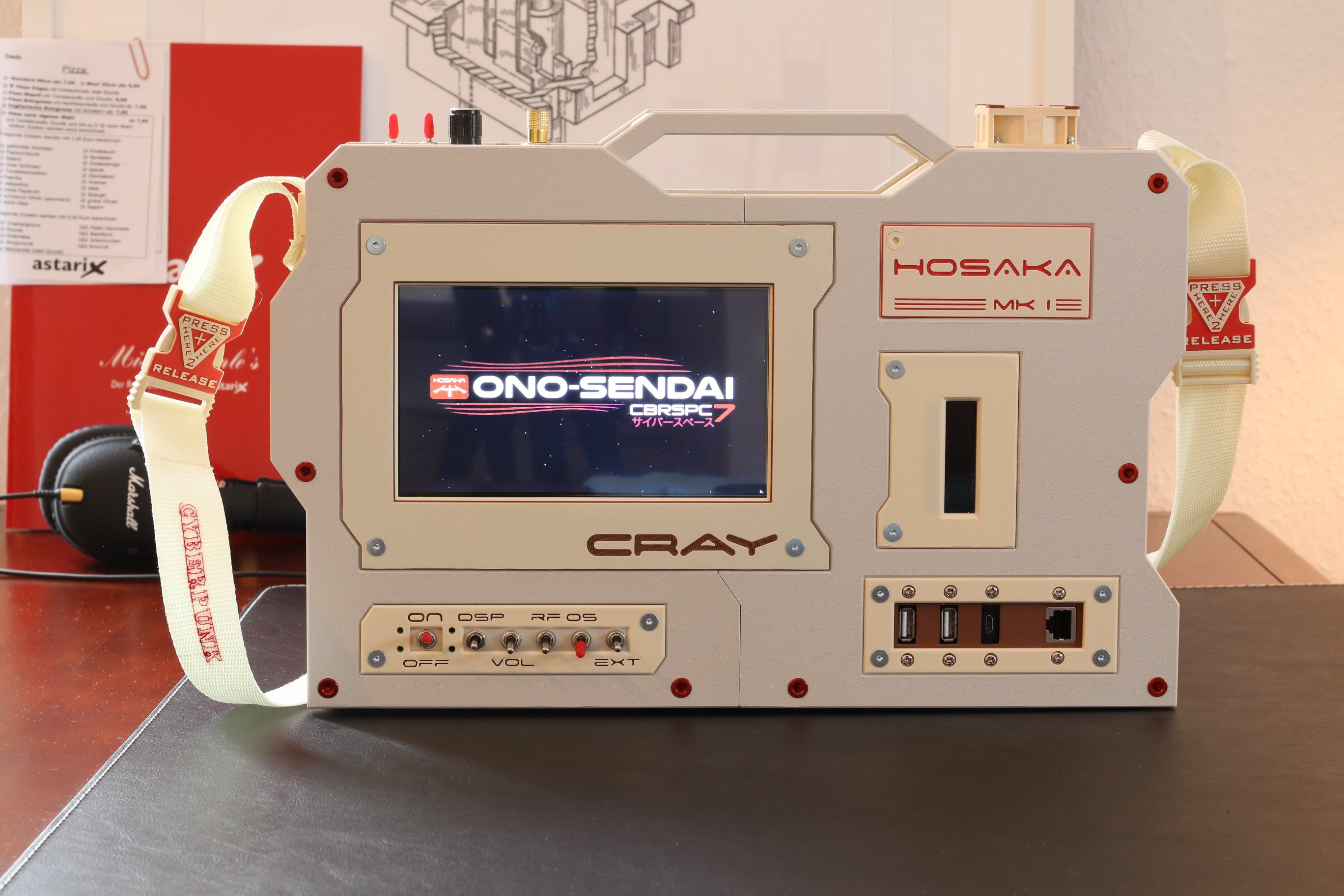
A retro-futuristic portable computer with a touch screen and a shoulder strapDespite this, over the last several years we’ve watched cyberdecks go from a few one-off examples to a vibrant community of truly personal computing devices. While there are some exceptions, most of them are larger, more expensive, and less portable than what’s available on the commercial market. But that’s not the point — a cyberdeck should be a reflection of the hacker that built it, not the product of a faceless megacorp.

Which is why we’re excited to officially announce the 2023 Cyberdeck Challenge, starting now and running all summer through to August 15th.

Whether it’s a ridiculously over the top wearable that wouldn’t look out of place in a cyberpunk anime or a pocket-sized gadget that you operate with a handful of unlabeled buttons, we want to see it. All we ask is that it be a functional device capable of some useful amount of computing, anything beyond that is up to you. Turn in one of the top three designs, and you’ll earn a $150 USD DigiKey shopping spree, just what you need to pack a few extra bells and whistles into your rig.

Continue reading “Jack In, The 2023 Cyberdeck Challenge Starts Now”

Illustrated Kristina with an IBM Model M keyboard floating between her hands.

Keebin’ With Kristina: The One With The Mouse-cropad

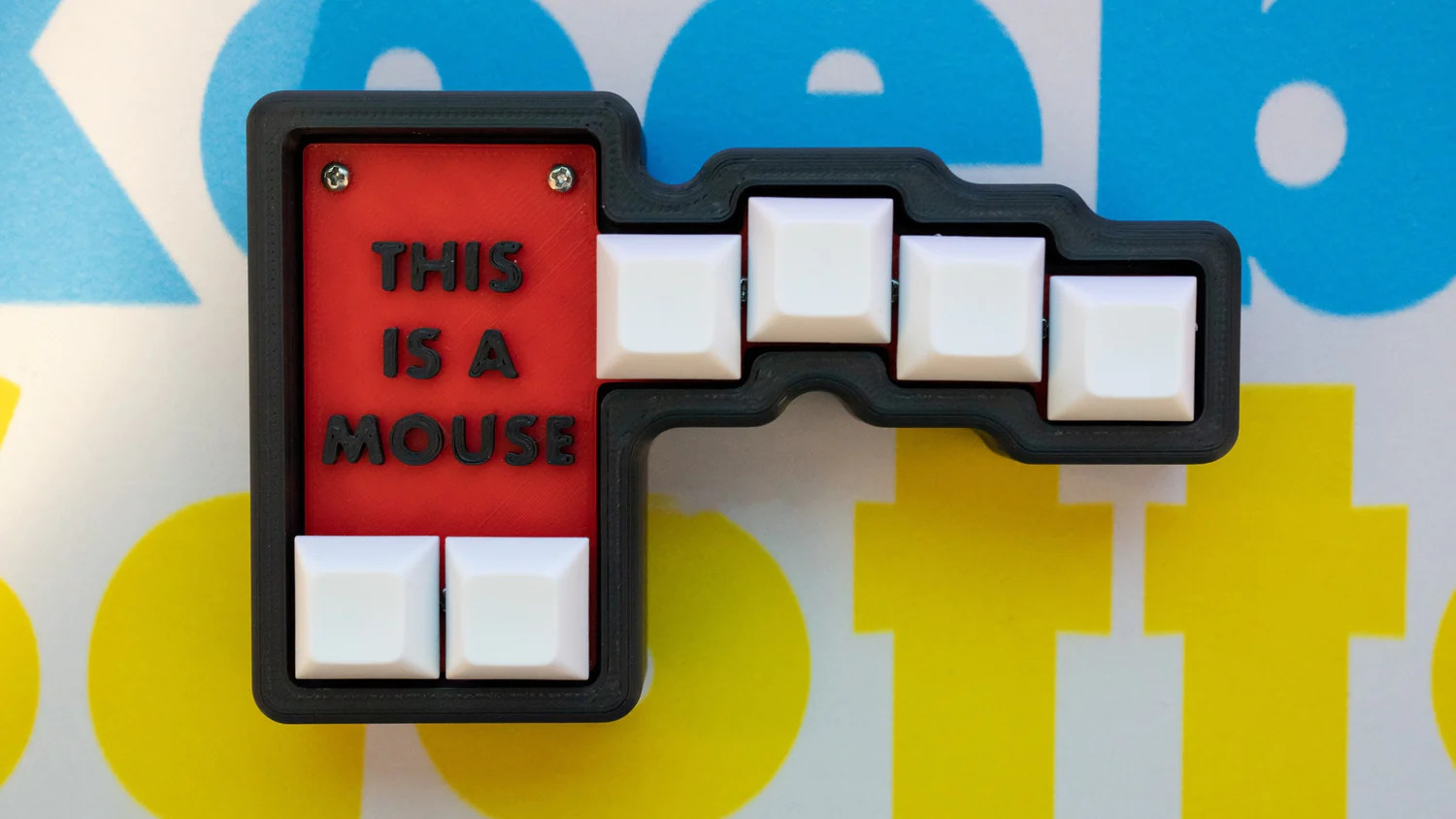
Okay, so you built a macropad or even a keyboard. What now? Well, most people use some kind of mouse to go along with it, but no one uses a mouse like this creation by [Joe_Scotto].

This is the mouse no one asked for, and yet I think it’s pretty awesome for something that’s supposed to be a joke. Maybe it’s in the great execution, I don’t know. I will ignore the suggestion that MX Browns are part of the joke, however. *cries in OG tactility*

Essentially, this is a macropad that uses QMK mouse keys to emulate a mouse. The build itself couldn’t be more straightforward — it’s six MX browns wired up to six pins on a Pico, and they all share a common ground. Keep the joke going by commissioning one from [Joe] or building it yourself.

Via [r/cyberdeck]

News: Microsoft Discontinues Natural Keyboard

Image via Wikipedia

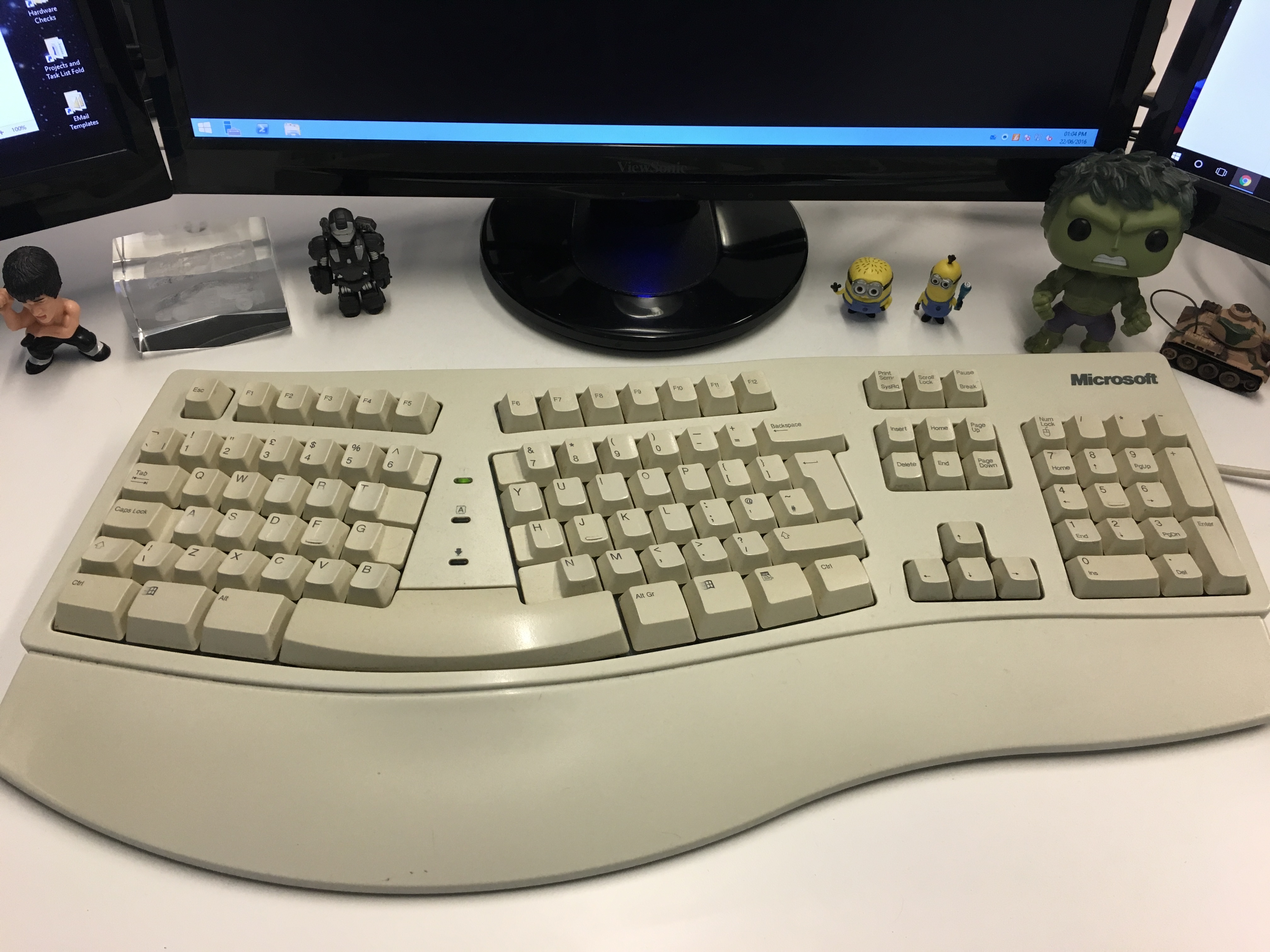
It’s often people’s first ergonomic keyboard — some variation of Microsoft’s Natural keyboard, that 90s split that took up so much real estate on the desk with it’s built-in wrist rest.

I’ll admit that despite using one for years at the office, I went back to whatever clicky rectangles I could get from the IT department. Then came the pain, and I got a Logitech Wave. Then came the surgery, and the Kinesis Advantage.

Well, now it seems that after 30 years and several ergonomic models, Microsoft are exiting the keyboard game. While I don’t personally understand why when there are so many fans, [Jeff Atwood] believes it’s because keyboards are exploding in popularity and tons of people are building their own. While that may be true, there are legions of normies trying to stave off carpal and cubital tunnel syndrome and have absolutely no interest in building anything, much less a keyboard. So, get these things while they’re hot, I guess.

Continue reading “Keebin’ With Kristina: The One With The Mouse-cropad”