Paper Mechanical Iris

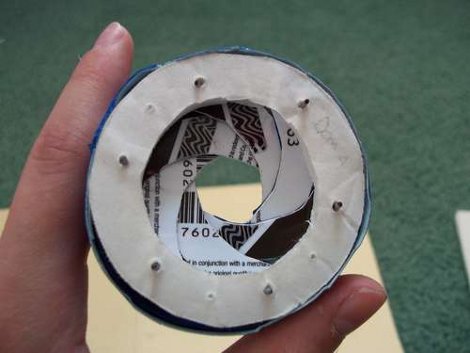
This functioning mechanical irs is made from paper templates, foam core poster board, old credit / gift / etc cards, paper clips and masking tape. First, patterns are designed and multiples are printed and laid out to make the 10 parts needed. Two rings are cut out of foam board and a third ring is cut into wedges to form a cam mechanism on top of one of the other two rings.

Twelve shutters are then cut from the credit cards, and small pieces of paper clip are glued to each end and both sides. One side rides the cam mechanism the other side is punched through the final ring.

We found it to be an interesting project that should be pretty easy for just about anyone to replicate (now that its all figured out for us), and besides, you never know when you might stumble across a small box of hotel key’s with a defunct pizza parlor’s advertisement on the back.

Beginner Concepts In Electronics And Arduino

arduino_tutorial_series

[Jeremy] is all about the Arduino, but also into helping people get started working with electronics. He has put together a series of videos on his web site which discuss the basics of using an Arduino. Having just published his tenth tutorial, he dropped us a line to let us know. His videos cover a wide range of topics and include source code, schematics, and a full parts list to help you follow along with him.

While the core of his lessons focus specifically on how to use the Arduino to perform particular tasks, he does introduce the viewer to many different concepts along the way. He covers PWM, button debouncing, interrupts, SPI communications, analog inputs, and more – all of which are must-know topics that extend beyond the realm of experimenting with Arduinos.

The videos run anywhere from 6 to 20 minutes in length, so you will want to set a block of time aside if you plan on checking them out.

If Arduino-specific videos aren’t your thing, he also has a series of general tech-related videos on his site as well which may be of interest. Otherwise, stick around to see the latest in his series of tutorials.

Continue reading “Beginner Concepts In Electronics And Arduino”

Switched Mode Power Supply Repair Guide

switched_mode_power_supply_repaiir

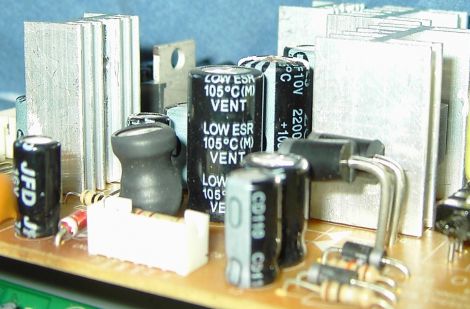
[Erich] spotted a broken DVD recorder at a local amateur radio meeting and decided to see if he could restore it to working order. While he was fortunate enough that someone labeled it as having a bad power supply, things aren’t always that easy. He gives a broad explanation as to how switched mode power supplies work as well as discusses some of the reasons these devices tend to fail. He identifies a few common components and areas that one should check while diagnosing a non-functioning power supply. While obvious bulging capacitors are easily identifiable, he discusses the need for an ESR meter and uses a kit-built model to test capacitors that do not have any visual signs of damage. While some of his walkthrough might be basic knowledge for readers who have experience in recapping circuit boards, it serves as a nice guide for those who are new to the world of electronics troubleshooting and repair.

How To Build A Ping-pong Ball Display

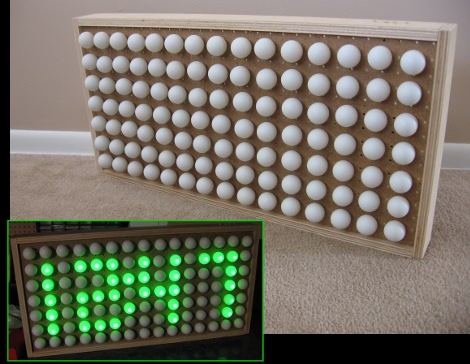
If you’ve been lusting after your own glowing display we’re here to help by sharing some simple building techniques that will result in an interesting project like the one you see above. This is a super-accurate clock That uses ping-pong balls as diffusers for LEDs, but with a little know-how you can turn this into a full marquee display. Join me after break where I’ll share the details of the project and give you everything you need to know to build your own.

Continue reading “How To Build A Ping-pong Ball Display”

Intro To Circuit Bending

Electronic musical instruments are a lot of fun for a hacker because, with a small palette of tools, know-how and curiosity, they are easily modified. As with any hack, there is always the chance that the subject will be ruined, so it’s not necessarily worth the risk to muck about inside your thousand-dollar pro synthesizer. Luckily for all of us, there are shovel-fulls of old electronic musical toys littering the curbs and second-hand shops of the world. These fun little devices provide ample opportunity to get familiar with audio electronics and circuit bending techniques.

A note on definitions: the term “circuit bending” can be synonymous with “hardware hacking” in the world of audio electronics, and we have seen some debate as to which term is better suited to a given project. We welcome you to share your viewpoints in the comments.

Keep reading to get started.
Continue reading “Intro To Circuit Bending”

Beginner Concepts: Powering Your Projects

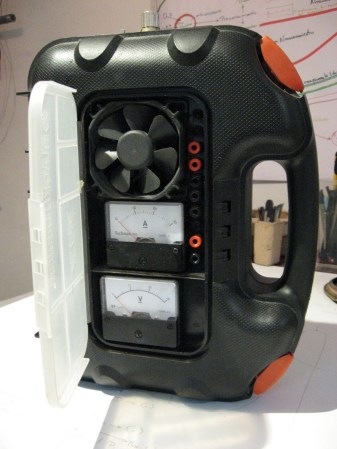
Powering your gadgets generally seems like a necessary evil. To help with this [Felipe La Rotta] made a really nice bench power supply using a PC power supply and a LM317 adjustable voltage regulator. PC power supplies are an example of a switched power supply(more on that later).  The LM317 is a type of linear voltage regulator that allows for adjusting the output voltage by varying some resistors. Whats the best way to power your circuits? well that depends…

Continue reading “Beginner Concepts: Powering Your Projects”

AVR Programming 04: Writing Code, Etc.

Welcome back to this fourth and final installment of the series. The first three parts should have been enough to get you off the ground, but a few more learning examples wouldn’t hurt. It’s also a good time to discuss some of the other things these little chips can do. Join me after the break to:

  • Expand the sample code, adding features to our simple program while I challenge you to write the code yourself.
  • Discuss AVR fuse bits, how to use them, and what to watch out for
  • Touch on some of the peripherals you’ll come across in these chips

As a grand flourish to the series, I’ve used the example hardware from this final part to build a bicycle tail light. Hopefully this will inspire you to create something much more clever.

Series roadmap:

Continue reading “AVR Programming 04: Writing Code, Etc.”