
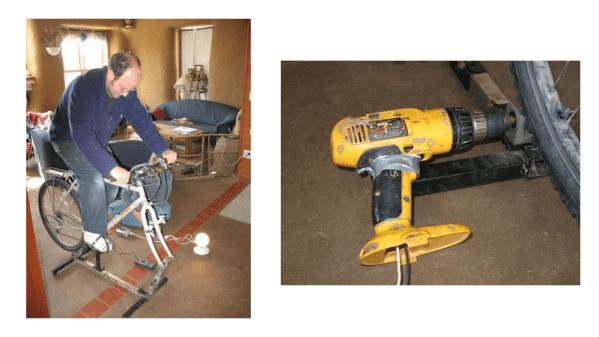
The bicycle is a great invention. It is an extremely efficient method of transportation, even more so than walking. So why not harness that efficiency for other things? [Tony] had that same thought so he ordered a bike generator but after waiting too long for the company to send it, he decided to make his own.
[Tony] is an bicycle enthusiast so he had an old bike and an old training stand he could use for the project. Generating electricity from pedaling the bike requires some sort of generator. Lucky for him, [Tony] happened to have a cordless drill that stopped going in reverse. Since he had since upgraded, this was the perfect candidate for the generator. The drill was mounted to the training stand so that a pulley inserted in the chuck pressed against the rear wheel. Wires were added to connect the drill’s battery connectors to a 12vdc to 120vac inverter. As the bike is pedaled, the rear wheel spins the drill, which spins the drill motor creating DC voltage. That DC voltage is then converted to AC by the inverter. With a multimeter connected to the output from the drill, it is easy to adjust the pedaling speed to keep the output in the 11-14v range which is required by the inverter.
In the photo above, you can see a light bulb being powered by the bike. However, the bike powered generator could not power the larger load of a computer. The remedy for this was to purchase a solar charge controller and a 12 volt battery. The bike charges the battery and the battery can power the computer through the inverter.


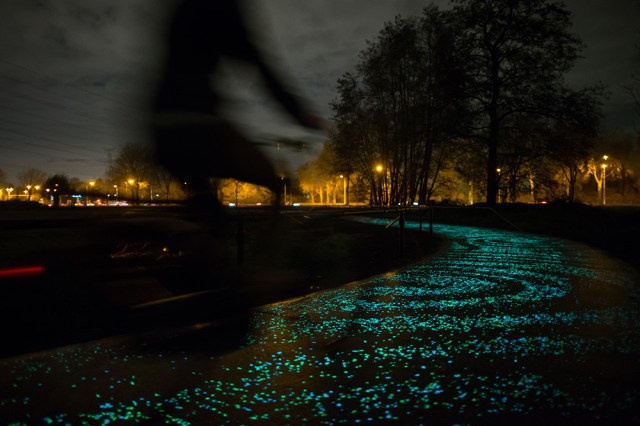 This project is the second installment of [Studio Roosegaarde’s]
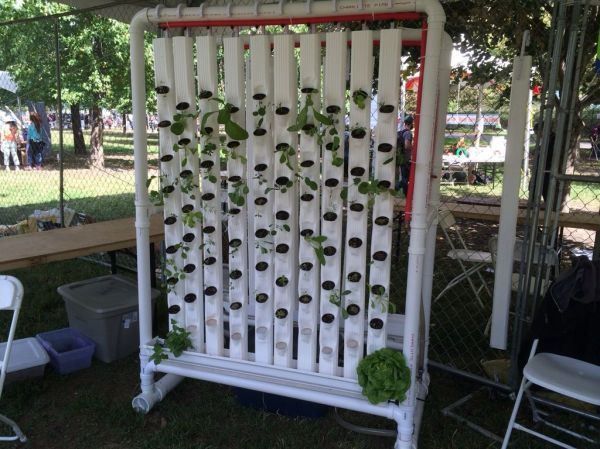
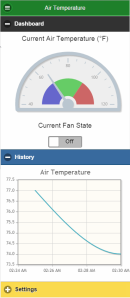 The potential urban farmer may not be super excited about tending to his crops. This is where the robot portion of the RUFS system comes into play. There are two control systems that work independently of each other. The first is for indoor applications and controls light cycles and circulation fans. The second is a little more complex and controls the watering portion of the system. Not only does it water the plants at pre-determined intervals but it also monitors the pH, nutrient and water levels inside the reservoir. Both these systems are Arduino-based. For extreme control freaks, there is one more add-on available. It’s Raspberry Pi based and has an accompanying mobile app. The Pi records and logs sensor data from the Arduinos and also allows remote updating of the watering and light schedules. The mobile app lets you not only look at current conditions of the system but also displays the historical data in a nice visual graph.
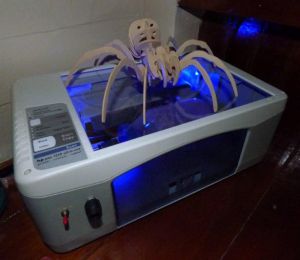 Don’t throw out that old printer! Not that you would, but even if you’ve already scavenged it for parts, you can








