The Last Component Storage System You’d Ever Need

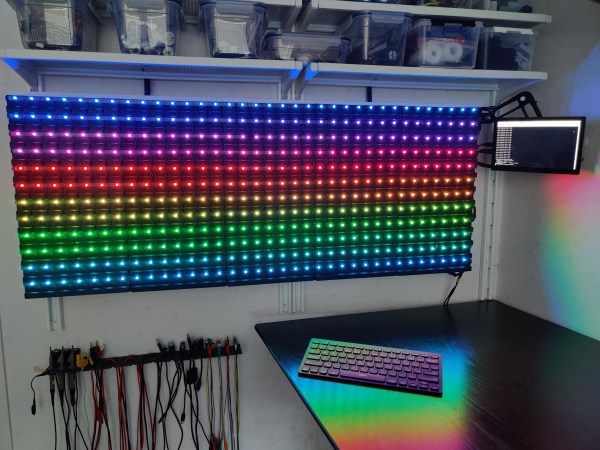
Think you’ve seen the best component storage system? This system could only be better if you could walk up and talk to it. [APTechnologies] was tired of using a hodgepodge of drawers and boxen for storing their components. What they needed was an all-purpose solution for storing all kinds of small-to-medium-sized goodies, be they through hole or SMT.

This one happens to have a software interface as well that is searchable with short, crisp expressions that find parts by ID or with parameters. It’s a Python 3 script running on a Raspberry Pi 4B that’s hiding behind the HDMI display. [APTechnologies] printed a special arm for that, and you can find all the files on GitHub. Not only does the LED above the corresponding drawer light up, it lights up in a color that represents the inventory levels. We assume green/yellow/red, but [APTechnologies] doesn’t specify.

Don’t know what to do with some of your components? If they’re really old, they may be no good anymore. It just depends.

Dog Bowls Show The Versatility Of Ceramic Slip Casting

Here at Hackaday, we feature projects that are built of just about every material imaginable. Silicon-spangled fiber-reinforced epoxy resin is our primary medium, but we see plastic, wood, steel, aluminum, and even textiles from time to time. It’s not often we see slip-cast ceramic molding, though, and when it pops up, it’s always good to take a look at this versatile manufacturing method.

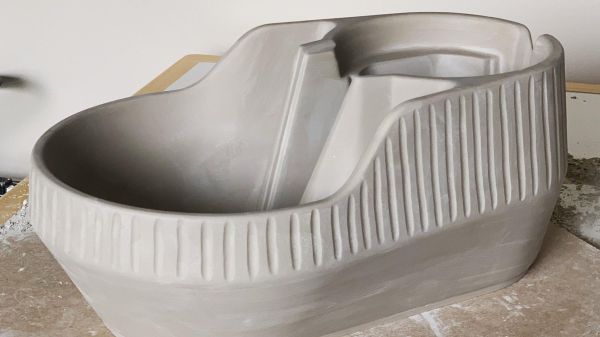
The back-story on this one is that [thoughtfulocean], a mechanical engineer idled by COVID lockdowns, wanted custom water bowls for his dogs, one of whom is clearly a grumpy Ewok. The design started with a 3D-print of the final vessel, printed in sections and glued together. These were used to create a two-piece plaster mold into which a watery slurry of clay, or slip, was poured. The plaster mold dehydrates the slip, leaving behind a semi-solid layer of clay of the desired thickness once the excess slip is poured off. The resulting casting is then fired in a kiln and glazed.

Of course, [thoughtfulocean] ran into a few problems along the way. The first mold was warped thanks to the mold box bowing under pressure from the plaster, so the whole molding process had to be revamped. The finished bowl also shrunk less than expected after firing, which led to some more revisions. But the finished bowl look really nice, and the included pump and filter keeps the Ewok’s water free from the yuck a dog’s face can introduce. As a bonus, it sounds like [thoughtfulocean] might have created a marketable product from all this. Take that, COVID!

Slip-casting ceramic may not be all that common around here, but ceramic as a material isn’t exactly a stranger. And who says slip casting is limited to ceramic? After all, we’ve seen a similar method used with plastic resin.

[via r/engineering]

A Pull Chain To End Your Zoom Pain

Yay! Another videoconference call is in the books, so that must mean that it’s time to fumble around awkwardly for the hang-up button with a fading smile. [lanewinfield] knew there had to be a better way, and looked to the pull chain switch for salvation. Sure, this could just as easily be a button, but what’s the fun in that? Besides, few buttons would be as satisfying as pulling a chain to a Zoom call.

The pull chain switch is connected to an Adafruit Feather nRF52840 Express that’s emulating a Bluetooth keyboard. Firmware-wise it sends command + F6, which triggers an AppleScript that manually exits and and all Zoom calls and kills Chrome tabs pointed to meet.google.com. He’s using Apple’s hotkey wizard Alfred, but this could be handled just as easily with something like AutoHotKey.

Pull chain switches are neat little mechanisms. The chain is connected to a cam that engages a wheel with copper contacts on half the outside. When you pull the chain, the wheel moves 90° and the wheel contacts connect up with the fixed contacts inside the housing to make a connection. Pulling the chain again moves the wheel which slides to the half without the contacts. Check it out in the video below.

Continue reading “A Pull Chain To End Your Zoom Pain”

Status Display Lets Them Know You Can’t Play

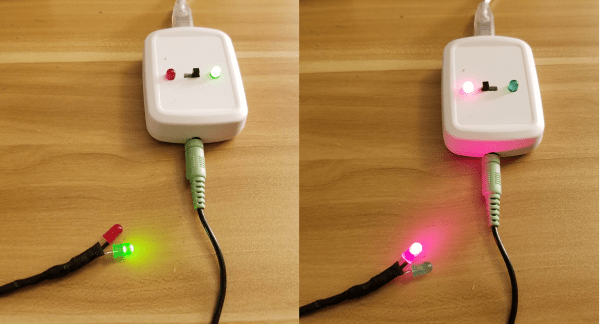
All this ongoing forced togetherness is great, but sometimes you just need to be able to pretend you’re alone so you can get some work done. So, how do you keep family members out of your home office? Our own [Bob Baddeley]’s free/busy indicator is about as simple as it gets.

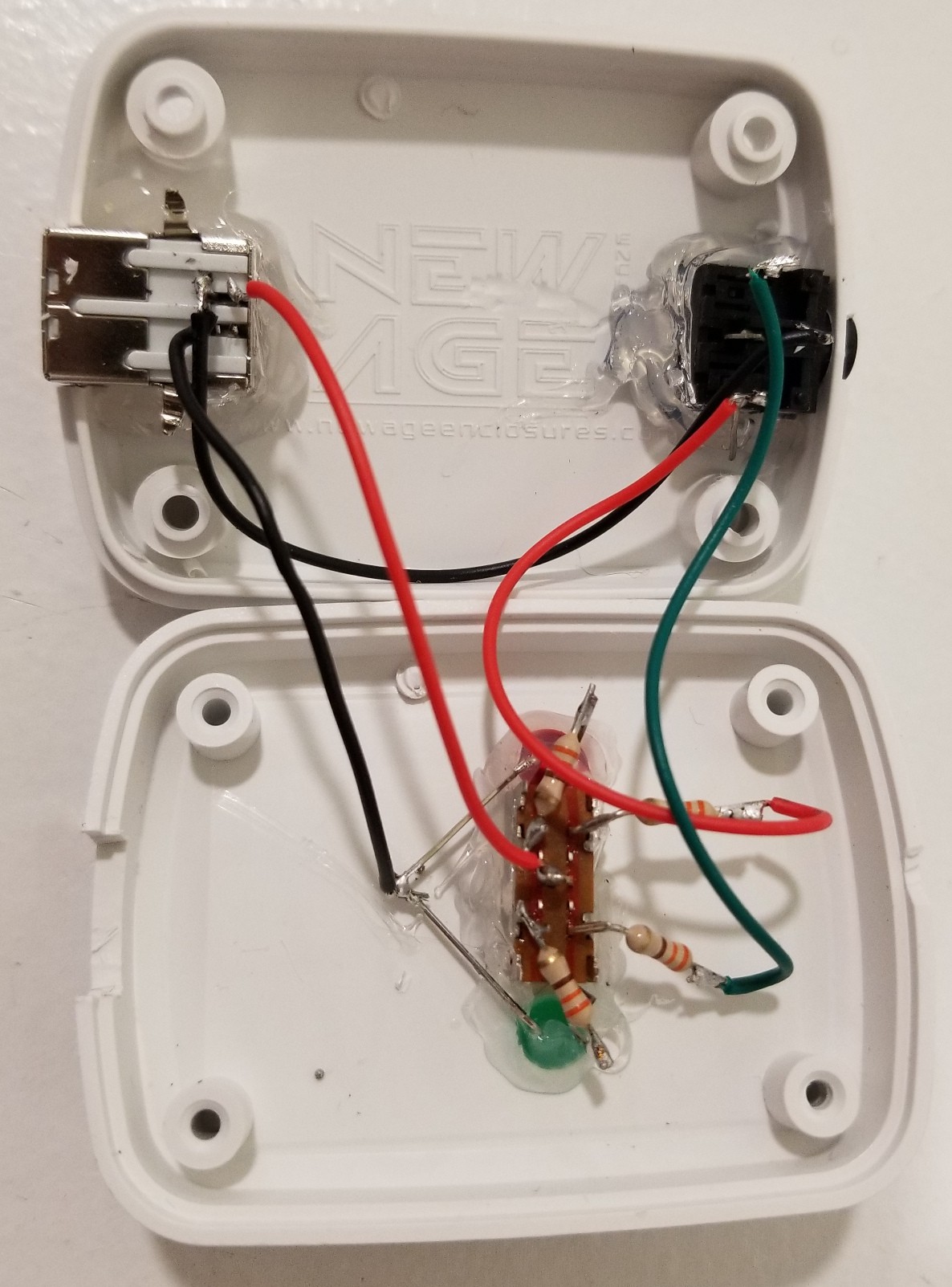
The best part is that the status can been seen on both sides of the door so you don’t forget to keep it updated. Or maybe it’s the super-low part count. There’s no BLE, LoRa, or Wi-Fi, just two sets of red and green LEDs, a three-way switch, and a power source. Well, and current-limiting resistors of course.

[Bob] already had all the components on hand, including the nifty enclosure, which is another great thing about this build. Like [Bob] says, you could house the control side of this circuit in just about anything you’ve got lying around.

Young children might abuse this one, but this status indicator that lets the family request your presence with the push of a button.

Little Red Night Light Is Just Right

Don’t you hate getting up in the middle of the night to use the bathroom? The worst part is not being able to see what you’re doing, but if you turn on a light, you’ll lose your night vision. Nightlights are supposed to be the best solution, but are usually too bright for 3 AM excursions and can end up leaking light into the bedroom. What the bathroom needs is a purpose-built nightlight that uses red light so you don’t lose your night vision.

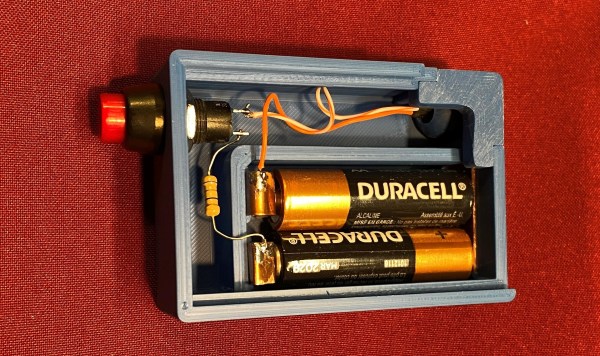
This simple, wall-mounted night light is just the thing. All it takes is two AA batteries, a resistor, a red LED, and an SPST push button. [Vchaney] even made their own battery contacts. The genius part of this build is in the adjustable LED, which is fitted into a ball that moves around in a socket so you can aim it wherever you need to see. All the files are available if you want to print one for yourself.

Those who sit might prefer to shine the light on the toilet paper roll. Here’s a smart roll holder that doubles as a night light, albeit a terribly bright one.

A Crust-Cutting, Carrot-Chopping Robot

[3DprintedLife] sure does hate bread crust. Not the upper portion of homemade bread, mind you — just that nasty stuff around the edges of store-bought loaves. Several dozen hours of CAD later, [3DprintedLife] had themselves a crust-cutting robot that also chops vegetables.

This De-Cruster 9000 is essentially a 2-axis robotic guillotine over a turntable. It uses a Raspberry Pi 4 and OpenCV to seek and destroy bread crusts with a dull dollar store knife. Aside from the compact design, our favorite part has to be the firmware limit switches baked into the custom control board. The stepper drivers have this fancy feature called StallGuard™ that constantly reads the back EMF to determine the load the motor is under. If you have it flag you right before the motor hits the end of the rail and stalls, bam, you have a firmware limit switch. Watch it remove crusts and chop a lot of carrots with faces after the break.

This is far from the dangerous-looking robot we’ve seen lately. Remember this hair-cutting contraption?

Continue reading “A Crust-Cutting, Carrot-Chopping Robot”

Actuator Opens The Door To Drier Dishes

Dishwashers are great at washing dishes and even rinsing them, most of the time. Where they tend to fail is in the drying part. Somehow these things dry hot enough to warp stoneware dishes, but not so well that things are actually dry when you open the door. Blame it on the lack of air movement.

Ideally, the dishwasher cycle is started soon after dinner time so it can be finished and opened up before it’s time for bed. But if you do that, then you miss all the dishes from late-night snacking and the occasional wine glass. Wait until bedtime to start it, and it has to sit several hours with moisture inside. Obviously, the answer is to listen for the victory beeps at the end of the cycle, and use a slow but forceful actuator to push the door open.

[Ivan Stepaniuk] is listening for the dishwasher’s frequencies with a microphone, amplifying them with a trusty LM386, and using an STM32 blue pill to crunch the audio. [Ivan] has plans to incorporate an ESP8266 board for IoT, presumably to get a notification when the door has been opened successfully. Check out the demo after the break.

Yes, dishwashers are great until they aren’t, and some little part breaks. But why pay for a new detergent compartment cover when you can just print one?

Continue reading “Actuator Opens The Door To Drier Dishes”