The Other Kind Of Phone Hacking

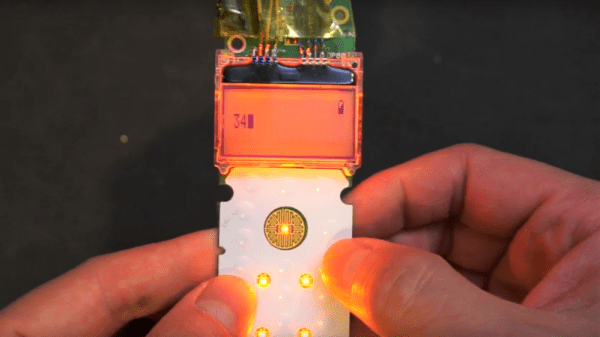
While it’s true that your parts bin might have a few parts harvested from outdated devices of recent vintage, there’s not much to glean anymore aside from wall warts. But the 3×48-character LCD from [Kerry Wong]’s old Uniden cordless landline phone was tempting enough for him to attempt a teardown and reverse engineering, and the results were instructive.

No data sheet? No problem. [Kerry] couldn’t find anything out about the nicely backlit display, so onto the logic analyzer it went. With only eight leads from the main board to the display module, it wasn’t likely to be a parallel protocol, and the video below shows that to be the case. A little fiddling with the parameters showed the protocol was Serial Peripheral Interface, but as with other standards that aren’t exactly standardized, [Kerry] was left with enough ambiguity to make the analysis interesting. Despite a mysterious header of 39 characters, he was able in the end to drive the LCD with an Arduino, and given that these phones were usually sold as a bundle with a base and several handsets, he ought to have a nice collection of displays for the parts bin.

With how prevalent this protocol has gotten, [Kerry]’s post makes us want to get up to speed on the basics of SPI. And to buy a logic analyzer too.

Continue reading “The Other Kind Of Phone Hacking”

FPGA Rescues Scope From The Dumpster

I’m always on the lookout for a quality addition to my lab that would respect my strict budget. Recently, I’ve found myself pushing the Hertz barrier with every other project I do and hence desperately wanted a high bandwidth scope. Unfortunately, only recently have 70 MHz to 100 MHz become really affordable, whilst a new quad channel oscilloscope in the 500 MHz to 1 GHz range still costs a fortune to acquire. My only option was to find an absolute miracle in the form of an old high bandwidth scope.

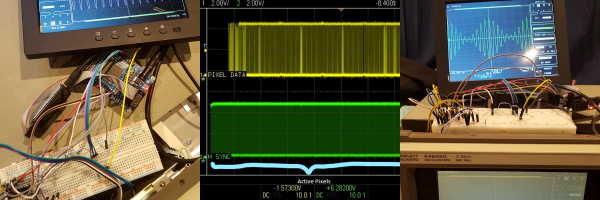
It seemed the Gods of Hand Me Down electronics were smiling upon me when I found this dumpster destined HP 54542C. It appeared to be in fairy good shape and was the Top Dog in its day. But something had to be broken right? Sure enough, the screen was clearly faulty and illegible. Want to know how I fixed it? Four letters: FPGA.

Continue reading “FPGA Rescues Scope From The Dumpster”

Inside A Microswitch

We’ve taken a few microswitches apart, mostly to fix those pesky Logitech mice that develop double-click syndrome, but we’ve never made a video. Luckily, [Julian] did, and it is worth watching if you want to understand the internal mechanism of these components.

[Julian] talks about the way the contacts make and break. He also discusses the mechanical hysteresis inherent in the system because of the metal moving contact having spring-like qualities

Continue reading “Inside A Microswitch”

These Engineering Ed Projects Are Our Kind Of Hacks

Highly polished all-in-one gear for teaching STEM is one way to approach the problem. But for some, they can be intimidating and the up-front expenditure can be a barrier to just trying something before you’re certain you want to commit. [Miranda] is taking a different approach with the aim of making engineering education possible with junk you have around the house. The point is to play around with engineering concepts with having to worry about doing it exactly right, or with exactly the right materials. You know… hacking!

Continue reading “These Engineering Ed Projects Are Our Kind Of Hacks”

What Lies Within: SMT Inductor Teardown

Ever wonder what’s inside a surface-mount inductor? Wonder no more as you watch this SMT inductor teardown video.

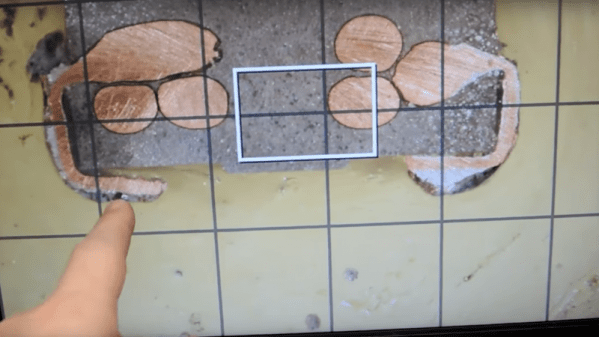
“Teardown” isn’t really accurate here, at least by the standard of [electronupdate]’s other component teardowns, like his looks inside LED light bulbs and das blinkenlights. “Rubdown” is more like it here, because what starts out as a rather solid looking SMT component needs to be ground down bit by bit to reveal the inner ferrite and copper goodness. [electronupdate] embedded the R30 SMT inductor in epoxy and hand lapped the whole thing until the windings were visible. Of course, just peeking inside is never enough, so he set upon an analysis of the inductor’s innards. Using a little careful macro photography and some simple image analysis, he verified the component’s data sheet claims; as an aside, is anyone else surprised that a tiny SMT component can handle 30 amps?

Looking for more practical applications for decapping components? How about iPhone brain surgery?

Continue reading “What Lies Within: SMT Inductor Teardown”

Tightwad Hacks Label Printer, Beats Manufacturer At Own Game

Sometimes we hack for the thrill of making something new, and sometimes we hack to push back the dark veil of ignorance to shed fresh light on a problem. And sometimes, like when turning a used label printer into a point-of-sale receipt printer, we hack because we’re cheapskates.

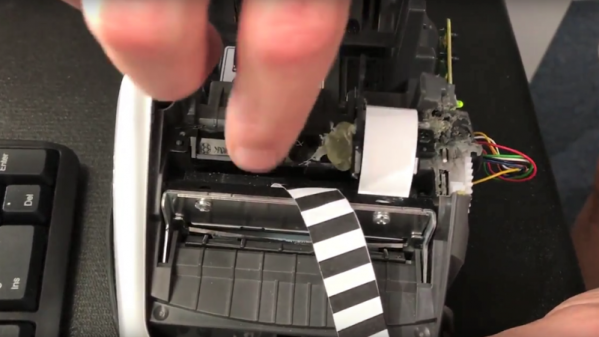
We say that with the utmost respect and affection — there’s nothing to be ashamed of when your motive is strictly pecuniary. In [Dan Herlihy]’s case, hacking a cheap Brother label printer to use thermal paper meant saving $300 on a dedicated receipt printer. But it also meant beating Brother at their “Razor and Blades” business model that keeps you buying their expensive proprietary labels. A pattern of holes in the plastic label roll tells the printer what size labels are loaded, so [Dan] defeated that by breaking off a piece of the plastic and gluing it on the sensor. To convince the printer that plain thermal paper is label stock, he printed up a small strip of paper with the same pattern of black registration stripes that appear on the back of the labels. Pretty clever stuff, and it lets him print high-resolution receipts for his electronics shop on the seriously cheap.

[Dan]’s hack is simple, but may suffer from wear on the paper encoder strip. Perhaps this Brother hack using the gears as encoders will provide some inspiration for long-term fix.

Continue reading “Tightwad Hacks Label Printer, Beats Manufacturer At Own Game”

BAMF: Hard Drive Platter Launcher Among All-Time Favorites

The hard drive platter launcher that [Krux] built has been among my all-time favorite builds and I am so excited that he is showing it off at this year’s Bay Area Maker Faire. At its core the concept is quite simple; dump a large amount of current through a coil all at once, and the magnetic current generated spontaneously repels the aluminum hard drive platter. The devil is in the details and this is where [Krux’s] work really shines.

Continue reading “BAMF: Hard Drive Platter Launcher Among All-Time Favorites”