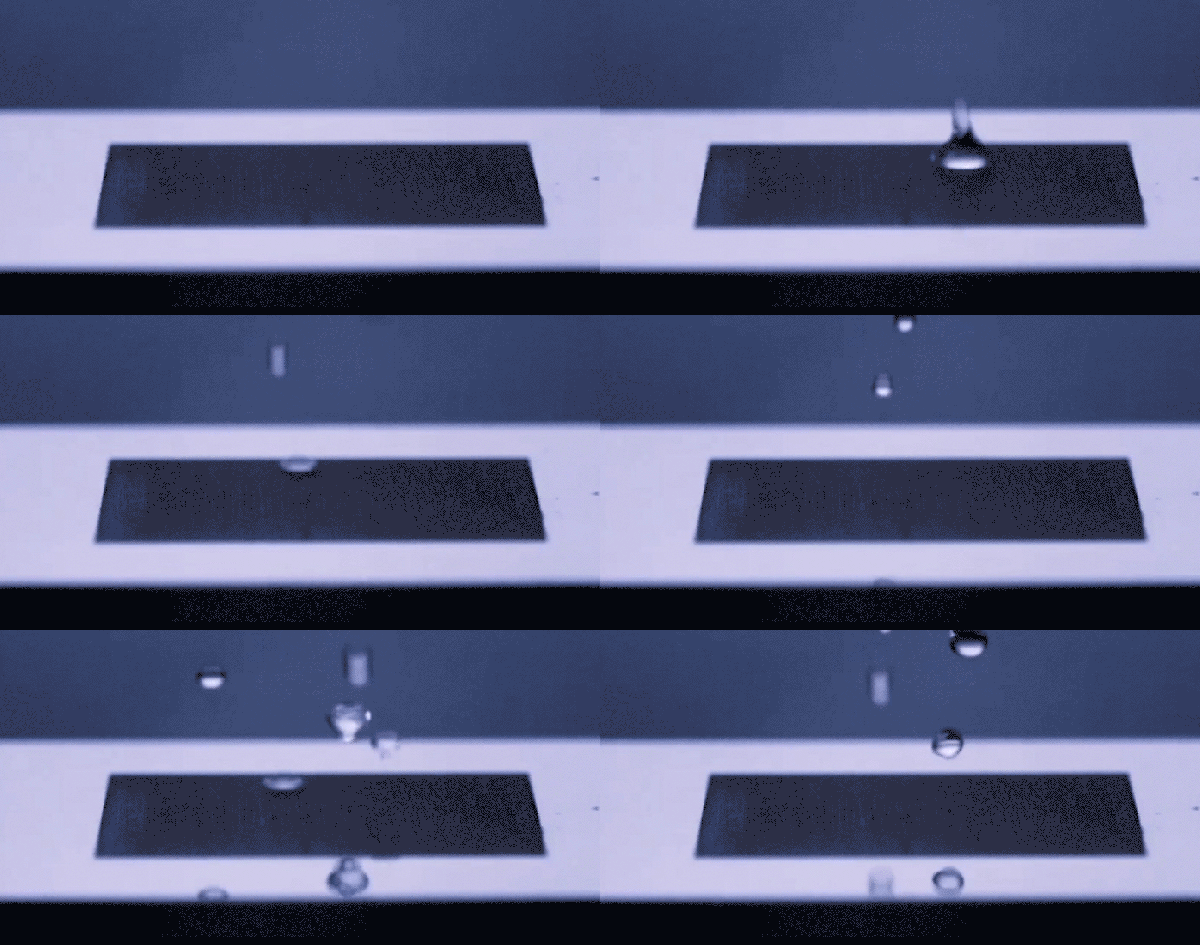
Just the other day we stood in the kitchen making eggs, staring suspiciously at a long scratch carved in the center of the frying pan. With all the articles passing through social media prompting us to be wary of things in our environment that are supposedly killing us, Teflon included, I wondered to myself if humans would ever start coming up with solutions to daily problems… like sticky eggs, which don’t involve the use of complex chemicals. Alas, the universe responds with uncanny timing. A group of researchers led by [Chunlei Guo] from Rochester University’s Institute of Optics has recently published their development of a surface textured by lasers which repels fluid like a rubber ball… without any chemical treating involved. You really need to see this happen in the video below.
This physical magic trick gets its inspiration from nature, mimicking properties of surface tension from living things that repel water such as lotus leaves or butterfly wings. To achieve a similar effect, a precision laser is used to etch nanoscale patterns onto metal which change the surface properties in such a way that fluid molecules prefer not to stick. The benefit to texturizing a material’s surface as opposed to glazing it in some other repellant, is that the pattern becomes intrinsically part of the surface structure and will not fade over time the way a chemical seal will chip or flake. This hydrophobic technology could improve the way we keep surfaces sanitary as well as lend itself to new methods of frost prevention. Not to mention the dozens of other less important applications that we’ve just thought of for our own amusement.
In addition to creating the hydrophobic surface, the Institute of Optic has employed similar tactics to come up with a material capable of absorbing fluid and carrying it upward swiftly against gravity. With the knowledge of physics and the power of lasers combined, we’re glad to see humans coming up with smarter ways to manipulate the world we live in for a more comfortable daily life.
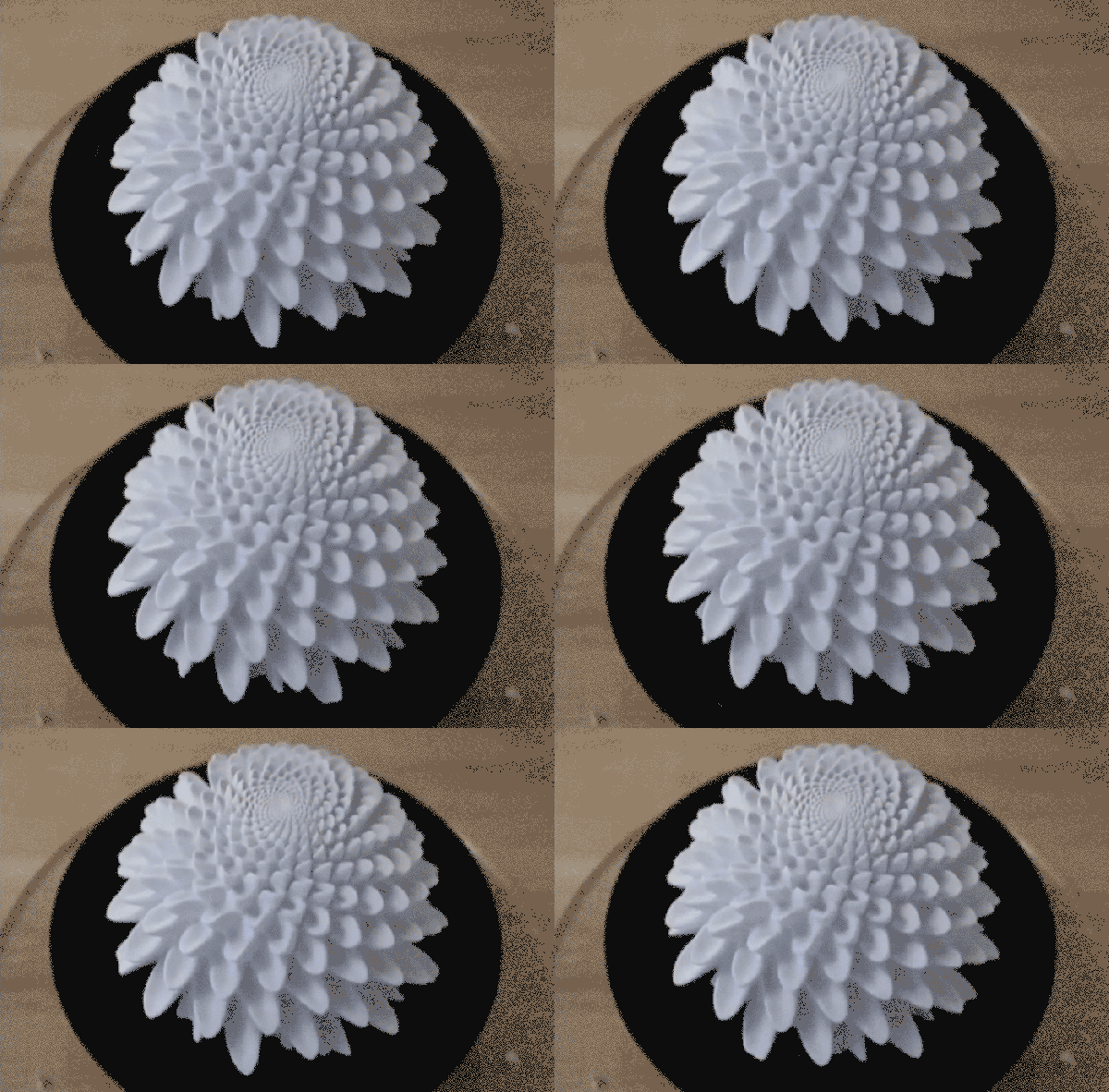
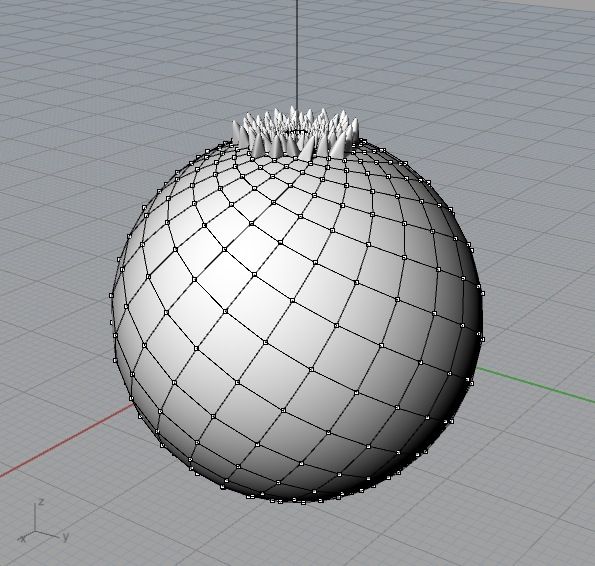 [John] modeled several 3D sculptures in Rhino containing similar geometric properties to those found in pinecones and palm tree fronds. As the segments grow from those objects in nature, they do so in approximately 137.5 degree intervals. This spacing produces a particular spiral appearance which [John] was aiming to recreate. To do so, he used a Python script which calculated a web of quads stretched over the surface of a sphere. From each of the divisions, stalk-like protrusions extend from the top center outward. Once these figures were 3D printed, they were mounted one at a time to the center of a spinning base and set to rotate at 550 RPM. A camera then films the shape as it’s in motion at a 1/2000 sec frame rate which captures stills of the object in just the right set of positions to produce the illusion that the tendrils are blooming from the top and pouring down the sides. The same effect could also be achieved with a strobe light instead of a camera.
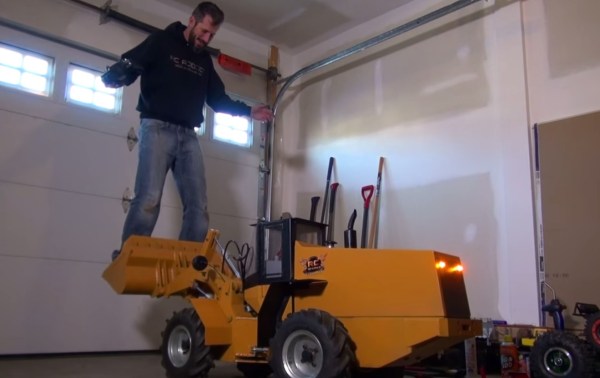
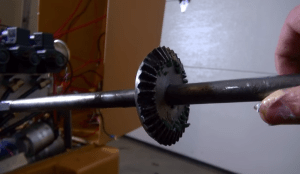 After several years of hard life, the loader came to [djMedic] in need of some TLC. The biggest issue was that the rear axle bevel gear had lost several teeth. This gear is under enormous loads when the loader is turning. A gear made of harder steel was the easy answer. Thankfully, you can order