The ARRL Raises A Stink About Illegal FPV Transmitters

We have all been beneficiaries of the boom in availability of cheap imported electronics over the last decade. It is difficult to convey to someone under a certain age the step change in availability of parts and modules that has come about as a result of both the growth of Chinese manufacturing and Internet sales that allow us direct access to sellers we would once only have found through a lengthy flight and an intractable language barrier.

So being able to buy an ESP8266 module or an OLED display for relative pennies is good news, but there is a downside to this free-for-all. Not all the products on offer are manufactured to legal standards wherever in the world we as customers might be, and not all of them are safe to use. We’ve all seen teardowns of lethal iPhone charger knock-offs, but this week the ARRL has highlighted an illegal import that could take being dangerous to a whole new level as well as bring an already beleaguered section of our community to a new low.

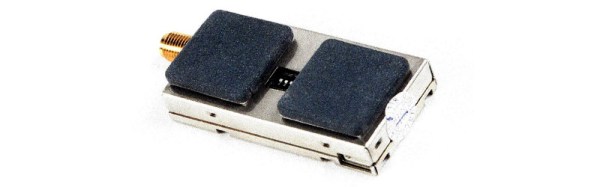
The products the radio amateurs are concerned about are video transmitters that work in the 1.2GHz band. These are sold for use with FPV cameras on multirotors, popularly referred to as drones, and are also being described as amateur radio products though their amateur radio application is minimal. The ARRL go into detail in their official complaint (PDF) about how these devices’ channels sit squarely over the frequencies used by GLONASS positioning systems, and most seriously, the frequencies used by the aircraft transponders on which the safety of our air traffic control system relies.

The multirotor community is the unfortunate recipient of a lot of bad press, most of which is arguably undeserved and the result of ignorant mass media reporting. We’ve written on this subject in the past, and reported on some of the proposals from governments which do not sound good for the enthusiast. It is thus a huge concern that products like those the ARRL is highlighting could result in interference with air traffic, this is exactly not the association that multirotor fliers need in a hostile environment.

The ARRL complaint highlights a particular model with a 5W output, which is easily high enough to cause significant interference. It is however just one of many similar products, which a very straightforward search on the likes of AliExpress or eBay will find on sale for prices well under $100. So if you are concerned with multirotors we’d urge you to ensure that the FPV transmitters you or your friends use are within the legal frequencies and power levels. We’re sure none of you would want an incident involving a manned aircraft on your conscience, nor would you relish the prospect of the encounter with law enforcement that would inevitably follow.

In the past we’ve taken a look at some of the fuss surrounding reported drone incidents, and brought you news of an Australian sausage lover in hot water for drone-based filming. It’s a hostile world out there, fly safe!

Raspberry Pi Launches Compute Module 3

The forgotten child of the Raspberry Pi family finally has an update. The Raspberry Pi Compute Module 3 has been launched.

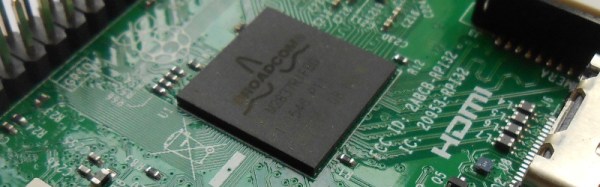
The Pi 3 Compute Module was teased all the way back in July, and what we knew then is just about what we know now. The new Compute Module is based on the BCM2837 processor – the same as found in the Raspberry Pi 3 – running at 1.2 GHz with 1 gigabyte of RAM. The basic form factor SODIMM form factor remains the same between the old and new Compute Modules, although the new version is 1 mm taller.

The Compute Module 3 comes with four gigabytes of eMMC Flash and sells for $30 on element14 and RS Components. There’s also a cost-reduced version called the Compute Module 3 Light that forgoes the eMMC Flash and instead breaks out those pins to the connector, allowing platform integrators to put an SD card or Flash chip on a daughter (mother?) board. The CM3 Lite version sells for $25. Continue reading “Raspberry Pi Launches Compute Module 3”

Blob-less Raspberry Pi Linux Is A Step Closer

The Raspberry Pi single board computer has been an astounding success since its launch nearly five years ago, to the extent that as of last autumn it had sold ten million units with no sign of sales abating. It has delivered an extremely affordable and pretty powerful computer into the hands of hobbyists, youngsters, hackers, engineers and thousands of other groups, and its open-source Raspbian operating system has brought a useful Linux environment to places we might once have thought impossible.

The previous paragraph, we have to admit, is almost true. The Pi has sold a lot, it’s really useful and lots of people use it, but is Raspbian open-source? Not strictly. Because the Broadcom silicon that powers the Pi has a significant amount of proprietary tech that the chipmaker has been unwilling to let us peer too closely at, each and every Raspberry Pi operating system has shipped with a precompiled binary blob containing the proprietary Broadcom code, and of course that’s the bit that isn’t open source. It hasn’t been a problem for most Pi users as it’s understood to be part of the trade-off that enabled the board’s creators to bring it to us at an affordable price back in 2012, but for open-source purists it’s been something of a thorn in the side of the little board from Cambridge.

This is not to say that all is lost on the blob-free Pi front. Aided by a partial pulling back of the curtain of secrecy by Broadcom in 2014, work has quietly been progressing, and we now have the announcement from [Kristina Brooks] that a minimal Linux kernel can boot from her latest open firmware efforts. You won’t be booting a blob-free Raspbian any time soon as there are bugs to fix and USB, DMA, and video hardware has still to receive full support, but it’s a significant step. We won’t pretend to be Broadcom firmware gurus as we’re simply reporting the work, but if it’s your specialty you can find the code in its GitHub repository. Meanwhile, we look forward to future progress on this very interesting project.

We reported on the partial Broadcom release back in 2014. At the time, the Raspberry Pi people offered a prize to the first person running a native Quake III game on their hardware, sadly though they note the competition is closed they haven’t linked to the winning entry.

Get Ready For The Great Eclipse Of 2017

On August 21, 2017, the moon will cast its shadow across most of North America, with a narrow path of totality tracing from Oregon to South Carolina. Tens of millions of people will have a chance to see something that the continental US hasn’t seen in ages — a total eclipse of the sun. Will you be ready?

The last time a total solar eclipse visited a significantly populated section of the US was in March of 1970. I remember it well as a four-year-old standing on the sidewalk in front of my house, all worked up about space already in those heady days of the Apollo program, gazing through smoked glass as the moon blotted out the sun for a few minutes. Just watching it was exhilarating, and being able to see it again and capitalize on a lifetime of geekiness to heighten the experience, and to be able to share it with my wife and kids, is exciting beyond words. But I’ve only got eight months to lay my plans! Continue reading “Get Ready For The Great Eclipse Of 2017”

Drones, Swarms At War

Using drones in areas of conflict is not something new. As commercial drones get easily affordable, we see it all the time in the news, some soldier using a Parrot drone to scout ahead, above trenches or around buildings. That’s a new reality that soldiers have to get used to. It changes the battlefield, especially traditional ground warfare. There is also research in drone swarms, performing tasks in team for some time now. Some of them are really impressive.

And then there’s the U.S. Military Perdix drones. William Roper of the Department of Defense illustrate what exactly their capabilities are:

Due to the complex nature of combat, Perdix are not pre-programmed synchronized individuals, they are a collective organism, sharing one distributed brain for decision-making and adapting to each other like swarms in nature. Because every Perdix communicates and collaborates with every other Perdix, the swarm has no leader and can gracefully adapt to drones entering or exiting the team.

Did we mention they can be released in mid-flight by a F/A 18 Super Hornet? That’s no piece of cake for any drone but Perdix is able to withstand speeds of Mach 0.6 and temperatures of -10 °C during release. In the latest tests conducted, three jets released a massive swarm of 103 Perdix drones, which after deployment communicated with each other and went on a simulated surveillance mission.

The Department of Defense announced the successful Micro-Drone demonstration and presented a video:

Continue reading “Drones, Swarms At War”

Super Mario Run(s) — Away With Your Money

If you are an Android user and a big fan of Super Mario beware: there is no Android version! There has been no official news on the Android version yet, let alone a version of the game. There is, however, a version circulating outside of Google Play market that will steal your bank account.

Right now attackers are taking advantage of the game’s popularity and Android users despair to spread malware posing as an Android version of Super Mario Run as they did in the past for Pokemon GO. The trojan is called Android Marcher and has been around since 2013, mostly targeting mobile users financial information. After installation, the application attempts to trick users with fake finance apps and a credit card page in an effort to capture banking details. The malware also locks out Google Play until the user supplies their credit card information.

In this new variant of Marcher, it can monitor the device and steal login data of regular apps, not just banking and payment apps, and send the stolen data back to command and control (C&C) servers. Facebook, WhatsApp, Skype, Gmail, the Google Play store are all vulnerable. Criminals can exploit these stolen accounts to carry out additional fraud.

Zscaler researchers advice is:

To avoid becoming a victim of such malware, it is a good practice to download apps only from trusted app stores such as Google Play. This practice can be enforced by unchecking the “Unknown Sources” option under the “Security” settings of your device.

We may add to turn on “App Verification”. Verify Apps regularly checks activity on your device and prevents or warns you about potential harm. Verify Apps is on by default, as is Unknown Sources turned off. Verify Apps also checks apps when you install them from sources other than Google Play. Of course, there is a privacy trade-off. Some information has to be sent about the apps you install back to Google.

The main advice is: use common sense. It’s common practice for companies to release official apps versions through Google Play and highly unlikely to do it via any other way.