TRINKET EDC CONTEST DRAWING #4 RESULTS

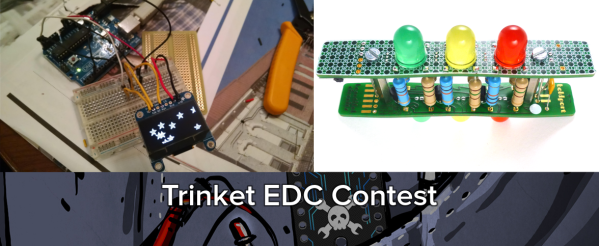
The fourth of five random drawings for Hackaday’s Trinket Everyday Carry Contest was held tonight. The winner is [davish] with his entry, Trinket Watch. 
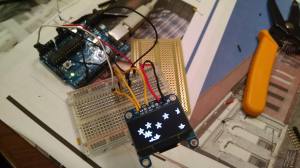
twatch3[davish] loves the current crop of smartwatches, but he wants one he can truly call his own. He’s using the Pro Trinket along with an Adafruit 1.3″ OLED for display duties. That little OLED can show a lot more than just numbers though. [davish] already has Adafruit’s logo demo running on the device. Trinket Watch is going to start out as a simple Arduino coded “dumbwatch”. After the basics of time and date are out of the way, [davish] hopes to add a Bluetooth module and turn Trinket Watch into a full-fledged smartwatch.
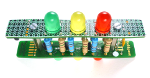
trinket-prize-cordwoodWe hope [davish] enjoys his new Cordwood Puzzle from The Hackaday Store. No jigsaws here, cordwood is a puzzle that involves solder! If you get a piece wrong, it’s time to break out that solder wick and fix your mistake. The puzzle is built using the cordwood assembly technique which was popular in the 1950’s and 1960s. We’re not kidding about it being a puzzle either – there are no instructions for this kit! [davish] will know he’s got it right when all 3 LEDs light up.
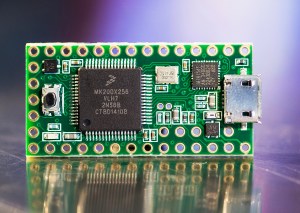
teensy-3-point-1-in-storeIf you didn’t win this week, all is not lost, you still have one more chance to win a random drawing! Our next drawing will be on 12/30/2014 at 9pm EST. The prize will be a Teensy 3.1 and audio adapter as a prize. To be eligible you need to submit your project as an official entry and publish at least one project log during the week.

The main contest entry window closes on January 2, 2015 – but don’t wait for the last minute! Hit the contest page and build some awesome wearable or pocketable electronics!


The Heathkit Mystery

Heathkit is a company that requires no introduction. From the mid-40s until the 90s, Heathkit was the brand for electronic kits ranging from test equipment, HiFis, amateur radio equipment, computers, to freakin’ robots. Their departure was a tragic loss for generations of engineers, electronic tinkerers and hobbyists who grew up with these excellent and useful kits.

Although Heathkit is dead, 2013 brought an announcement that Heathkit was back in the biz. A Facebook page was launched, a Reddit AMA was held, and the news was that Heathkit would rise from the dead in the first half of 2014. It’s now Christmas, 2014, and there’s no sign of Heathkit anywhere. Adafruit has been keeping a watchful eye on the on the (lack of) developments, and the only surprising thing to report is that there is nothing to report. There has been no new announcement, there are no new products, the “official” Heathkit website hasn’t been updated in a year, and no one knows what’s going on.

Adafruit has decided to dig into the matter, and while they’ve come up with a few items of note, there’s not much to report. A trademark for ‘HEATHKIT’ was filed October 27, 2014 – two months ago. An email was sent to the attorney of record and there has been no response.

This trademark was granted to Heathkit Company, Inc., incorporated in Delaware. Searching for any companies in Delaware using the Heathkit name returns exactly two results: Heathkit Company, Inc., and Heathkit Holdings, Inc.. Adafruit is probably going to pay the $20 to the Delaware Department of State to get the detailed information that includes Heathkit’s tax assessment and tax filing history.

The last bit of information comes from a whois on the heathkit.com domain. The relevant contacts have been emailed, and there are no further details. The Heathkit virtual museum was contacted for information, as was the news editor for ARRL.org. Nobody knows anything, or at least nobody is telling anybody anything.

To date, the only physical evidence of Heathkit’s rebirth is a geocache that was left at Brooklyn Bridge Park, announced during the Reddit AMA. This geocache was recovered by reddit user IFoundTheHeathKit, a throwaway account that had no posts before or since finding the cache. We have no idea what was in that geocache, what the ‘secret passphrase’ or set of instructions was, or if anything ever came of the promise to send one of the first new kits.

So there ‘ya go. A lot of words but no information. If you have any info, the Adafruit crew would like to have a word with you.

Update

The person who found the Heathkit geocache has been found:


The full comment referred to below is,

Hey, person who found the Heathkit geocache here. The secret passcode was an Einstein quote about radio vs wired communication (invisible cats), and they said they’d send me something in early 2014. Never had any communication except through FB, and they haven’t replied to any of my recent messages.

IFoundTheHeathKit might want to email Adafruit with a copy of all the emails.

RISC, Tagged Memory, And Minion Cores

Buy a computing device nowadays, and you’re probably getting something that knows x86 or an ARM. There’s more than one architecture out there for general purpose computing with dual-core MIPS boards available and some very strange silicon that’s making its way into dev boards. lowRISC is the latest endeavour from a few notable silicon designers, able to run Linux ‘well’ and adding a few novel security features that haven’t yet been put together this way before.

There are two interesting features that make the lowRISC notable. The first is tagged memory. This has been used before in older, weirder computers as a sort of metadata for memory. Basically, a few bits of each memory address tag each memory address as executable/non-executable, serve as memory watchpoints, garbage collection, and a lock on every word. New instructions are added to the ISA, allowing these tags to be manipulated, watched, and monitored to prevent the most common single security problem: buffer overflows. It’s an extremely interesting application of tagged memory, and something that isn’t really found in a modern architecture.

The second neat feature of the lowRISC are the minions. These are programmable devices tied to the processor’s I/O that work a lot like a Zynq SOC or the PRU inside the BeagleBone. Basically, they’re used for programmable I/O, implementing SPI/I2C/I2S/SDIO in software, offloading work from the main core, and devices that require very precise timing.

The current goal of the lowRISC team is to develop the hardware on an FPGA, releasing some beta silicon in a year’s time. The first complete chip will be an embedded SOC, hopefully release sometime around late 2016 or early 2017. The ultimate goal is an SOC with a GPU that would be used in mobile phones, set-top boxes, and Raspi and BeagleBone-like dev boards. There are enough people on the team, including [Robert Mullins] and [Alex Bradbury] of the University of Cambridge and the Raspberry Pi, researchers at UC Berkeley, and [Bunnie Huang].

It’s a project still in its infancy, but the features these people are going after are very interesting, and something that just isn’t being done with other platforms.

[Alex Bardbury] gave a talk on lowRISC at ORConf last October. You can check out the presentation here.

TRINKET EDC CONTEST ENTRY: Lazydoro

[Vasilis] has entered Lazydoro in the Trinket Everyday Carry Contest.  Lazydoro is designed to get him up off his backside, and walking around. Recent medical research has determined that sitting too long is a bad thing. In fact,  Dr. David Agus has been quoted by Nike as saying that sitting for several hours is as bad as smoking (wayback machine link). While we’re not exactly up on the latest medical trends, we can definitely see that getting up and walking around a bit never hurt anyone. Lazydoro will alert [Vasilis] once every 20 minutes or so to get up and stretch his legs a bit.

[Vasilis] plans to pair a Pro Trinket with an accelerometer module, specifically an ADXL377 from Analog Devices. The accelerometer will allow Lazydoro to determine if [Vasilis] has moved around. If 20 or 30 minutes go by without major movement, Lazydoro will nudge him to get up and take a walk.

Since shipping to Greece takes awhile, [Vasilis] is developing with an Arduino Uno and a ADXL345 while he waits for his parts to arrive. He’s hacked this into a wrist mounted device for testing. One thing  [Vasilis]  hasn’t figured out yet is how to alert the user to move around. A small vibrating motor would probably work – but we’d suggest electric shocks. A good zap always puts the spring in our step!

There is still plenty of time to enter the Trinket Everyday Carry Contest.  The main contest runs until January 2, but we’re having random drawings every week! Don’t forget to write a project log before the next drawing at 9pm EDT on Tuesday, December 23. You and all of the other entrants have a chance to win a Cordwood Puzzle from The Hackaday Store!

amazonfiretv

Amazon Fire TV Update Bricks Hacked Devices

The Amazon Fire TV is Amazon’s answer to all of the other streaming media devices on the market today. Amazon is reportedly selling these devices at cost, making very little off of the hardware sales. Instead, they are relying on the fact that most users will rent or purchase digital content on these boxes, and they can make more money in the long run this way. In fact, the device does not allow users to download content directly from the Google Play store, or even play media via USB disk. This makes it more likely that you will purchase content though Amazon’s own channels.

We’re hackers. We like to make things do what they were never intended to do. We like to add functionality. We want to customize, upgrade, and break our devices. It’s fun for us. It’s no surprise that hackers have been jail breaking these devices to see what else they are capable of. A side effect of these hacks is that content can be downloaded directly from Google Play. USB playback can also be enabled. This makes the device more useful to the consumer, but obviously is not in line with Amazon’s business strategy.

Amazon’s response to these hacks was to release a firmware update that will brick the device if it discovers that it has been rooted. It also will not allow a hacker to downgrade the firmware to an older version, since this would of course remove the root detection features.

This probably doesn’t come as a surprise to most of us. We’ve seen this type of thing for years with mobile phones. The iPhone has been locked to the Apple Store since the first generation, but the first iPhone was jailbroken just days after its initial release. Then there was the PlayStation 3 “downgrade” fiasco that resulted in hacks to restore the functionality. It seems that hackers and corporations are forever destined to disagree on who actually owns the hardware and what ownership really means. We’re locked in an epic game of cat and mouse, but usually the hackers seem to triumph in the end.

Chaos Computer Club (and Hackaday) Blocked By British Porn Filters

The Chaos Computer Club, Europe’s largest association of hackers and hackerspaces, has been blocked by several UK ISPs as part of a government filter to block adult content.

Since July, 2013, large UK ISPs have been tasked with implementing what has been dubbed the Great Firewall of Britain, a filter that blocks adult content, content related to alcohol, drugs, and smoking, and opinions deemed ‘extremist’ by the government. This is an opt-out filter; while it does filter out content deemed ‘unacceptable’, Internet subscribers are able to opt out of the filter by contacting their ISP.

Originally envisioned as a porn filter, and recently updated with list of banned sexual acts including spanking, aggressive whipping, role-playing as non-adults, and humiliation, the British Internet filter has seen more esoteric content blocked from British shores. Objectionable material such as, “anorexia and eating disorder websites,” “web forums,” “web blocking circumvention tools”, and the oddly categorized, “esoteric material” are also included in the filter.

A site built by the Open Rights Group is currently tracking which ISPs blocking which domains. http://ccc.de is currently blocked by ISPs Three and Vodafone. Interestingly, this site – Hackaday – is blocked by the ‘Moderate’ British Telecom filter. The ‘Light’ BT filter – and all other British ISPs – still somehow let Hackaday through, despite posts about building shotguns cropping up from time to time.

UPDATE: Upon reflection, it comes to my attention that Brits have a choice of ISP.

A 16-voice Homebrew Polyphonic Synth

Homebrew synths – generating a waveform in a microcontroller, adding a MIDI interface, and sending everything out to a speaker – are great projects that will teach you a ton about how much you can do with a tiny, low power uC. [Mark] created what is probably the most powerful homebrew synth we’ve seen, all while using a relatively low-power microcontroller.

The hardware for this project is an LPC1311 ARM Cortex M3 running at 72 MHz. Turning digital audio into something a speaker can understand is handled by a Wolfson WM8762, a stereo 24-bit DAC. Both of these chips can be bought for under one pound in quantity one, something you can’t say about the chips used in olde-tyme synths.

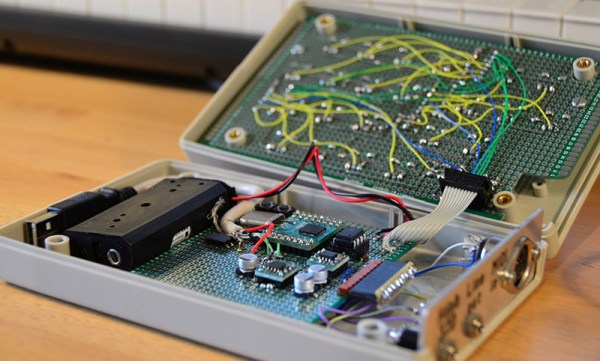
The front panel, shown below, uses 22 pots and two switches to control the waveform, ADSR, filter, volume, and pan. To save pins on the microcontroller, [Mark] used a few analog multiplexers. As far as circuitry goes, it’s a fairly simple setup, with the only truly weird component being the optocoupler for the MIDI input.

goom2

The software for the synth is written mostly in assembly. In a previous version where most of the code was written in C, everything was a factor of two slower. Doing all the voice generation in assembly allowed for twice as many simultaneous voices.

It’s a great project, and compared to some of the other synth builds we’ve seen before, [Mark]’s project is at the top of its class. A quick search of the archives says this is probably the most polyphonic homebrew synth we’ve seen, and listening to the sound sample on the project page, it sounds pretty good, to boot.