Mining And Refining: Sulfur

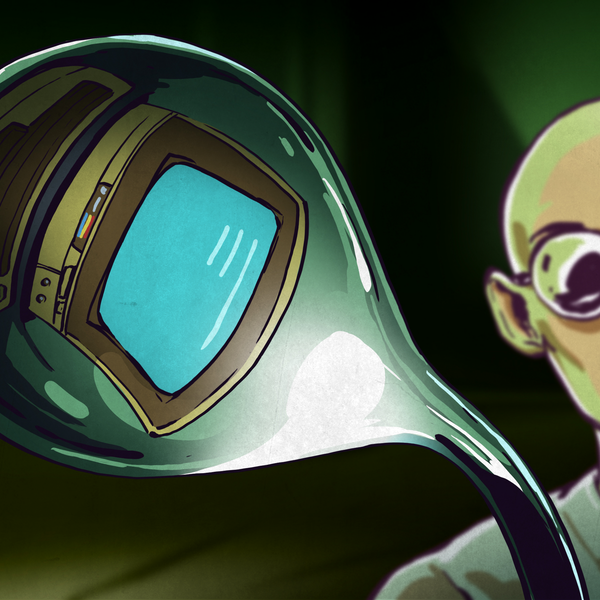
When you think of the periodic table, some elements just have a vibe to them that’s completely unscientific, but nonetheless undeniable. Precious metals like gold and silver are obvious examples, associated as they always have been with the wealth of kings. Copper and iron are sturdy working-class metals, each worthy of having entire ages of human industry named after them, with silicon now forming the backbone of our current Information Age. Carbon builds up the chemistry of life itself and fuels almost all human endeavors, and none of us would get very far without oxygen.

But what about sulfur? Nobody seems to think much about poor sulfur, and when they do it tends to be derogatory. Sulfur puts the stink in rotten eggs, threatens us when it spews from the mouths of volcanoes, and can become a deadly threat when used to make gunpowder. Sulfur seems like something more associated with the noxious processes and bleak factories of the early Industrial Revolution, not a component of our modern, high-technology world.

And yet despite its malodorous and low-tech reputation, there are actually few industrial processes that don’t depend on massive amounts of sulfur in some way. Sulfur is a critical ingredient in processes that form the foundation of almost all industry, so its production is usually a matter of national and economic security, which is odd considering that nearly all the sulfur we use is recovered from the waste of other industrial processes.

Continue reading “Mining And Refining: Sulfur”

Cursing The Curse Of Cursive

Unlike probably most people, I enjoy the act of writing by hand — but I’ve always disliked signing my name. Why is that? I think it’s because signatures are supposed to be in cursive, or else they don’t count. At least, that’s what I was taught growing up. (And I’m really not that old, I swear!)

Having the exact same name as my mother meant that it was important to adolescent me to be different, and that included making sure our signatures looked nothing alike. Whereas her gentle, looping hand spoke to her sensitive and friendly nature, my heavy-handed block print was just another way of letting out my teen angst. Sometime in the last couple of decades, my signature became K-squiggle P-squiggle, which is really just a sped-up, screw-you version of my modern handwriting, which is a combination of print and cursive.

But let’s back up a bit. I started learning to write in kindergarten, but that of course was in script, with separate letters. Me and my fellow Xennial zeigeistians learned a specific printing method called D’Nealian, which was designed to ease the transition from printing to cursive with its curly tails on every letter.

We practiced our D’Nealian (So fancy! So grown-up!) on something called Zaner-Bloser paper, which is still used today, and by probably second grade were making that transition from easy Zorro-like lowercase Zs to the quite mature-looking double-squiggle of the cursive version. It was as though our handwriting was moving from day to night, changing and moving as fast as we were. You’d think we would have appreciated learning a way of writing that was more like us — a blur of activity, everything connected, an oddly-modular alphabet that was supposed to serve us well in adulthood. But we didn’t. We hated it. And you probably did, too.

Continue reading “Cursing The Curse Of Cursive”

Smart Pills Can Tell Your Doctor That You’ve Taken Them

We have many kinds of pills available these days to treat all kinds of different disorders. Of course, the problem with pills is that they don’t work if you don’t take them. Even Worse, for some medicines, missing a dose can cause all kinds of undesirable withdrawl effects and set back a patient’s treatment.

Smart pills aim to fix this problem with a simple monitoring solution that can tell when a patient has taken their medication. They’re now publicly available and authorized for use, so let’s look at how they work.

Continue reading “Smart Pills Can Tell Your Doctor That You’ve Taken Them”

IGY: The Year We All Got Along

If you are a Steely Dan fan, you might know the Donald Fagen song, “IGY.” In it, Fagen sings about a rosy future with high-speed undersea rail, solar power, giant computers making life better, and spandex jackets. Since that song was on the 1982 album Nightfly, it is already too old for some people to remember, but the title goes back even further: the International Geophysical Year which was actually a little longer than a year in 1957 and 1958. The year was a concerted effort by 67 countries to further mankind’s knowledge of the Earth. It was successful,  and was big news in its day, although not much remembered now.

The real origin dates back to even earlier. In 1882 and 1932 there were International Polar Years dedicated to researching the polar regions of the Earth. In a way, it makes sense to do this. Why should 60 or more countries each mount difficult, dangerous, and expensive expeditions to such a hostile environment? However, instead of a third polar year, James Van Allen (who has a famous belt) and some other scientists felt that advances in many fields made it the right time to study geophysics. From the scientific point of view, the IGY coincided with the solar activity cycle maximum. But there were other forces at play, too.

Continue reading “IGY: The Year We All Got Along”

New Parkinson’s Test Smells Success

Parkinson’s disease affects millions of people all over the world. The degenerative condition causes characteristic tremors, trouble walking, and often comes with complications including dementia, depression, and anxiety.

One of the major challenges around Parkinson’s disease involves diagnosis. There’s no single, commonly-available test that can confirm or rule out the disease. It’s can cause particular frustration as the disease is most treatable in its early stages.

That may soon change, however. One woman identified that she seemingly had the ability to “smell” the disease in those affected, and is now working with scientists to develop a test for the condition.

Follow Your Nose

The human sense of smell, by and large, isn’t particularly impressive. It helps us enjoy the scent of fresh bread baking in an oven, or the aroma of freshly cut grass. However, as a tool for inspecting and learning about the world around us, it really comes up short.

Some of us, though, are more capable in the olfactory department than others. Joy Milne from Perth, Scotland, is one such person. She happened to detected a change in her partner’s characteristic smell, one day, and twelve years later, they were diagnosed with Parkinson’s disease.

The idea that someone could “smell” a difference with people with Parkinson’s disease is an easy one to test. When Milne eventually put the idea together that the different smell she noticed was perhaps related to her husbands condition, she quickly drew the interest of scientists. With the aid of her partner, a former doctor, she teamed up with researchers Dr. Tilo Kunath and Professor Perdita Barran to investigate further. Continue reading “New Parkinson’s Test Smells Success”

Floppy Disk Sings: I’m Big In Japan

The other day, a medical office needed my insurance card. I asked them where to e-mail it and they acted like I had offered them human flesh as an appetizer. “We don’t have e-mail! You have to bring it to us in person!” They finally admitted that they could take a fax and I then had to go figure out how to get a free one page fax sent over the Internet. Keep in mind, that I live in the fourth largest city in the United States — firmly in the top 100 largest cities in the world. I’m not out in the wilderness dealing with a country doctor.

I understand HIPAA and other legal and regulatory concerns probably inhibit them from taking e-mail, but other doctors and health care providers have apparently figured it out. But it turns out that the more regulations are involved in something, the more behind-the-times it is likely to be.

Continue reading “Floppy Disk Sings: I’m Big In Japan”

Robotic Surgeons Are Showing Hints Of One Day Outperforming Humans

When it comes to fields that are considered the most complex of human endeavours, the most typically cited are those of rocket science and brain surgery. Indeed, to become a surgeon is to qualify in a complex, ever-changing, and high-performance field, with a pay scale and respect to match.

The tools of surgery have changed over time, with robotic assistants becoming commonplace in recent decades. Now the latest robots are starting to outperform human surgeons in some ways. Let’s look at how that’s been achieved, and what it means for the future of medicine. Continue reading “Robotic Surgeons Are Showing Hints Of One Day Outperforming Humans”