In Soviet Russia, Computer Programs You

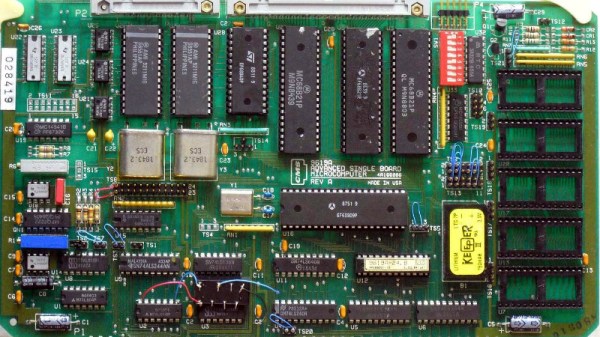
We admire [Alex Studer’s] approach to schoolwork. His final assignment in his history class was to do an open-ended research project on any topic and — this is key — using any medium. He’d recently watched a video about how Tetris came from the former Soviet Union, and adding in a little eBay research set out to build a period-accurate Soviet computer replica. The post covers the technical details, but if you want to read the historical aspects the school paper is also online.

The first decision was what CPU to use and [Alex] picked the U880 which is a Soviet Z80. All the usual parts you would use with a Z80 have U880 equivalents, so that fleshed out the rest of the design. There were a few concessions made. Instead of a bulky analog monitor, the replica uses an LCD display. Instead of an audio cassette recorder, the new machine uses a CompactFlash socket. We don’t think those are bad decisions. He also replaced the Soviet EPROMs with modern parts. Although the original parts appeared to program correctly, they were unreliable in operation. [Alex] theorizes that his programmer did not generate enough programming voltage to fully program the cells, so they would pass at the low speeds used by the programmer, but not work in the actual circuit.

Continue reading “In Soviet Russia, Computer Programs You”

The TRS80 Model 100 Gets A Brain Transplant

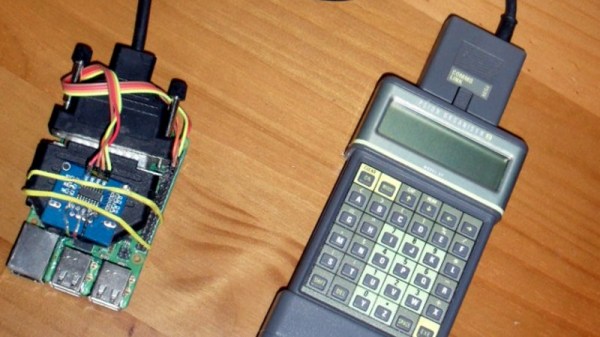
We’ll forgive you if you were busy in the ’80s, and missed the TRS80 Model 100. It was a portable version of the original, ran on four AA batteries, and even had an integrated acoustic coupler which proved handy for workers on the go. However, time is rarely kind, and [Trammell] had come across a non-functional example for just $20. It was time to bring this relic screaming into the modern age.

The motherboard was toast, so [Trammell] decided to wire up a Teensy++ directly to the Hitachi HD44102 display driver chips. Being an older LCD, the display needed a negative bias voltage, so a few diodes, capacitors and a PWM line stepped in to create a charge pump. There was no character generator on board, so the heavy lifting is all handled by the Teensy itself. The keyboard was a simple enough matrix design, so that was wired straight up.

[Trammell]’s work with this iteration got as far as acting as a USB serial terminal, and there was some work done on VT100 emulation. However, according to Twitter, the next stage involves an iCE40 FPGA and some music with which we’re altogether too familiar.

[Trammell] owns a working Model 100, too – employed in some modem experiments, no less.

Resurrecting An Amiga 500+

Recently, I was lucky enough to receive a big haul of retro computer gear from a friend who was emptying out his garage. Even better, the haul was almost entirely old Amiga gear — my favorite computing platform of all time. Upon returning home, I gleefully sorted through the boxes, powering things up one by one. Amazingly, everything worked… except for one lonely Amiga 500+. I was greeted by a dull grey screen. This wouldn’t do, so naturally, I got to work.

It seemed like a shame to be opening the machine, as after almost 30 years of life, this one still had its warranty seal intact. Regardless, nothing ventured, nothing gained – the Torx bits were at hand and the screws were coming out.

Continue reading “Resurrecting An Amiga 500+”

The Xerox Star On A Desktop Near You

It is 1980-something and you see someone typing on a keyboard. The display is graphical, and they use a mouse to finish a document, send it over the network to another similar computer, where another user edits it a bit and prints it on a laser printer. Given the time-frame you might think the computer is a Mac, but you’d be wrong. The Xerox Star had all the features Apple “invented” about three years before the Macintosh arrived. If you never heard of the Star, that’s not surprising. At $16,500 each, there were only about 25,000 sold. Your chances of finding a working one now are slim, but thanks to emulation created by [Josh Dersch] you can try the Star out on your hardware today. If you want a preview, have a look at the 1982 video, below.

The machine had a surprisingly complex architecture. The main CPU was a microcoded computer with multiple registers that would run a sort of microcode program to execute different instruction sets depending on what was running. In addition, there was an intel 8085 that loaded the right microcode and serviced the keyboard, the mouse, the floppy, and the serial ports.

Continue reading “The Xerox Star On A Desktop Near You”

Anatomy Of A Cloned Piece Of Hardware

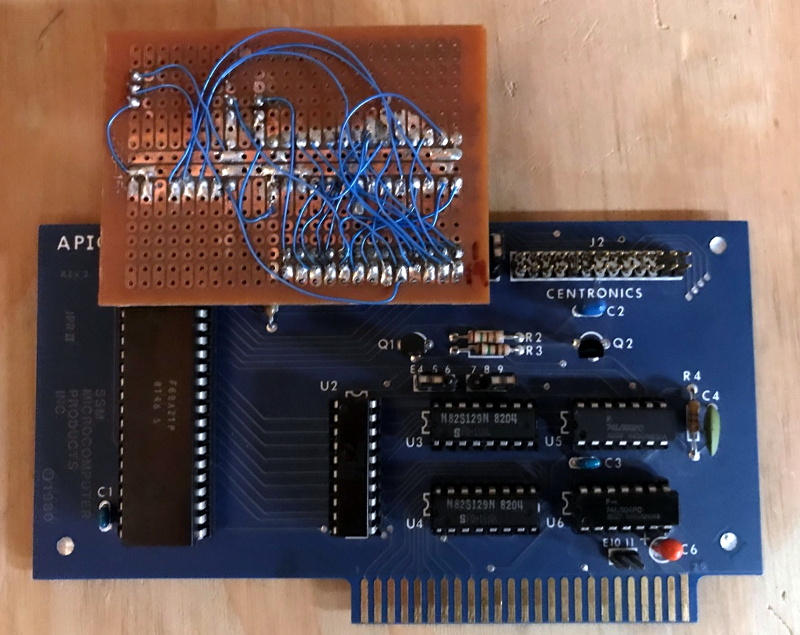
What would you think if you saw a bootleg of a product you design, manufacture, and sell pop up on eBay? For those of us who don’t make our livelihood this way, we might secretly hope our blinkenlight project ends up being so awesome that clones on AliExpress or TaoBao end up selling in the thousands . But of course anyone selling electronics as their business is going to be upset and wonder how this happened? It’s easy to fall into the trap of automatically assigning blame; if the legit boards were made in China would you assume that’s where the design was snagged to produce the bootlegs? There’s a saying about assumptions that applies to this tale.

Dave Curran from Tynemouth Software had one of his products cloned, and since he has been good enough to share all the details with us we’ve been able to take a look at the evidence. Dave’s detective work is top notch. What he found was surprising, his overseas manufacturer was blameless, and the bootleg board came from an entirely different source. Continue reading “Anatomy Of A Cloned Piece Of Hardware”

Is That A Vintage Computer In Your Pocket?

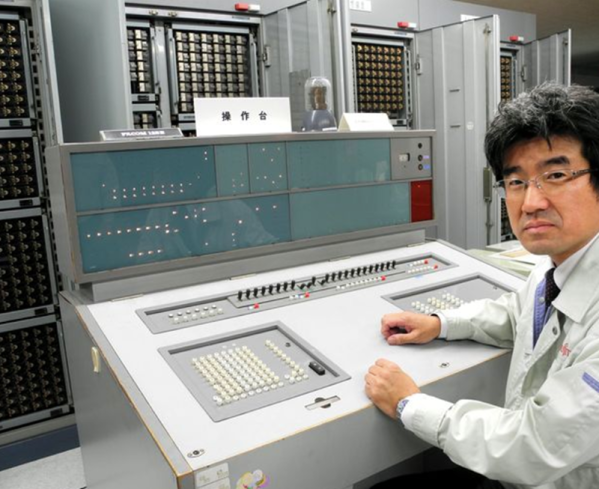
There’s a lot of debate over which of several contenders was the first modern computer. One of those first operating computers was the University of Cambridge’s EDSAC — the brainchild of Dr. Maurice Wilkes. The EDSAC scored a lot of firsts and used a serial data path along with mercury delay line memories. Over on Hackaday.io, [David Boucher] wanted to simulate the EDSAC in a much smaller form factor than the original room full of racks.

As you can see in the video below, he succeeded in that task, using a Teensy and a small LCD display. We’re reminded EDSAC was among the first machines so some of the terms we would employ were not in use yet. An order is an instruction, for example. Initial orders are akin to a bootloader. Continue reading “Is That A Vintage Computer In Your Pocket?”

Vintage Audio Gear Gets A Display Upgrade

The lengths the retrocomputing devotee must go to in order to breathe new life into old gear can border on the heroic. Tracing down long-discontinued parts, buying multiple copies of the same unit to act as organ donors for the one good machine, and when all else fails, improvising with current productions parts to get that vintage look and feel.

This LCD display backlighting fix for a vintage audio sampler falls into that last category, which was pulled off by [Inkoo Vintage Computer]. The unit in question is an Akai S1100 sampler, a classic from the late 1980s that had already been modified to replace the original floppy drive with a USB reader when the backlight on the LCD began to give out. Replacements for the original electroluminescent backlight are available, but [Inkoo] opted for a cheaper way out. An iPhone 6s 6 Plus backlight was an inexpensive option, if it could be made to fit. Luckily, [Inkoo] was able to trim the diffuser without causing any electrical issues. A boost converter was needed to run the backlight from the sampler’s 5 V DC rail, and interfacing the backlight’s flexible circuitry to the 80s-era copper wiring was a bit fussy, but the results were great. The sampler’s LCD is legible again, and looks just like it might have in the studio back when [Depeche Mode] and [Duran Duran] were using it to crank out hits.

As much as we like this repair, it doesn’t imply that EL is a dead technology. Far from it – [Ben Krasnow] is using it to create unique displays, and EL wire makes for some dazzling wearables. It doesn’t last forever, but while it does, it’s pretty neat stuff.