Sappers clearing the last mines from the beach front of a former French luxury hotel, now in use as a rest club for troops of 3rd Division, 15 July 1944.

The Long Tail Of War: Finding Unexploded Ordnance Before It Finds Us

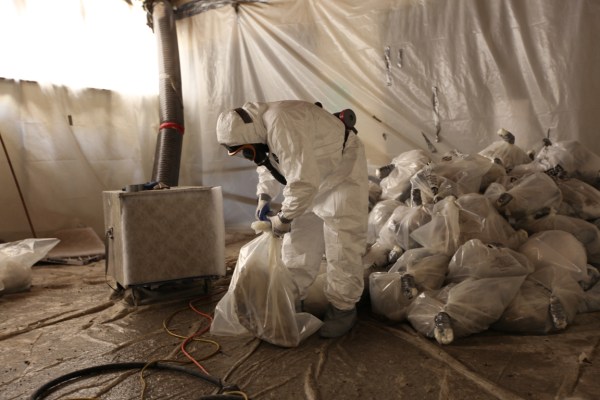
Long after the enemy forces have laid down their arms, peace accords have been signed and victories celebrated, there is still a heavy toll to be paid. Most of this comes in the form of unexploded ordnance, including landmines and the severe pollution from heavy metals and other contaminants that can make large areas risky to lethal to enter. Perhaps the most extreme example of this lasting effect is the Zone Rouge (Red Zone) in France, which immediately after the First World War came to a close comprised 1,200 square kilometers.

Within this zone, contamination with heavy metals is so heavy that some areas do not support life, while unexploded shells – some containing lethal gases – and other unexploded ordnance is found throughout the soil. To this day much of the original area remains off-limits, though injuries from old, but still very potent ordnance are common around its borders. Clean-up of the Zone Rouge is expected to take hundreds of years. Sadly, this a pattern that is repeated throughout much of the world. While European nations stumble over ordnance from its two world wars, nations in Africa, Asia and elsewhere struggle with the legacy from much more recent conflicts.

Currently, in Europe’s most recent battlefield, more mines are being laid, booby traps set and unexploded shells and other ordnance scattered where people used to live. Clearing these areas, to make them safe for a return of their inhabitants has already begun in Ukraine, but just like elsewhere in the world, it is an arduous and highly dangerous process with all too often lethal outcomes.

Continue reading “The Long Tail Of War: Finding Unexploded Ordnance Before It Finds Us”

As Europe Goes To LEDs, Scientists Worry

There was a time when street lighting means someone had to go light the lamps. Electricity changed that, but street and outdoor lighting has been quietly going through a new revolution: LEDs. The problem, though, is that LEDs provide what scientists call “broad white” light and there are concerns about the impact the unnatural lighting will have on ecosystems, including people and animals.

Of course, the first step in worrying about something is to measure it. You would think that satellites would have a bird’s-eye view of the nighttime lighting landscape, and, of course, they do. But most of the imagery isn’t suitable for looking at the spectrum of wavelength data scientists need to quantify what they call ALAN — Artificial Light at Night.

The ISS imaging is, however, sufficient. Using special data techniques, they were able to track the adoption of LEDs over sodium lights and other technologies between 2012-2013 and 2014-2020 across Europe. For example, in the title image, you can see Belgium with an orange tint indicating low-pressure sodium lights. The Netherlands, France, and the UK have a more yellow hue, indicating high-pressure sodium lamps. Germany is more of a blue color due to fluorescent and mercury vapor bulbs.

Continue reading “As Europe Goes To LEDs, Scientists Worry”

Water drop on rose leaf.

Groundwater: Management Of A Much Neglected Lifeline

It seems obvious that if you dig or drill into the soil, at some point you will hit groundwater. Drill deep enough and you will reach an aquifer containing enormous amounts of fresh water. After this you can just pump water out of these wells and you will have fresh water aplenty. Or so was the thinking among many for the longest time. As enormous the fresh water reserves in the form of groundwater are – with most liquid fresh water being groundwater – we can literally empty them faster than that they’ll refill.

As the Dust Bowl disaster painfully showed in the 1930s and drought along with surface subsidence issues as in e.g. California’s Central Valley shows today is that we cannot simply use the soil and groundwater and expect no consequences. While the 19th century saw many fresh settlers to the West’s arid and semi-arid regions like California believe in the ‘Rain follows the plow‘ mysticism, the 20th century and these first few decades of the 21st century taught us that tilling the soil and drawing groundwater for irrigation does not change an arid climate into a lush one.

Perhaps ironically, even with increasing droughts, most human settlements use stormwater drainage and combined sewage systems to carry rainwater away, rather than letting the groundwater recharge naturally. Fortunately, more and more regions these days are seeing the necessity of managing groundwater.

Continue reading “Groundwater: Management Of A Much Neglected Lifeline”

With A Little Heat, Printed Parts Handle Vacuum Duty

We don’t have to tell the average Hackaday reader that desktop 3D printing has been transformative for our community, but what might not be as obvious is the impact the technology has had on the scientific community. As explained in Thermal Post-Processing of 3D Printed Polypropylene Parts for
Vacuum Systems
by [Pierce Mayville], [Aliaksei Petsiuk], and [Joshua Pearce]
, the use of printed plastic parts, especially when based on open source designs, can lead to huge cost reductions in the production of scientific hardware.

More specifically, the authors wanted to examine the use of 3D printing components to be used in a vacuum. Parts produced with filament-based printers tend to be porous, and as such, are not suitable for fittings or adapters which need to be pumped down to below one atmosphere. The paper goes on to explain that there are coatings that can be used to seal the printed parts, but that they can outgas at negative pressures.

The solution proposed by the team is exceptionally simple: after printing their desired parts in polypropylene on a Lulzbot Taz 6, they simply hit them with a standard consumer heat gun. With the temperature set at ~400 °C, it took a little under a minute for the surface of take on a glossy appearance — the result reminds us of an ABS print smoothed with acetone vapor.

As the part is heated, the surface texture visibly changes. The smoothed parts performed far better in vacuum testing.

In addition to the heat treatment, the team also experimented with increasing degrees of infill overlap in the slicer settings. The end result is that parts printed with a high overlap and then heat treated were able to reliably handle pressures as low as 0.4 mTorr. While the paper admits that manually cooking your printed parts with a heat gun isn’t exactly the ideal solution for producing vacuum-capable components, it’s certainly a promising start and deserves further study.

A black PCB with an ESP32 and an SBM-20 geiger counter

Flexible Radiation Monitoring System Speaks LoRa And WiFi

Radioactivity has always been a fascinating phenomenon for anyone interested in physics, and as a result we’ve featured many radioactivity-related projects on these pages over the years. More recently however, fears of nuclear disaster have prompted many hackers to look into environmental radiation monitoring. [Malte] was one of those looking to upgrade the radiation monitor on his weather station, but found the options for wireless geiger counters a bit limited.

So he decided to build himself his own Wifi and LoRa compatible environmental radiation monitor. Like most such projects it’s based on the ubiquitous Soviet-made SBM-20 GM tube, although the design also supports the Chinese J305βγ model. In either case, the tube’s operating voltage is generated by a discrete-transistor based oscillator which boosts the board’s 5 V supply to around 400 V with the help of an inductor and a voltage multiplier.

Graphs showing temperature, humidity and radiation levels
Data can be visualized in graphs, together with other data from the weather station like temperature and humidity

The tube’s output signal is converted into clean digital pulses to be counted by either an ESP32 or a Moteino R6, depending on the choice of wireless protocol. The ESP can make its data available through a web interface using its WiFi interface, while the Moteino can communicate through LoRa and sends out its data using MQTT. The resulting data is a counts-per-minute value which can be converted into an equivalent dose in Sievert using a simple conversion formula.

All design files are available on [Malte]’s website, including a PCB layout that neatly fits inside standard waterproof enclosures. Getting more radiation monitors out in the field can only be a good thing, as we found out when we tried to detect a radiation accident using community-sourced data back in 2019. Don’t like WiFi or LoRa? There’s plenty of other ways to connect your GM tubes to the internet.

Understanding Wavelets

Mathematical transforms can be a great help in understanding signals. Imaging trying to look at a complex waveform and figuring out the frequency components without the Fourier transform. [Artem Kirsanov] calls the wavelet transform a “mathematical microscope” and his video gives you a great introduction to the topic. You can see the video below.

The video starts with a discussion about how the time domain and frequency domain have a dual relationship — not big news if you’ve dealt with Fourier transforms and — in fact — that’s the next topic in the video. However, there are limitations to the transformation — you lose time domain information in the process.

Continue reading “Understanding Wavelets”

Frank Drake’s Legacy, Or: Are We All Alone In The Universe?

When Frank Drake began his astronomy career in the late 1950s, this was an incredibly exciting time for the field. Humanity was beginning to unlock the secrets of the Universe using ever more powerful radio frequency and optical telescopes, including the tantalizing prospect of space-based telescopes. Amidst the ramping up Space Race between the US and USSR, there was an ever-growing excitement about humankind’s future among the stars.

As concrete plans for landings and colonies on the Moon, Venus and Mars were proposed and put into action, it also brought to the forefront many existing and new questions about humanity’s place in the Universe. During Frank Drake’s 92 years on planet Earth – until his passing on September 2nd of this year – he was one of the driving forces behind the search for extraterrestrial intelligence (SETI), along with other legends like Carl Sagan.

Although to the average person the acronym SETI is most likely to bring to mind popcorn movies about little grey – or green – men, Drake’s Project Ozma, as well as the SETI Institution and the ongoing Breakthrough Listen project are just some of the attempts made by Drake and his colleagues over the decades to answer that one question that may affect the very course of humankind’s future: are we alone in the Universe?

Continue reading “Frank Drake’s Legacy, Or: Are We All Alone In The Universe?”