Conductive Cellulose-Based Fibers For Clothing: Coming Soon?

Summary of the process of producing side-by-side PANI and cotton cellulose fibers. (Credit: Wongcheng Liu et al., 2023)

With the rise of ‘smart’ devices, it seems like only a matter of time before smart fabrics become an every day thing. Yet a complication with these is that merely threading copper wires into clothing is neither practical nor very durable, which is why researchers have been trying to find a way to combine cellulose-based fibers like cotton with another, conductive material like carbon to create an affordable, resilient material which can provide the pathways for these smart fabrics. Recently a team at Washington State University created a version that integrates polyaniline (PANI, press release for paywalled paper), which is a well-known conductive polymer.

A recent review article by Duan-Chao Wang and colleagues in Polymers covers the research in conductive fibers, with conductive additives ranging from carbon nanotubes (CNT) and graphene to various metallic compounds and conductive polymers. As noted by Wang et al., a major aspect to successful commercialization is enabling scaling and cost-effectiveness of producing such fibers. This is the core of the achievement by the WSU team, who used a side-by-side structure of a cellulose substrate and the PANI conductive covering, which should be easier to produce and more durable than previous attempts to merge these two materials into conductive fibers suitable for fabrics.

Other research by Zhang-Chi Ling and colleagues, as reported earlier this year in NPG Asia Materials, details the creation of composite, conductive fibers made from bacterial cellulose with in-situ entanglement of CNTs. With even 100,000 bending cycles not showing much degradation, this could be another good candidate for conductive fabrics. Which of these approaches will first hit mass-production is still anyone’s guess, but we might see them sooner rather than later.

How Germany’s Troubled Pebble Bed Reactor Came Of Age In China

Although the concept of nuclear fission is a simple and straightforward one, the many choices for fuel types, fuel design, reactor configurations, coolant types, neutron moderator or reflector types, etc. make that nuclear fission reactors have blossomed into a wide range of reactor designs, each with their own advantages and disadvantages. The story of the pebble bed reactor (PBR) is among the most interesting here, with its development winding its way from the US Manhattan Project over the Atlantic to Germany’s nuclear power industry during the 1960s, before finding a welcoming home in China’s rapidly growing nuclear power industry.

As a reactor design, PBRs do not use fuel rods like most other nuclear reactors, but rather spherical fuel elements (‘pebbles’) that are inserted at the top of the reactor vessel and extracted at the bottom, allowing for continuous refueling, while helium acts as coolant. With a strong negative temperature coefficient, the design should be extremely safe, while providing high-temperature steam that can be used for applications that otherwise require a coal boiler or gas turbine.

With China recently having put its twin-PBR HTR-PM plant into commercial operation, why is it that it was not the US, Germany or South Africa to first commercialize PBRs, but relative newcomer China?

Continue reading “How Germany’s Troubled Pebble Bed Reactor Came Of Age In China”

The Geometry Of Transistors

Building things in a lab is easy, at least when compared to scaling up for mass production. That’s why there are so many articles about fusion being right around the corner, or battery technology that’ll allow aviation to switch away from fossil fuels, or any number of other miraculous solutions that never come into being. They simply don’t scale or can’t be manufactured in a cost effective way. But even when they are miraculous and can be produced on a massive scale, as is the case for things like transistors, there are some oddities that come up as a result of the process of making so many. This video goes into some of the intricacies of a bipolar junction transistor (BJT) and why it looks the way it does.

The BJT in this video is a fairly standard NPN type, with three layers of silicon acting as emitter, base, and collector. Typically when learning about electronics devices the drawings of them are simplified two-dimensional block diagrams, but under a microscope this transistor at first appears nothing like the models shown in the textbook. Instead it resembles more of a bird’s foot with a few small wires attached. The bird’s foot shape is a result of attempting to lower the undesirable resistances of the device and improve its performance, and some of its other quirks are due to the manufacturing process. That process starts with a much larger layer of doped silicon that will eventually become the collector, and then the other two, much smaller, layers of the transistor deposited on top of the collector. This also explains while it looks like there are only two layers upon first glance, and also shows that the horizontal diagram used to model the device is actually positioned vertically in the real world.

For most of the processes in our daily lives, the transistor has largely been abstracted away. We don’t have to think about them in a computer that much anymore, and unless work is being done on high-wattage power electronics devices, radios, or audio amplifiers it’s not likely that an average person will run into a transistor. But this video goes a long way to explaining the basics of one of the fundamental building blocks of the modern world for those willing to take a dive into the physics. Take a look at this video as well for an intuitive explanation of the close cousin of the BJT, the field-effect transistor.

Continue reading “The Geometry Of Transistors”

Some Bacteria Could Have A Rudimentary Form Of Memory

When we think of bacteria, we think of simple single-celled organisms that basically exist to consume resources and reproduce. They don’t think, feel, or remember… or do they? Bacteria don’t have brains, and as far as we know, they’re incapable of thought. But could they react to an experience and recall it later?

New research suggests that some bacteria could have a rudimentary form of memory of their experiences in the environment. They could even pass this memory down across generations via a unique mechanism. Let’s dive into the latest research that is investigating just what bacteria know, and how they happen to know it.

Continue reading “Some Bacteria Could Have A Rudimentary Form Of Memory”

Homemade Raman Laser Is Shaken, Not Stirred

You wouldn’t think that shaking something in just the right way would be the recipe for creating laser light, but as [Les Wright] explains in his new video, that’s pretty much how his DIY Raman laser works.

Of course, “shaking” is probably a gross oversimplification of Raman scattering, which lies at the heart of this laser. [Les] spends the first half of the video explaining Raman scattering and stimulated Raman scattering. It’s an excellent treatment of the subject matter, but at the end of the day, when certain crystals and liquids are pumped with a high-intensity laser they’ll emit coherent, monochromatic light at a lower frequency than the pumping laser. By carefully selecting the gain medium and the pumping laser wavelength, Raman lasers can emit almost any wavelength.

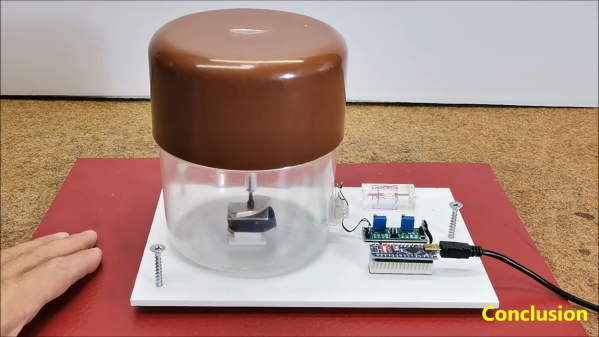
Most gain media for Raman lasers are somewhat exotic, but luckily some easily available materials will work just fine too. [Les] chose the common solvent dimethylsulfoxide (DMSO) for his laser, which was made from a length of aluminum hex stock. Bored out, capped with quartz windows, and fitted with a port to fill it with DMSO, the laser — or more correctly, a resonator — is placed in the path of [Les]’ high-power tattoo removal laser. Laser light at 532 nm from the pumping laser passes through a focusing lens into the DMSO where the stimulated Raman scattering takes place, and 628 nm light comes out. [Les] measured the wavelengths with his Raspberry Pi spectrometer, and found that the emitted wavelength was exactly as predicted by the Raman spectrum of DMSO.

It’s always a treat to see one of [Les]’ videos pop up in our feed; he’s got the coolest toys, and he not only knows what to do with them, but how to explain what’s going on with the physics. It’s a rare treat to watch a video and come away feeling smarter than when you started.

Continue reading “Homemade Raman Laser Is Shaken, Not Stirred”

Impact Of Imperfect Timekeeping On Quantum Control And Computing

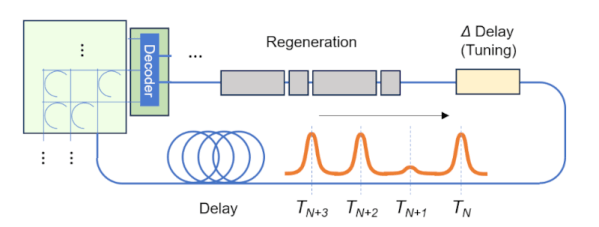
In classical control theory, both open-loop and closed-loop control systems are commonly used. These systems are well understood and rather straightforward, controlling everything from washing machines to industrial equipment to the classical computing devices that make today’s society work. When trying to transfer this knowledge to the world of quantum control theory, however, many issues arise. The most pertinent ones involve closed-loop quantum control and the clocking of quantum computations. With physical limitations on the accuracy and resolution of clocks, this would set hard limits on the accuracy and speed of quantum computing.

The entire argument is covered in two letters to Physical Review Letters, by Florian Meier et al. titled Fundamental Accuracy-Resolution Trade-Off for Timekeeping Devices (Arxiv preprint), and by Jake Xuereb et al. titled Impact of Imperfect Timekeeping on Quantum Control (Arxiv preprint). The simple version is that by simply increasing the clock rate, accuracy suffers, with dephasing and other issues becoming more frequent.

Solving the riddle of closed-loop quantum control theory is a hard one, as noted by Daoyi Dong and Ian R Peterson in 2011. In their paper titled Quantum control theory and applications: A survey, the most fundamental problem with such a closed-loop quantum control system lies with aspects such as the uncertainty principle, which limits the accuracy with which properties of the system can be known.

In this regard, an accurately clocked open-loop system could work better, except that here we run into other fundamental issues. Even though this shouldn’t phase us, as with time solutions may be found to the timekeeping and other issues, it’s nonetheless part of the uncertainties that keep causing waves in quantum physics.

Top image: Impact of timekeeping error on quantum gate fidelity & independent clock dephasing (Xuereb et al., 2023)

Nanobots Self Replicate

Hey, what if you could have a factory that makes robots that is run by… robots? This is hardly an original thought, but we are a long way from having an assembly line of C3POs self-replicating. On the other hand, animals — including humans — self-replicate all the time using DNA. Now, scientists are making tiny nanorobots from DNA that can assemble more DNA, including copies of themselves.

Assembling 3D structures with DNA has deep implications. For example, it might be possible to build drugs in situ, delivering powerful toxins only to cancer cells. Another example would be putting DNA factories in diabetes patients to manufacture the insulin they can’t.

Continue reading “Nanobots Self Replicate”