The Roller Ship Was Not An Effective Way To Cross The High Seas

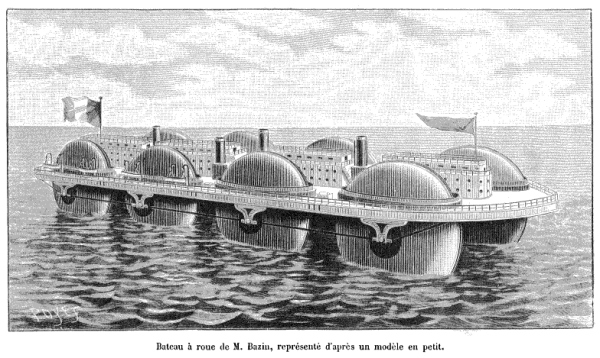
Boats come in all shapes and sizes. We have container ships, oil tankers, old-timey wooden sailing ships, catamarans, trimarans, and all sorts besides. Most are designed with features that give them a certain advantage or utility that justifies their construction for a given application.

The roller ship, on the other hand, has not justified its own repeat construction. Just one example was ever built, which proved unseaworthy and impractical. Let’s explore this nautical oddity and learn about why it didn’t make waves as its inventor may have hoped.

Continue reading “The Roller Ship Was Not An Effective Way To Cross The High Seas”

Japan’s First Commercial Rocket Debuts With A Bang

Though it suffered through decades of naysayers, these days you’d be hard pressed to find anyone who would still argue that the commercialization of space has been anything but a resounding success for the United States. SpaceX has completely disrupted what was a stagnant industry — of the 108 US rocket launches in 2023, 98 of them were performed by the Falcon 9. Even the smaller players, such as Rocket Lab and Blue Origin, are innovating and bringing new technologies to market at a rate which the legacy aerospace companies haven’t been able to achieve since the Space Race.

So it’s no surprise that other countries are looking to replicate that success. Japan in particular has been following NASA’s playbook by offering lucrative space contracts to major domestic tech companies such as Mitsubishi, Honda, NEC, Toyota, Canon, Kyocera, and Sumitomo. Over the last several years this has resulted in the development of a number spacecraft and missions, such as the Hakuto-R Moon lander. It’s also laid the groundwork for exciting future projects, like the crewed lunar rover Toyota and Honda are jointly developing for the Artemis program.

But so far there’s been a crucial element missing from Japan’s commercial space aspirations, an orbital booster rocket. While the country has state-funded launch vehicles such as the H-IIA and H3 rockets, they come with the usual bureaucracy one would expect from a government program. In comparison, a privately developed and operated booster holds the promise of reduced costs and a higher launch cadence, especially if there are multiple competing vehicles on the market.

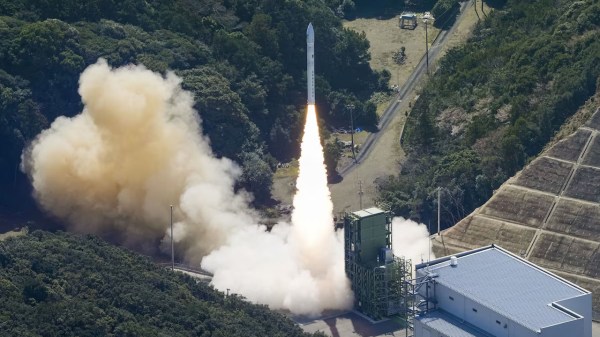
With the recent test flight of Space One’s KAIROS rocket, that final piece of the puzzle may finally be falling into place. While the launch unfortunately failed shortly after liftoff, the fact that the private rocket was able to get off the ground — literally and figuratively — is a promising sign of what’s to come.

Continue reading “Japan’s First Commercial Rocket Debuts With A Bang”

Retrotechtacular: Build Your Own Dune Buggy, 1970s Style

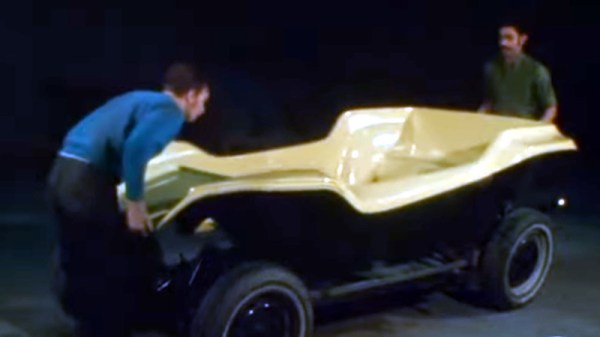
The custom car phenomenon is as old as the second-hand car, yet somehow the decades which stick in the mind as their heyday are the 1960s and 1970s. If you didn’t have a dune buggy or a van with outrageously flared arches and an eye-hurting paint job you were nothing in those days — or at least that’s what those of us who were too young to possess such vehicles except as posters on our bedroom walls were led to believe. Periscope Films have put up a period guide from the early 1970s on how to build your own dune buggy, and can we just say it’s got us yearning to drive something just as outrageous?

Of course, auto salvage yards aren’t bursting with Beetles as donor cars in 2024, indeed the accident-damaged model used in the film would almost certainly now be lovingly restored instead of being torn apart to make a dune buggy. We’re taken through the process of stripping and shortening the Beetle floorpan, for which we’re thankful that in 2024 we have decent quality cutting disks, and watching the welder joining thin sheet metal with a stick welder gives us some serious respect for his skills.

Perhaps the part of this video most likely to raise a smile is how it portrays building a car as easy. Anyone who has ever hacked a car to pieces will tell you that’s the easy part, and it’s the building something from the pile of rusty parts which causes so many projects to fail. But given an accident damaged Beetle and a buggy kit in 1972 would we have dug in and given it a try? Of course!

We’ve touched on the Beetle’s hackability in the past, but some of us believe that the crown of most hackable car rests elsewhere.

Continue reading “Retrotechtacular: Build Your Own Dune Buggy, 1970s Style”

How Does Time Work On The Moon?

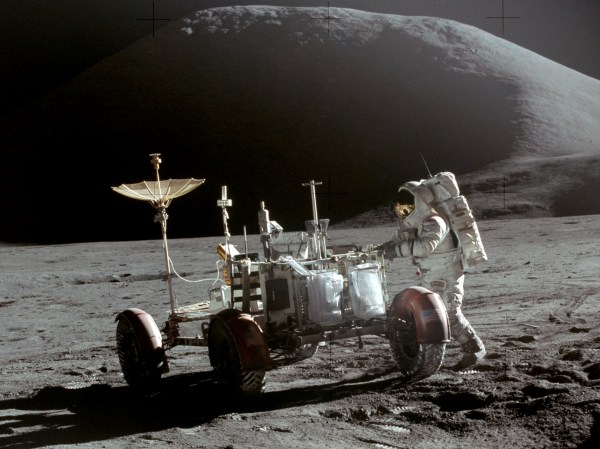
We’re looking to go back to the Moon. Not just with robots this time, but with astronauts, too! They’ll be doing all kinds of interesting things when they get there. Maybe they’ll even work towards establishing a more permanent presence for humanity on the lunar surface, in which case they’ll have to get up in the morning, eat breakfast, and get to work.

This raises the question—how does time work on the Moon? As simple as they can be down here, Earthly days and years have little meaning up there, after all. So what’s going on up there?

Continue reading “How Does Time Work On The Moon?”

Illustrated Kristina with an IBM Model M keyboard floating between her hands.

Keebin’ With Kristina: The One With The Pickle Pi

Image by [jefmer] via Hackaday.IO
The unstoppable [jefmer] wrote in to alert me to Pickle Pi, their latest Keebin’-friendly creation. Why “Pickle Pi”? Well, the Pi part should be obvious, but the rest comes from the Gherkin 30% ortholinear keyboard [jefmer] built with Gateron Yellows and, unfortunately, second-choice XDA keycaps, as the first batch were stolen off of the porch.

If you’re wondering where the rest of the keys are, they are accessible by holding various keys rather than tapping them. Shift is Shift when tapped held, but becomes Enter when tapped. [jefmer] wrote out their entire project description on the thing in order to break in the Gherkin.

The brains of this acrylic sandwich tablet is a Pi Zero 2, with a Pro Micro for the keyboard controller. Although programs like Ghostwriter and Thonny work fine, Chromium is “painfully slow” due to the RAM limitations of the Pi Zero 2. On the upside, battery life is 7-8 hours depending on usage. Even so, [jefmer] might replace it with a Pi 4 — the current battery pack won’t support a Pi 5.
Continue reading “Keebin’ With Kristina: The One With The Pickle Pi”

User Beware: The Fine Line Between Content And Code

Everyone loves themes. Doesn’t matter if it’s a text editor or a smart display in the kitchen, we want to be able to easily customize its look and feel to our liking. When setting up a new device or piece of software, playing around with the available themes may be one of the first things you do without giving it much thought. After all, it’s not like picking the wrong one is going to do something crazy like silently delete all the files on your computer, right?

Unfortunately, that’s exactly what happened a few days ago to [JeansenVaars] while trying out a Plasma Global Theme from the KDE Store. According to their Reddit post, shortly after installing the “Gray Layout” theme for the popular Linux graphical environment, the system started behaving oddly and then prompted for a root password. Realizing something didn’t seem right they declined, but at that point, it was already too late for all of the personal files in their home directory.

Continue reading “User Beware: The Fine Line Between Content And Code”

Hackaday Links Column Banner

Hackaday Links: March 24, 2024

Way to rub it in, guys. As it turns out, due to family and work obligations we won’t be able to see the next Great American Eclipse, at least not from anywhere near the path of totality, when it sweeps from Mexico into Canada on April 8. And that’s too bad, because compared to the eclipse back in 2017, “Eclipse 2: Solar Boogaloo” is occurring during a much more active phase in the solar cycle, with the potential for some pretty exciting viewing. The sun regularly belches out gigatons of plasma during coronal mass ejections (CMEs), most of which we can’t see with the naked eye because not only is staring at the sun not a great idea, but most of that activity occurs across the disk of the sun, obscuring the view in the background light. But during the eclipse, we — oops, you — might just get lucky enough to have a solar prominence erupt along the limb of the sun that will be visible during totality. The sun has been quite active lately, as reflected by the relatively high sunspot number, so even though it’s an outside chance, it’s certainly more likely than it was in 2017. Good luck out there.  Continue reading “Hackaday Links: March 24, 2024”