Hackaday Supercon 2024 Call For Participation: We Want You!

We’re tremendously excited to be able to announce that the Hackaday Supercon is on for 2024, and will be taking place November 1st through the 3rd in sunny Pasadena, California. As always, Supercon is all about you, the Hackaday community. So put on your thinking caps because we’d like to hear your proposals for talks and workshops! The Call for Speakers and Call for Workshops forms are online now, and you’ve got until July 9th to get yourself signed up.

Supercon is a fantastic event to geek out with your fellow hackers, and to share the inevitable ups and downs that accompany any serious project. Like last year, we’ll be featuring both longer and shorter talks, and hope to get a great mix of both first-time presenters and Hackaday luminaries.

Honestly, just the crowd that Supercon brings together is reason enough to attend, but then you throw in the talks, the badge-hacking, the food, and the miscellaneous shenanigans … it’s an event you really don’t want to miss. And as always, presenters get in for free, get their moment in the sun, and get warm vibes from the Hackaday audience. Get yourself signed up now!

You’ve Probably Never Considered Taking An Airship To Orbit

There have been all kinds of wild ideas to get spacecraft into orbit. Everything from firing huge cannons to spinning craft at rapid speed has been posited, explored, or in some cases, even tested to some degree. And yet, good ol’ flaming rockets continue to dominate all, because they actually get the job done.

Rockets, fuel, and all their supporting infrastructure remain expensive, so the search for an alternative goes on. One daring idea involves using airships to loft payloads into orbit. What if you could simply float up into space?

Continue reading “You’ve Probably Never Considered Taking An Airship To Orbit” →

Hackaday Links Column Banner

Hackaday Links: May 12, 2024

Don’t pack your bags for the trip to exoplanet K2-18b quite yet — it turns out that the James Webb Space Telescope may not have detected signs of life there after all. Last year, astronomers reported the possible presence of dimethyl sulfide there, a gas that (at least on Earth) is generally associated with phytoplankton in the ocean. Webb used its infrared spectrometer instruments to look at the light from the planet’s star, a red dwarf about 111 light-years away, as it passed through the hydrogen-rich atmosphere. The finding was sort of incidental to the discovery of much stronger signals for methane and carbon dioxide, but it turns out that the DMS signal might have just been overlap from the methane signal. It’s too bad, because K2-18b seems to be somewhat Earth-like, if you can get over the lack of oxygen and the average temperature just below freezing. So, maybe not a great place to visit, but it would be nice to see if life, uh, found a way anywhere else in the universe.

Attention Fortran fans: your favorite language isn’t quite dead yet. In fact, it cracked the top ten on one recent survey, perhaps on the strength of its numerical and scientific applications. The “Programming Community Index” is perhaps a bit subjective, since it’s based on things like Google searches for references to particular languages. It’s no surprise then that Python tops such a list, but it’s still interesting that there’s enough interest in a 67-year-old programming language to make it onto the list. We’d probably not advise building a career around Fortran, but you never know.

Continue reading “Hackaday Links: May 12, 2024” →

Ask Hackaday: Do You Calibrate Your Instruments?

Like many of you, I have a bench full of electronic instruments. The newest is my Rigol oscilloscope, only a few years old, while the oldest is probably my RF signal generator that dates from some time in the early 1950s. Some of those instruments have been with me for decades, and have been crucial in the gestation of countless projects.

If I follow the manufacturer’s recommendations then just like that PAT tester I should have them calibrated frequently. This process involves sending them off to a specialised lab where their readings are compared to a standard and they are adjusted accordingly, and when they return I know I can trust their readings. It’s important if you work in an industry where everything must be verified, for example I’m certain the folks down the road at Airbus use meticulously calibrated instruments when making assemblies for their aircraft, because there is no room for error in a safety critical application at 20000 feet.

But on my bench? Not so much, nobody is likely to face danger if my frequency counter has drifted by a few Hz. Continue reading “Ask Hackaday: Do You Calibrate Your Instruments?” →

The Great Green Wall: Africa’s Ambitious Attempt To Fight Desertification

As our climate changes, we fear that warmer temperatures and drier conditions could make life hard for us. In most locations, it’s a future concern that feels uncomfortably near, but for some locations, it’s already very real. Take the Sahara desert, for example, and the degraded landscapes to the south in the Sahel. These arid regions are so dry that they struggle to support life at all, and temperatures there are rising faster than almost anywhere else on the planet.

In the face of this escalating threat, one of the most visionary initiatives underway is the Great Green Wall of Africa. It’s a mega-sized project that aims to restore life to barren terrain.

Continue reading “The Great Green Wall: Africa’s Ambitious Attempt To Fight Desertification” →

Displays We Love Hacking: LVDS And EDP

There are times when tiny displays no longer cut it. Whether you want to build a tablet or reuse some laptop displays, you will eventually deal with LVDS and eDP displays. To be more exact, these are displays that want you to use either LVDS or eDP signaling to send a picture.

Of the two, LVDS is the older standard for connecting displays, and eDP is the newer one. In fact, eDP has mostly replaced LVDS for things like laptop and tablet displays. Nevertheless, you will still encounter both of these in the wild, so let’s start with LVDS.

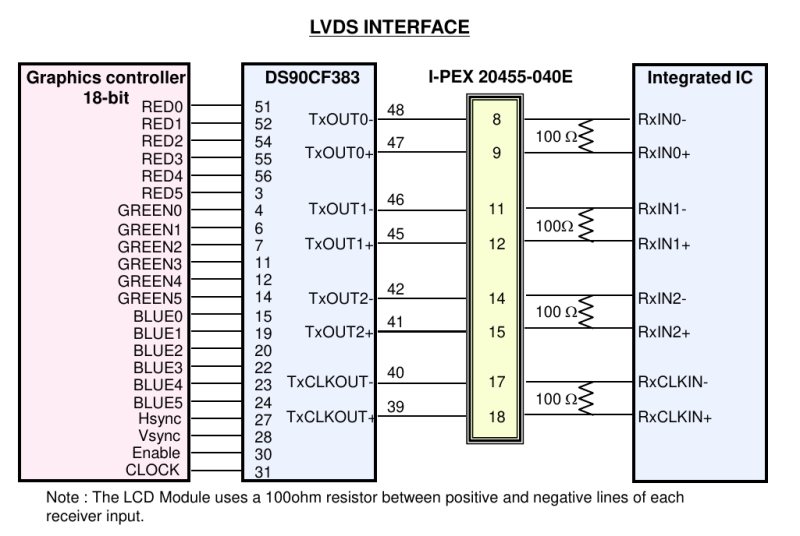
The name “LVDS” actually comes from the LVDS signaling standard (Low-Voltage Differential Signaling), which is a fairly generic data transfer standard over differential pairs, just like RS485. Using LVDS signaling for embedded display purposes is covered by a separate standard called FPD-Link, and when people say “LVDS”, what they’re actually talking about is FPD-Link. In this article, I will also use LVDS while actually talking about FPD-Link. Barely anyone uses FPD-Link except some datasheets, and I’ll use “LVDS” because that’s what people actually use. It’s just that you deserve to know the distinction so that you’re not confused when someone mentions LVDS when talking about, say, industrial machinery.

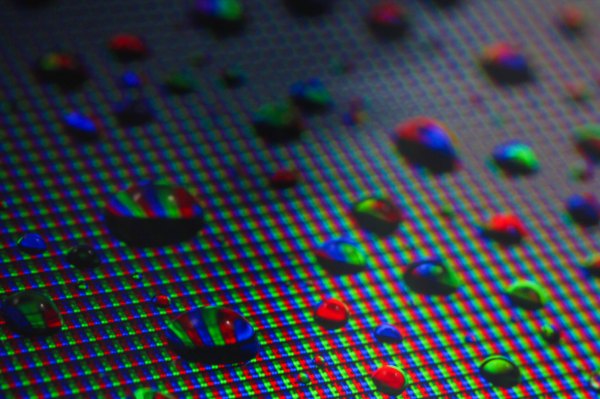
Both LVDS and eDP run at pretty high frequencies – they’re commonly used for color displays with pretty large resolutions, so speed can no longer be a constraint. eDP, as a successor technology, is a fair bit more capable, but LVDS doesn’t pull punches either – if you want to make a 1024 x 768 color LCD panel work, you will use LVDS, sometimes parallel RGB – at this point, SPI just won’t cut it. There’s a lot of overlap – and that’s because LVDS is basically parallel RGB, but serialized and put onto diffpairs. Let me show you how that happened, and why it’s cool.

Continue reading “Displays We Love Hacking: LVDS And EDP” →

Your Open-Source Client Options In The Non-Mastodon Fediverse

When things started getting iffy over at Twitter, Mastodon rose as a popular alternative to the traditional microblogging platfrom. In contrast to the walled gardens of other social media channels, it uses an open protocol that runs on distributed servers that loosely join together, forming the “Fediverse”.

The beauty of the Fediverse isn’t just in its server structure, though. It’s also in the variety of clients available for accessing the network. Where Twitter is now super-strict about which apps can hook into the network, the Fediverse welcomes all comers to the platform! And although Mastodon is certainly the largest player, it’s absolutely not the only elephant in the room.

Today, we’ll look at a bunch of alternative clients for the platform, ranging from mobile apps to web clients. They offer unique features and interfaces that cater to different user preferences and needs. We’ll look at the most notable examples—each of which brings a different flavor to your Fediverse experience.

Continue reading “Your Open-Source Client Options In The Non-Mastodon Fediverse” →